Search

MESSAGE FROM THE GENERAL MANAGER OF HUMAN RESOURCES


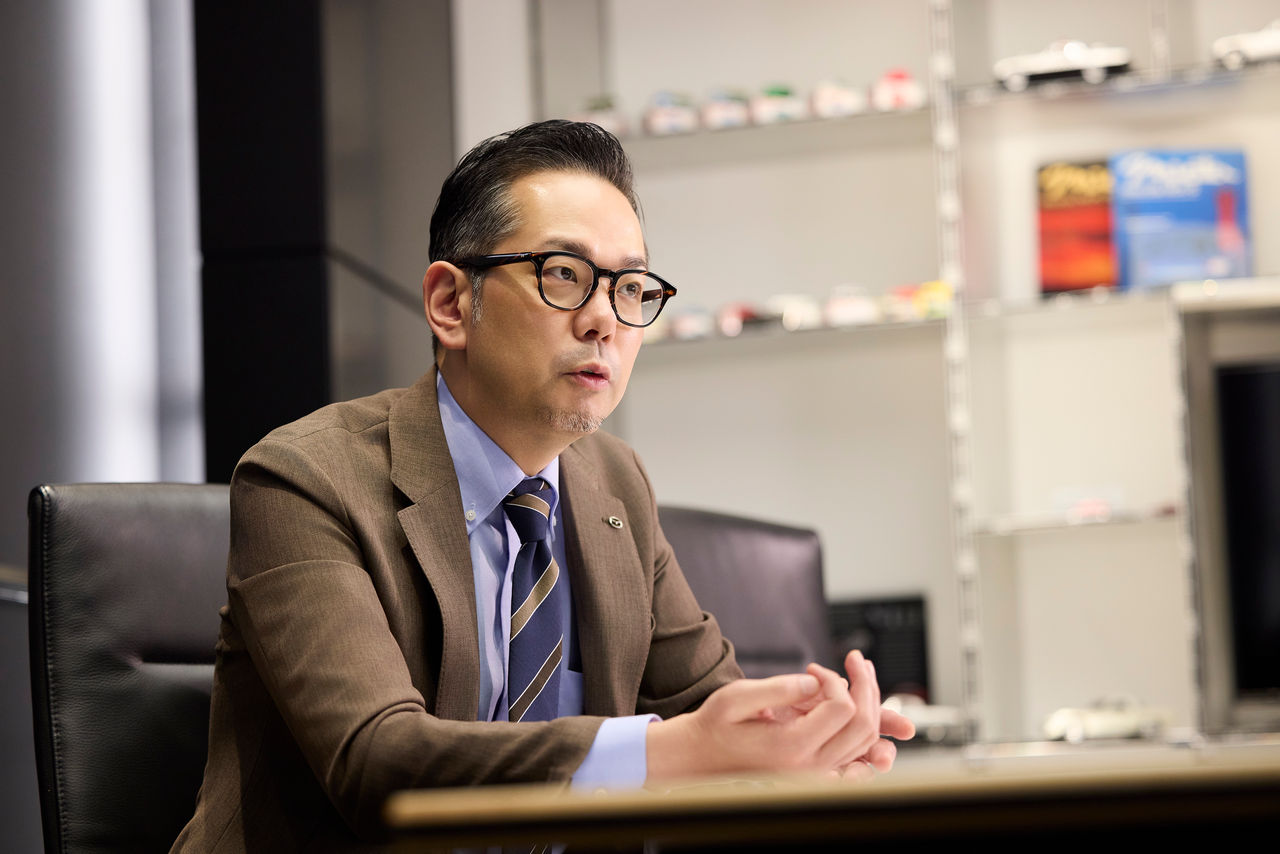
Strengthening Our People and Organization Through Human Resource Strategies to Support Customer-centered Value Creation


Satoshi Nishikawa

General Manager, Human Resources Division


Highlights


1.  Human resource strategies unlock the full potential of our employees, helping bring our corporate philosophy to life and driving sustainable growth


2.  Establishing metrics and targets that show the progress of our human resource strategies and the state of our workforce, and using these to inform management decisions


3.  Using Blueprint organizational culture reform initiatives to embed and deepen Brand Value Management and further promote diversity


What kind of people and organization do Mazda’s human resource strategies aim to create?

People are our most valuable asset. For Mazda to grow sustainably and remain a brand that continues to be chosen by customers, every employee must be able to realize their full potential. Together, their contributions will drive value creation. I have worked in human resources throughout my entire career at Mazda and have witnessed many employees take on challenges and grow. This experience has convinced me that people are much more than business resources; they are also the source of our value creation and competitiveness.


At the same time, the talent landscape is changing dramatically, marked by a declining and aging population, erosion of the lifetime employment model, waning interest in manufacturing careers among young people, and increasingly diverse ways of working.


As a company with its head office in a regional city, it is more important than ever that we build systems and mechanisms that enable us to attract, retain, and empower talent, and that allow employees to appreciate the value of working at Mazda and put them on a trajectory of self-led growth.


Our human resource strategies set out the key people-related issues and priorities we must address to realize our corporate philosophy and management policies. Their aim is to bring together the skills of employees performing at their best and turn the sum of these skills into sustainable growth for Mazda.


Our human resource strategies are designed to transform Mazda into a “highly efficient group of professionals.” By this, we mean an organization where skilled individuals think independently, collaborate with diverse teams of colleagues, and create high added value. Even amidst rapid change, we aim to build an organization that is resilient and can respond swiftly to management challenges and consistently create value. To achieve this, we are addressing three key people-related priorities: transitioning to a more efficient organization, securing talent, and creating an environment that supports autonomy and growth. We are also working on the foundation that will support them: transforming our organizational culture and health and productivity management.


At Mazda, we are looking for people who can think from the customer perspective, take initiative, and create value through co-creation with a diverse team of colleagues. We believe Mazda will become even more competitive as more of our people embrace change, continue learning, and take on new challenges.


All Mazda employees are expected to start with the customer in their day-to-day work, guided by Brand Value Management. They must also keep taking on challenges while acting out of consideration for how customers and colleagues feel. To make this possible, employees need a workplace culture in which they can work safely and with peace of mind, supported by a culture of open communication. Through our human resource strategies, we will build a resilient, adaptable, and caring organization that can thrive even in challenging circumstances.
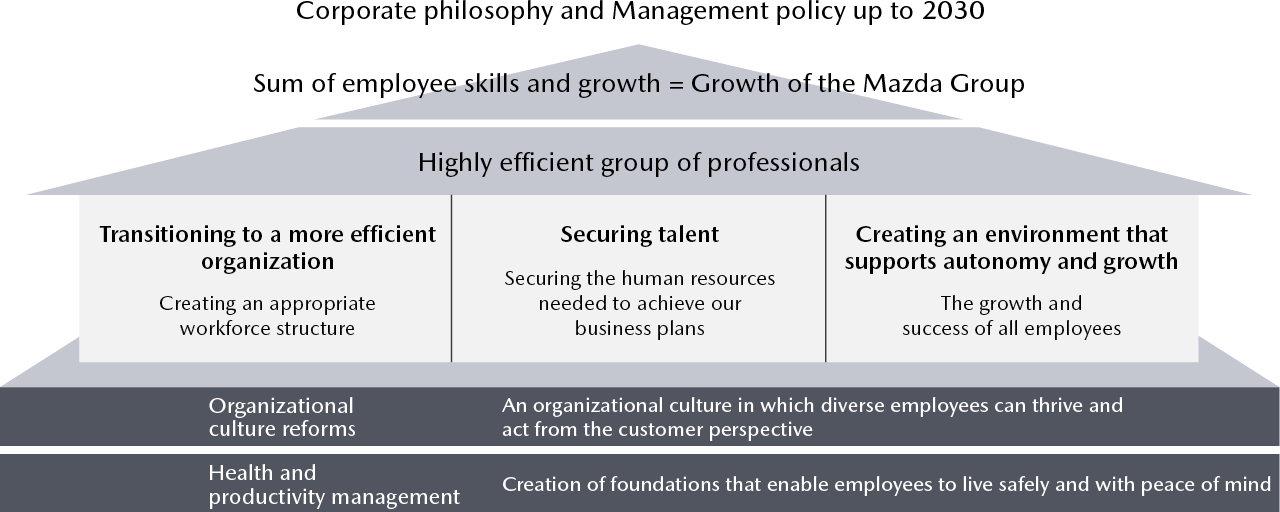
Overview of human resource strategies

Overview of human resource strategies


What progress have you made in human resource strategies thus far and what initiatives will you pursue going forward?

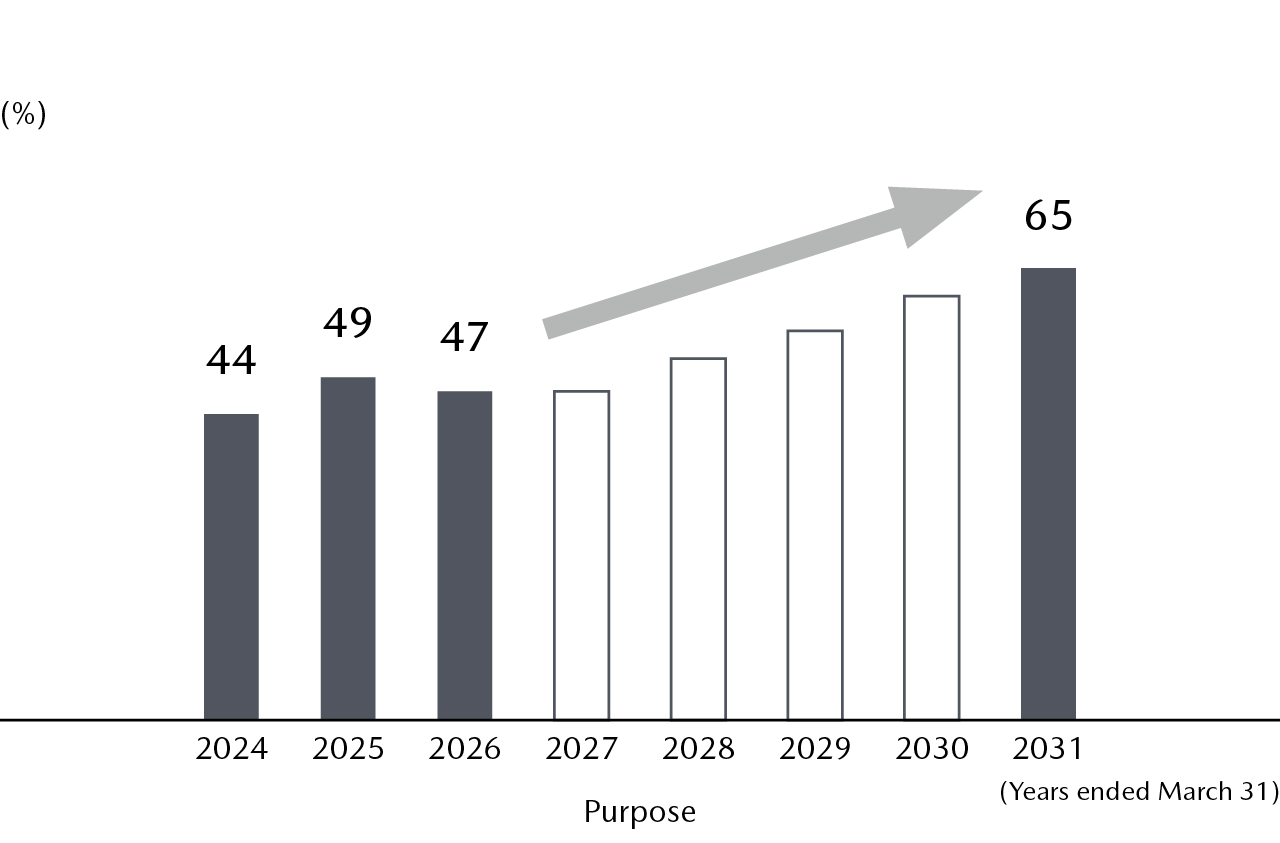
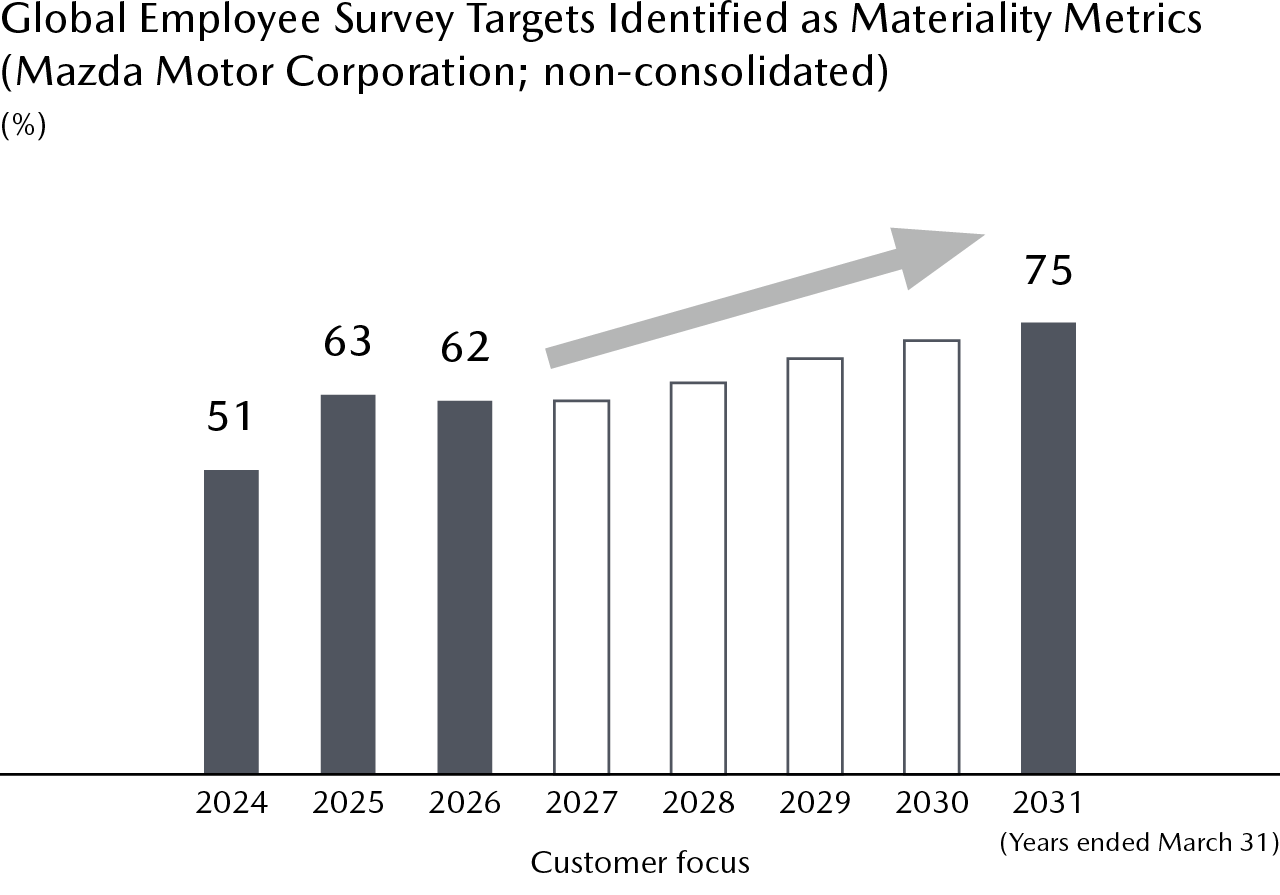
In FY March 2026, we developed a roadmap for advancing our human resource strategies and established metrics and targets to measure the progress of related initiatives. As indicators for measuring progress in “strengthening people and organizations that turn constraints into creativity,” one of our companywide material issues, we have set targets for FY March 2031 based on the Global Employee Survey (GES): 75% for “customer focus,” a level comparable to leading Japanese companies, and 65% for “purpose,” in line with the average for Japanese companies.


We set these targets because we believe we need to track not only the progress of each initiative but also how employees receive it and how it changes their attitudes and behavior. We have also established a framework for sharing results with management in a timely manner so that we can identify emerging changes and issues in human resources early on and quickly translate these insights into the necessary action. We will also communicate our progress to internal and external stakeholders.


In FY March 2027, we are focusing particularly on two of our key people-related priorities: transitioning to a more efficient organization and creating an environment that supports employee autonomy and growth. To transition to a more efficient organization, we will define the workforce structure each area of the business needs to aim for in light of both business strategy and the growing use of AI and other digital technologies, then develop concrete plans for moving toward this. To create an environment that supports employee autonomy and growth, we will proactively listen to feedback from the workplace, identify the issues we need to address in order to further employee growth and success, and strengthen the systems and mechanisms needed to resolve these issues.


We aim to maximize the value of our human capital by creating an environment in which each and every employee can realize their full potential and experience their own growth.

Global Employee Survey Targets Identified as Materiality Metrics (Mazda Motor Corporation; non-consolidated)

Why are we focusing on Blueprint organizational culture reform initiatives?

We believe that helping our employees realize their full potential requires more than systems and mechanisms and that the company culture behind these is equally important. People cannot realize their full potential in an inward-focused organization that lacks open communication. That is why we are implementing Blueprint. We believe that transforming our culture so every employee can realize their full potential and contribute to value creation is essential to how we manage the business.


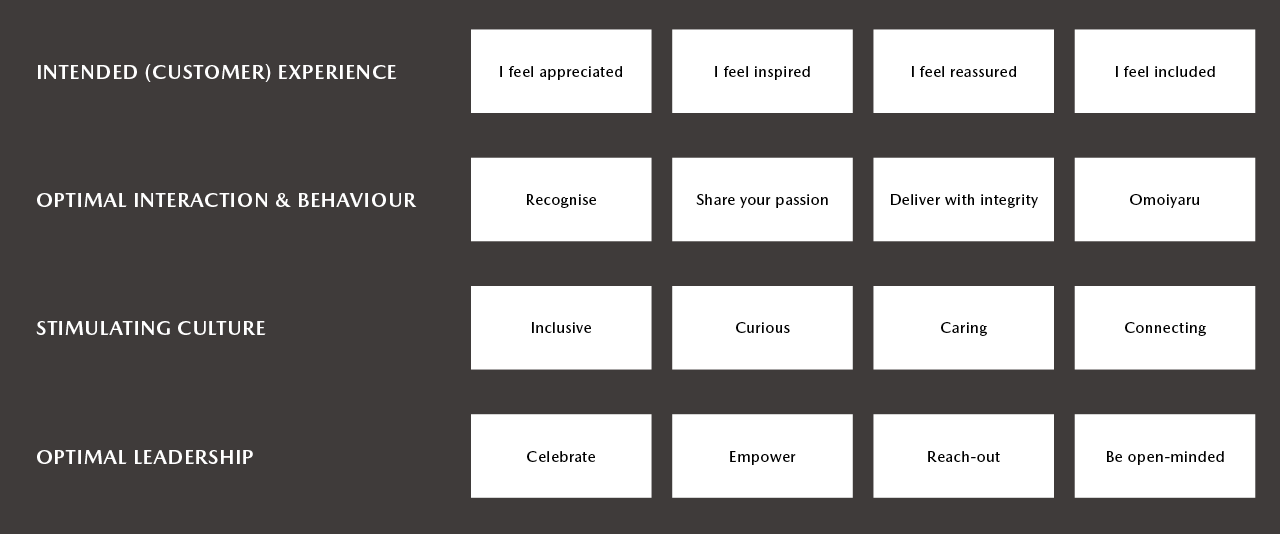
Blueprint places how we want customers and colleagues to feel at the top, with the behaviors, culture, and leadership needed to bring about those feelings beneath it. At its core is a simple approach: act from an awareness of how we want others to feel. This is also one of the key principles of Brand Value Management. To implement Brand Value Management and build a brand that continues to be chosen by customers, all of us at Mazda—not only those engaged in sales and service—must start with the customer in how we think and act. In this respect, we see Blueprint as much more than an organizational culture reform initiative. It is also an opportunity for all of us to reaffirm what it means to put Brand Value Management into practice. We value each employee thinking and acting from the starting point of “What can I do for our customers?” and “What value and emotions do I want others to experience?” We believe these efforts will build on one another to create value for customers and, ultimately, give us the strength to create value that is distinctly Mazda.


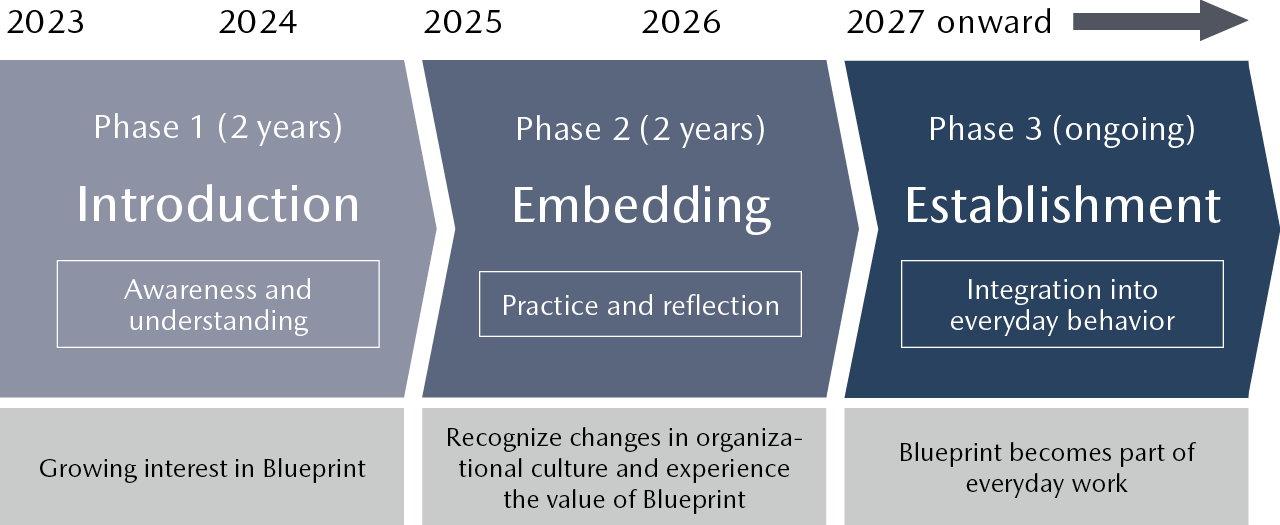
Blueprint was first implemented at our locations in Europe and North America. In Japan, 14 master navigators began their work in 2023 and have continued to guide the program through its introduction, wider adoption, and establishment. Each Blueprint session is led by employees who have been trained as navigators. By FY March 2026, approximately 700 navigators had brought the program to some 24,000 employees, including those working in production.


In FY March 2027, we are continuing to promote Blueprint as a key initiative to embed and strengthen Brand Value Management throughout our organization. Building on Mazda Mirai 2026, held in 2026, we are extending Blueprint sessions to all employees and encouraging dialogue in the workplace. These sessions give each person an opportunity to deepen their understanding of Brand Value Management, apply it to their own work, and act on it.


The results of our sustained focus on Blueprint over the past several years are beginning to show in our Global Employee Survey as well. We see these results as an early sign that our employees are beginning to think and act more consistently from the customer perspective. We believe this kind of organizational culture is what will make us truly competitive and will ultimately become the foundation for sustainable value creation and enhancement of corporate value.

Blueprint implementation timeline

Blueprint implementation timeline

Through Blueprint, Mazda has defined the values it considers important for organizational culture reform, starting with “intended (customer) experience,” followed by “optimal interaction and behavior,” “stimulating culture,” and “optimal leadership.”

Through Blueprint, Mazda has defined the values it considers important for organizational culture reform, starting with “intended (customer) experience,” followed by “optimal interaction and behavior,” “stimulating culture,” and “optimal leadership.”


How will you create value from diversity?

People, our most valuable asset, are also the source of our value creation. That value cannot emerge from a single worldview or way of thinking. We believe new ideas and value emerge when people with diverse perspectives and backgrounds embrace and respect one another’s differences, and engage in dialogue and co-creation. For Mazda, diversity is an important foundation for value creation, and promoting it is essential to creating value that is distinctly Mazda. We will continue to strengthen the systems and rules that enable every employee to use their skills to work and thrive, regardless of gender, age, nationality, disability, sexual orientation, or gender identity. In doing so, we will lay the groundwork for creating value that is distinctly Mazda.


Promoting diversity requires more than creating the right workplace environment and systems. It cannot succeed without a healthy workplace culture as its foundation. The Blueprint principle of “starting with how we want others to feel and acting accordingly” fosters mutual understanding and dialogue. It also helps us build an organization in which all kinds of people can realize their full potential.


We will therefore continue Blueprint initiatives as part of our broader commitment to diversity, aiming to foster an organizational culture in which all our employees think independently, engage in dialogue, and create value through co-creation with a diverse team of colleagues.