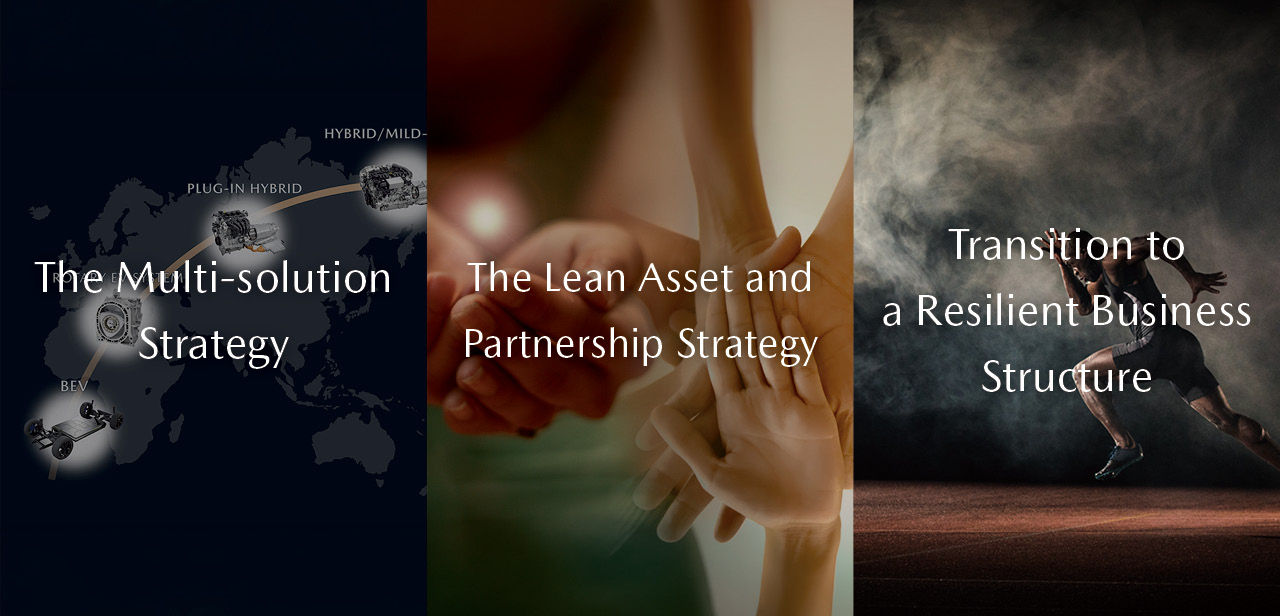
Philosophy alone cannot bring unique value to life. We must translate our philosophy into business strategies and structures so that it can be put into practice consistently. As the automotive industry undergoes profound change, what matters is not scale, but the management capability to adapt to change while continuing to refine the elements of our business that create value distinct to Mazda. To achieve this, we are moving forward with three strategies as an integrated whole.
The first is our Multi-solution Strategy. Electrification is an irreversible trend, but markets are moving toward it at different paces. Charging infrastructure, energy landscapes, and customer readiness also vary greatly across regions. As a company operating in more than 130 countries and regions, Mazda will offer ICE, HEV, PHEV, and BEV products, optimizing the solutions available in each market for regional and customer needs. Rather than betting everything on a single technology, we will maintain a range of options and continue providing practical solutions that deliver real value to customers.
Second, the Lean Asset and Partnership Strategy. We will focus our own investments on the areas that define Mazda, including our human-centric design philosophy and the Joy of Driving. At the same time, we will leverage partnerships in areas where scale and speed are essential to secure the competitiveness we need. This allows us to concentrate finite business resources on the areas that create the greatest value for customers.
The third is our transition to a Resilient Business Structure. First, through 2027, we will complete structural reforms totaling 200 billion yen, including 100 billion yen in structural cost reductions and 100 billion yen in fixed-cost efficiencies. These reforms will strengthen our earning power by the equivalent of approximately four percentage points of return on sales (ROS), enabling us to offset the impact of external factors, including US tariffs, through our own efforts. At the heart of this cost transformation is what we call “Mazda Ryohin-renka”—maximizing customer value per unit of cost. This approach is not just about cutting costs. It is about concentrating resources where customers perceive value and refining those areas relentlessly to maximize customer value per unit of cost.
Our Multi-solution Strategy strengthens our ability to respond to market needs, our Lean Asset and Partnership Strategy increases investment efficiency, and our Resilient Business Structure supports sustainable earning power. Together, these three strategies form the foundation for Brand Value Management.
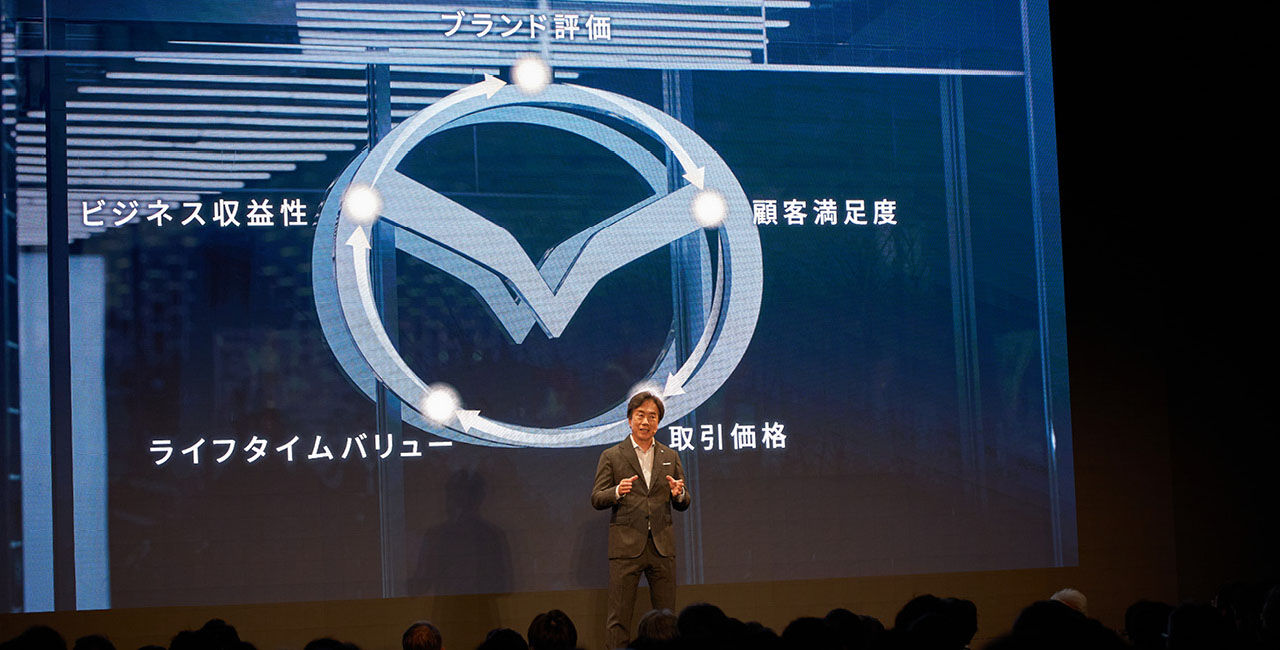
Brand Value Management is therefore much more than a philosophy. It is implemented as strategies and becomes how we do business in and of itself, ultimately translating into financial results. This structural transformation will generate the earning power needed to achieve return on sales (ROS) of at least 5% and return on equity (ROE) of at least 10%, driving a sustained increase in corporate value.