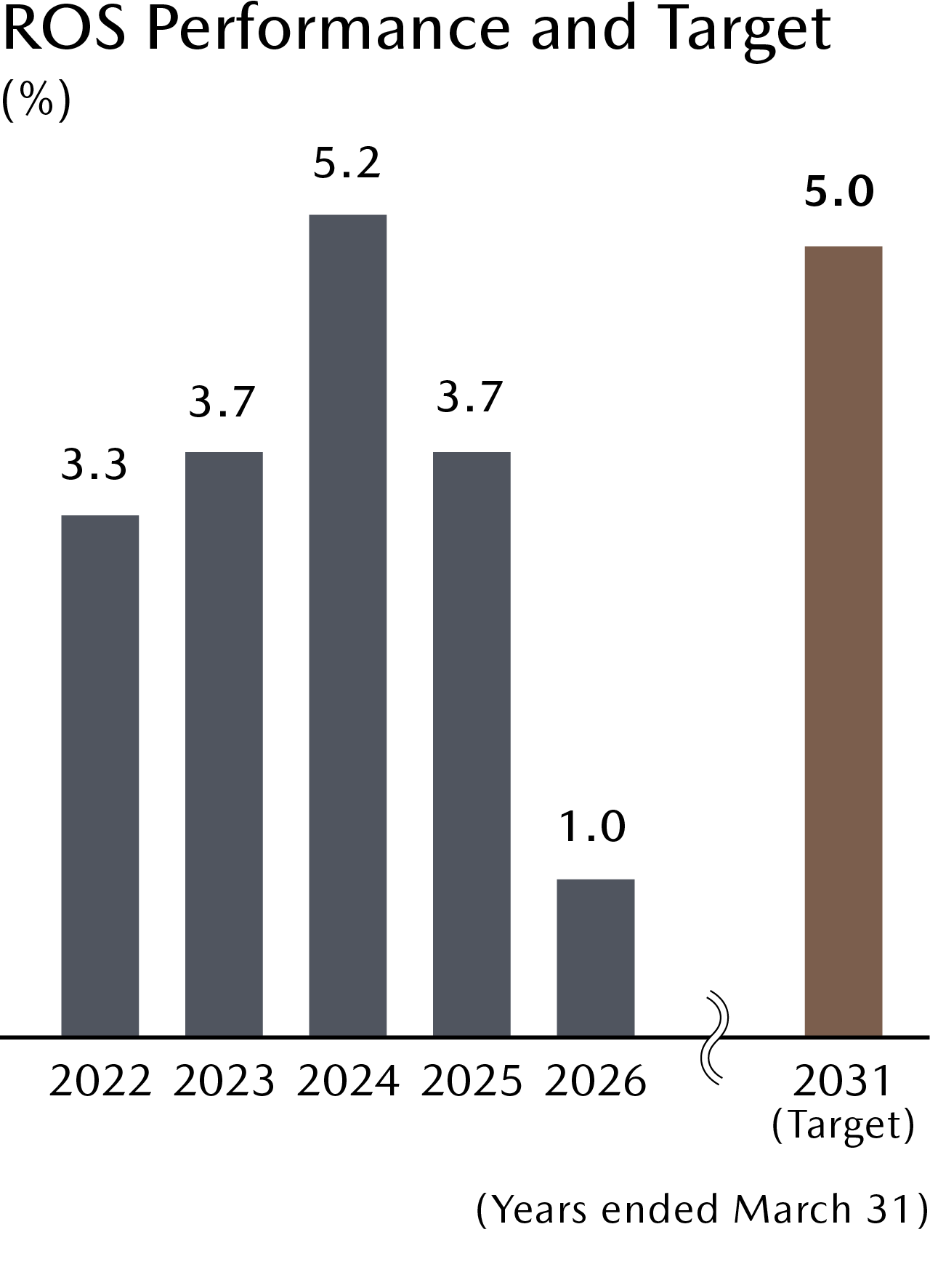
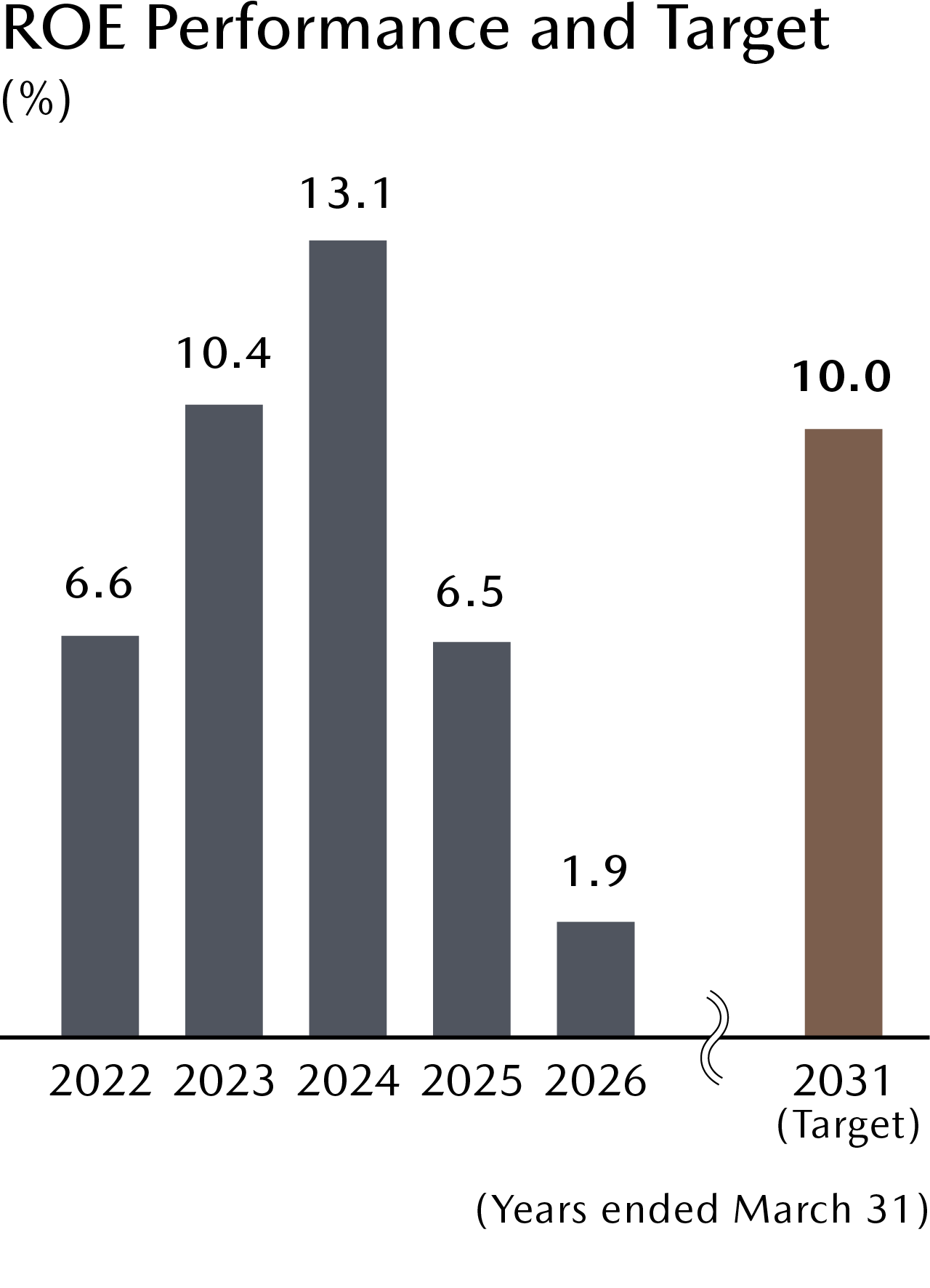
The external environment surrounding the automotive industry is becoming increasingly complex and uncertain. Electrification trends are evolving unevenly across regions, geopolitical risks such as U.S. tariff policies remain fluid, and raw material prices remain elevated. In addition, the competitive landscape is undergoing structural transformation. Under these conditions, I believe that the role of the CFO is not simply to safeguard financial stability, but to build a business structure capable of delivering sustainable growth regardless of changes in the external environment.
During my career I have worked in Mazda’s businesses in Japan, Europe, and North America, gaining firsthand experience with customers’ needs and competitive dynamics unique to each market. While the value customers seek differs from country to country, one principle remains constant: a brand earns lasting trust by continuously delivering what customers truly value. In an increasingly uncertain and rapidly changing environment, I believe sustainable growth requires flexibility, resilience, and the ability to keep multiple strategic options open rather than relying on a single path forward.
To achieve this, Mazda is advancing three key initiatives which are not only aimed at strengthening cost competitiveness, but also at creating the financial capacity and strategic flexibility required to support growth driven by our Brand Value Management approach.
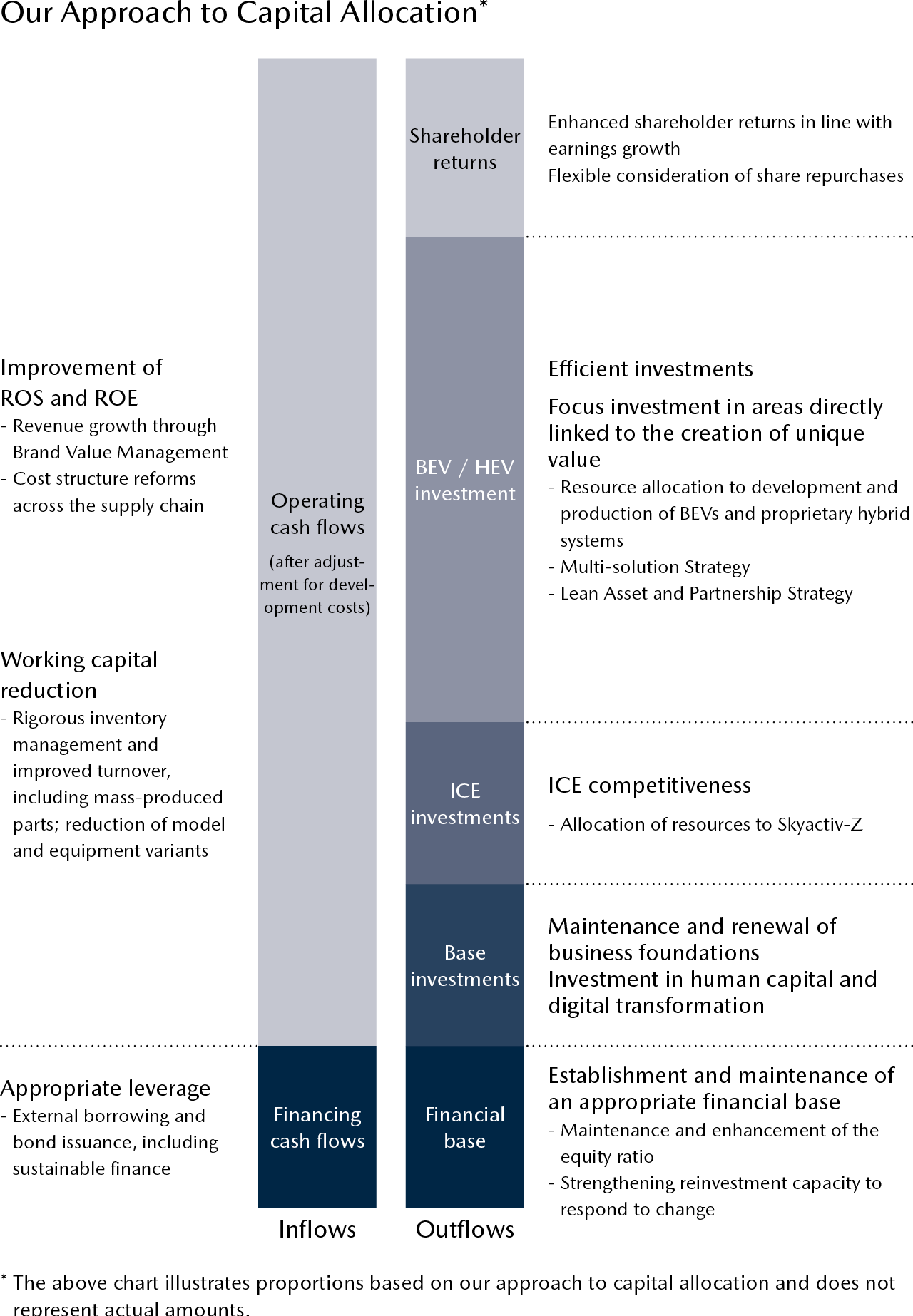
First, we are pursuing our Lean Asset and Partnership Strategy, which focuses on maximizing investment efficiency. In an industry where technological advancement requires increasing levels of capital, it is neither realistic nor optimal to internalize all capabilities. Instead, we clearly define the areas where Mazda should invest— those that directly contribute to our unique value, such as humancentric vehicle development and the Joy of Driving—while leveraging partnerships in other areas. This approach improves investment efficiency while enabling us to concentrate resources on areas that enhance customer value and support sustainable revenue growth. We have also reviewed our electrification investments and optimized the amount to approximately 1.2 trillion yen through 2030, including investments by business partners.
Second, our Multi-solution Strategy enables disciplined capital allocation for long-term value creation while responding to differences in demand and shifts in customer preferences across regions.
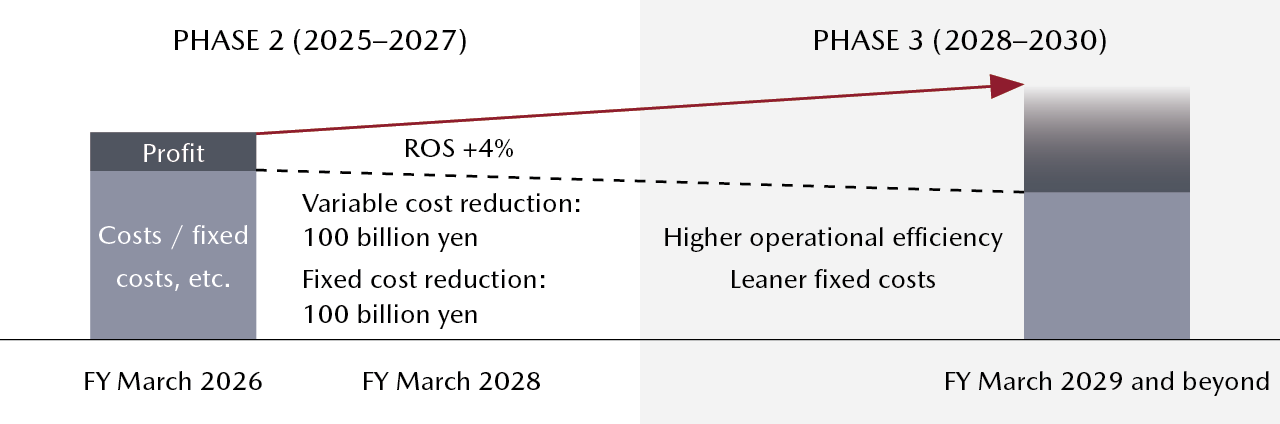
Third, we are implementing structural cost reductions and fixed cost efficiency improvements, targeting a total impact of approximately 200 billion yen by the end of Phase 2 of our 2030 Roadmap. These initiatives are not simply cost-cutting measures; they represent a fundamental transformation of our cost structure that lowers the break-even point and strengthens our ability to generate stable profits.
At the same time, we recognize that these initiatives must be underpinned by the strength of our people and organization. Through efforts such as Blueprint organizational culture reform initiatives, we are strengthening cross-functional collaboration, enhancing the quality of dialogue, and enabling more agile decisionmaking across the company. These changes are improving our ability to execute strategy consistently and capture opportunities in a rapidly changing environment.
Through these efforts, we are transforming Mazda into a company that can withstand external shocks while continuing to invest in growth. By strengthening our business structure in this way, we enhance not only our resilience, but also our capacity to deliver sustained improvements in revenue quality and profitability.