HUMAN CAPITAL
Basic Approach
Mazda considers people its greatest asset and the source of value creation as it works to realize its corporate philosophy. The environment in which the automotive industry operates has changed dramatically in recent years, presenting challenges that cannot be addressed by conventional approaches and ideas. Even in this environment, Mazda believes that to deliver on its business strategies, it must respond swiftly to change and foster resonance and a strong connection with its brand among stakeholders through products and services tailored to customer preferences and needs. Guided by its management philosophy of Brand Value Management, the company will continue to develop people capable of creating value that is distinctly Mazda and work to create products that resonate with customers. It will also create an environment and build systems that enable all employees to realize their full potential, translating this into the growth of the entire Mazda Group.
Background to Mazda's Human Resource Strategies
The automotive industry is undergoing what has been described as a once-in-a-century transformation, with uncertainty about the future making the business environment more challenging each year. Securing and retaining talent is also becoming increasingly difficult. Contributing factors include a shrinking working-age population as the birthrate falls and society ages at an accelerating pace, a shift away from manufacturing careers, particularly among young people, and the continued concentration of the population in the Tokyo metropolitan area.
Headquartered in the regional city of Hiroshima, Mazda must secure its greatest asset—people—and support each individual's growth and contribution amidst this challenging environment, an undertaking that requires a medium- to long-term approach to structural reform in human resources, along with greater investment in people.
The company is carefully assessing the functions and tasks needed to deliver its strategies and plans in each business area and advance the digital transformation of its operations, including the use of generative AI. It must also urgently consider how it will secure the talent these efforts require and enable each individual to contribute fully.
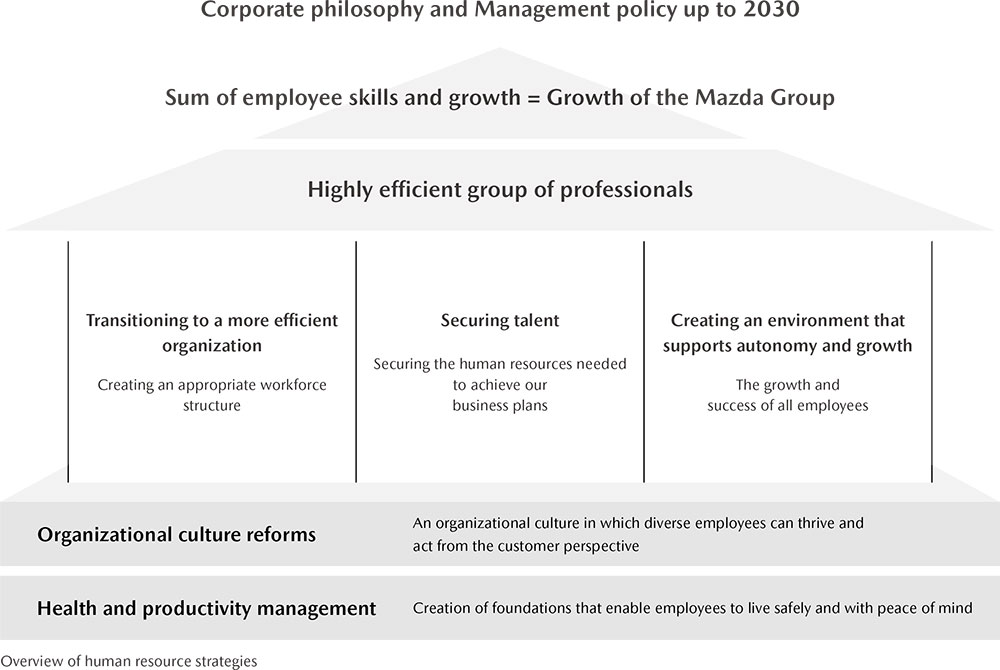
Against this backdrop, Mazda identified three material issues in human resources: transitioning to a more efficient organization, securing talent, and creating an environment that supports autonomy and growth. In February 2025, it formulated human resource strategies to realize its corporate philosophy and Management Policy up to 2030 and began implementing these.
Vision
The vision for Mazda's human resource strategy is "the sum of employee skills and growth equals the growth of the Mazda Group." Mazda is working to maximize the skills and growth of each of its employees while transforming itself into a resilient organization that can respond swiftly to business challenges and deliver better results more efficiently. In other words, the company believes that becoming a highly efficient group of professionals will drive sustainable growth for the Mazda Group.
Mazda has designated four Global Employee Survey categories as key metrics for its human resource strategies. By tracking changes in employee attitudes and behavior at regular intervals, it will measure progress toward becoming a highly efficient group of professionals. For the two higher-level metrics, Customer focus and Purpose, the company has set targets for 2030 and is continually monitoring progress. These metrics are key measures of how well it is putting customer-centered Brand Value Management into practice.
Targets for 2030:
Global Employee Survey (GES)
Customer focus: 75%: Top level among Japanese companies
Purpose: 65%: On par with the average for Japanese companies
Initiatives
Transitioning to a More Efficient Organization
Mazda believes an organization able to respond swiftly and flexibly to any change is best equipped to realize its corporate philosophy and Management Policy up to 2030 in a challenging business environment. Each area of the business will take a medium- to long-term view, factoring in potential changes and risks as it defines the functions and operations needed to deliver on its business plan. It will then use these requirements to map out its workforce structure and optimal organizational design. Developing a human resource portfolio and a medium-term staffing plan will be central to these efforts and will help Mazda transition to a more efficient organizational structure.
Development of a Human Resource Portfolio
Looking ahead to 2030 and beyond, each area of the business will define in detail the functions and positions required to execute its business plan. It will compare these requirements with its current organization, identify the functions and operations that need strengthening, and map out a lean, efficient organization for the future. In its future-focused transition plan, Mazda will also identify functions and operations that need to be scaled back as the structure of work changes and digital transformation advances. The company will support this transition through measures such as reskilling.
Development of a Medium-term Staffing Plan
Mazda will consolidate the future organizational vision for each business area, as defined in its human resource portfolio, and the plans for achieving that vision into a staffing plan. For business areas and functions that will need strengthening, the staffing plan will specify how many people are needed, when they are needed, and how the company will secure them through external recruitment and effective use of internal talent.
Operational Streamlining and Digital Transformation
Mazda must take on a wide range of new tasks, including those related to carbon neutrality and electrification. While the company will continue to prioritize work that creates value, it must fundamentally rethink how it organizes tasks likely to be automated or streamlined as digital technology advances. To implement its business strategies and create value unique to Mazda, the company will identify which work should continue to be performed by people as it systematically advances the digital transformation of operations.
Securing Talent
Securing a workforce is a major challenge for many companies across industries. To secure enough people to implement its business strategies, Mazda needs a medium- to long-term plan identifying the talent it requires and where to find it. Even when drawing on internal talent, the company needs time to provide preparatory training and develop employees into effective contributors. The same is true of external recruitment: people with the required skills and experience are not always available when needed. Mazda must plan for the considerable time needed to attract top talent and transform its recruitment channels and methods from the ground up to move beyond conventional approaches.
Securing Talent Internally: Accelerating Personnel Transfers
Expansion of the Internal Job Posting System
Mazda has offered internal job postings year-round since 2023. Previously, applications were accepted only during designated periods several times a year. Moving to a year-round system has increased both the range of positions available and the number of applicants, encouraging transfers across fields and business areas. Employees' attitudes toward their careers have also shifted, with more taking ownership of their career planning. In FY March 2026, more than 100 transfers were completed through internal job postings, an annual record. Job postings also cover secondments to roles requested by local communities, extending opportunities beyond Mazda. Both the number of postings and the range of settings in which employees can contribute are growing. Mazda will continue to encourage employees to take ownership of their careers and create an environment that supports them in taking action, paving the way for the introduction of the Career Challenge System.
Talent Development Plan Incorporating Reskilling and Upskilling
Mazda must provide learning opportunities to help employees move into business areas it needs to strengthen. Employees moving into new areas need reskilling opportunities, while those pursuing more advanced work in their field need upskilling opportunities. The company will align talent development plans for internal transfers with the medium-term staffing plan for each area of the business as it prepares to offer these learning opportunities.
Recruiting External Talent: Transforming Recruitment
Diversification of New Graduate Recruitment Channels
As ways of working become more diverse, the values and priorities of students entering the job market are also changing significantly. Students consider a wide range of factors, including job responsibilities, workplace atmosphere and culture, arrangements such as flexible work hours and remote work, and the level of educational support available. In response to students' increasingly diverse values, Mazda is introducing recruitment for specific job categories, expanding internship programs, offering workplace tours, and holding company information sessions focused on employee benefits and education support. Beyond its Head Office in Hiroshima, the company is also expanding these initiatives in locations in the Tokyo metropolitan area.
Expansion of Mid-career Recruitment Channels
Lifetime employment is declining alongside change in work styles and forms of employment and shifts in how the younger generation thinks about work, prompting many Japanese companies to shift away from the practice of hiring new graduates in a single annual intake. In response, Mazda has increased the proportion of mid-career hires among its new hires each year and is actively diversifying recruitment channels to address intensifying competition for talent.
・Alumni Hiring Program
In 2024, Mazda introduced an alumni hiring program to rehire former employees who have gained experience and knowledge in other industries or fields since leaving the company. The company has launched the "Come Back Recruitment Site" where any interested former employee can register interest in returning to Mazda, regardless of age, time since leaving the company, or previous division. The site provides company and job information, interviews with employees hired through the Alumni Recruitment Program, and details of recruitment events, and is supported by a dedicated team of coordinators.
・Referral Recruitment Program
No one understands Mazda better than its own employees. In 2023, the company introduced an employee referral program that draws on employees' personal and professional networks. The program makes it easier for Mazda to find candidates who understand its culture and operations and are a strong fit, helping the company secure a broad range of talent.
・Sharing Information through Social Media
Information about a company's employees and workplaces is important to job seekers. Mazda actively uses its official social media accounts to introduce its employees, show what its workplaces are like, and highlight efforts to improve its corporate culture, helping raise awareness of that culture. These accounts also reach many people who are not currently looking for work, helping the company build a pool of potential future candidates.
・Strengthening Recruitment in the Tokyo Metropolitan Area and Offering Fully Remote Work
Mazda has traditionally recruited both new graduates and mid-career hires to work at its Hiroshima Head Office. As ways of working become more varied, however, candidates are placing greater emphasis than ever on where they work. In response, the company opened the Mazda R&D Center Tokyo in Azabudai, Minato-ku, Tokyo, enabling employees to work for Mazda outside Hiroshima. It will continue to improve working environments and step up recruitment in the Tokyo metropolitan area. Mazda has also introduced a policy allowing fully remote work in response to growing demand in recent years. Many employees now work remotely for the company from locations across Japan. As a result of these initiatives, the share of mid-career hires based in the Tokyo metropolitan area or working fully remotely rose to approximately 30% in FY March 2026, indicating that a diverse range of people are now contributing at Mazda.
Maintaining Employment and Recruiting Talent Globally
The Mazda Group adapts its recruitment activities to local conditions to secure the people it needs. As its production sites have a particularly significant impact on local economies, the Group works to maintain and manage appropriate employment levels. In Japan, it maintains production volumes and associated employment at its production sites in Hiroshima and Yamaguchi prefectures. Across its overseas operations, including Mexico, Thailand, and the United States, the Group works to maintain and create local jobs while recruiting in line with local labor practices.
Revision of Compensation Systems and Levels
Mazda is expanding compensation arrangements for administrative and technical employees beyond its existing wage ranges linked to job grades. This will allow it to offer market-based or otherwise appropriate compensation, primarily for hard-to-fill positions such as IT and software engineering roles. For production employees, the company is increasing allowances to reflect the responsibilities and contributions of supervisory staff, particularly frontline supervisors who are central to workplace operations. Across all job categories, Mazda will review its evaluation system and revamp its compensation system to better differentiate rewards according to performance. Through these changes, it aims to reward employees who deliver results more effectively and support their continued contribution. The company ensures that wages at its domestic and overseas locations comply with local laws and regulations, including minimum wage requirements, so that employees receive appropriate compensation.
Creating an Environment That Supports Autonomy and Growth
Enabling Every Employee to Grow and Thrive
Mazda's human resource strategies aim to enable every employee to be ambitious and excel in their role, and for their combined contributions to drive growth across the Mazda Group. To achieve this, the company must create an environment where employees can thrive, with suitable offices and other physical facilities as well as effective human resource systems and mechanisms.
Through the initiatives below, Mazda will help employees identify where they stand relative to their future goals and the areas they need to develop to take the next step toward these goals, as well as creating an environment that supports steady growth and enables every employee to contribute more fully.
- Employees developing their own career plans
- Diversifying career paths and supporting self-directed career choices
- Creating and enhancing an environment that supports employees' self-directed learning
Employees Developing Their Own Career Plans
At Mazda, each employee sets goals based on their career aspirations and maps out a career plan for achieving them. They objectively assess their strengths and weaknesses based on the skills and experience gained throughout their career thus far. After identifying areas in which their skills and experience exceed or fall short of requirements and the challenges they need to overcome toward these goals, they incorporate these findings into their career plans. Supervisors plan and provide assignments and learning opportunities tailored to each employee's career plan to help them acquire the skills and experience they need.
Diversifying Career Paths and Supporting Self-directed Career Choices
Mazda is introducing a job-based human resource system alongside its conventional membership-based system, creating an environment in which employees can pursue career opportunities and choose their career paths based on their own plans and aspirations.
Upgrading "Tobiuo" to "Tobiuo 2.0"
Mazda introduced its "Tobiuo" human resource system in 2000. At the time, Mazda was among the first companies to discontinue the employee ability-based evaluation system that was still prevalent at many Japanese companies, replacing it with a job grade system for back-office employees as the foundation of Tobiuo. After using Tobiuo for a quarter of a century, Mazda is now upgrading the system to Tobiuo 2.0 as changes in the business environment and labor market make it increasingly difficult to attract and retain talent. The company will comprehensively review its human resource framework, from core performance appraisal and compensation systems to policies and processes, to build a stronger foundation for supporting the growth and success of each of its employees.
Introducing the Career Challenge System (Planned for FY March 2028)
Job-based human resource systems are becoming increasingly widespread in Japan. They define the roles, skills, and experience required for each position in advance and use these requirements as the basis for recruitment, placement, evaluation, and compensation. In light of this trend, Mazda is planning to introduce a "Career Challenge System." Designed for highly motivated employees who want to build their careers proactively in line with their own aspirations, the Career Challenge System will be combined with the internal job posting system to provide access to a wide range of job postings. Mazda will also consider using different compensation, performance evaluation, and other related human resource arrangements from those of Tobiuo where necessary.
Creating an Environment That Supports Employees' Self-directed Learning
Employees need ongoing learning opportunities as well as day-to-day work experience to make steady progress along their career paths. Mazda will therefore create an environment in which employees can undertake self-directed learning, supported by structured curricula tailored to each employee's next career step. The company will enhance its e-learning environments so busy employees can study at work, at home, or during their commute, making courses easier to access on personal smartphones and tablets in addition to company-issued computers. It is committed to meeting its employees' needs and supporting their self-directed learning by making it easy for them to learn anytime, anywhere.
Digital and IT Talent Development Initiatives
To improve digital literacy across the company, Mazda is investing in developing digital talent capable of using AI. The company aims to equip all back-office employees with the skills needed to use AI and IT, while also training personnel to handle more advanced AI applications. As part of this initiative, it is using programs offered by Aidemy Inc. and working with a range of partners to drive transformation. Beyond the adoption of digital tools, Mazda will advance digital transformation by reassessing and redefining its business processes, aiming to double productivity and shift personnel to work that adds greater value. By FY March 2031, Mazda aims to double its revenue per back-office employee compared with FY March 2023 and develop 400 AX personnel* who are highly skilled in both business operations and AI technology.
* AX personnel who are proficient in Python and Microsoft Foundry.
Ongoing Enhancement of Conventional Employee Training
Mazda is placing less emphasis on group training, previously its main approach to employee training, as it shifts toward self-directed learning centered on e-learning. It will continue to offer and enhance the content of group training programs it considers important.
Key Group Education and Training Programs
| Program | Frequency | Participants | Objective | Details |
|---|---|---|---|---|
| Global Business Leader Program | As needed | Employees selected from Mazda Group companies around the world | Preparing future executives to lead global business by developing their leadership and strategic thinking and broadening their perspectives |
|
| Global production site employee development program | As needed | Management and production employees at overseas production sites | Basic education for all levels of employees working at overseas production sites |
|
| Level-specific training*1 | As needed | Administrative and technical employees | Helping employees review the responsibilities associated with their employee level and identify how they can contribute to strengthening the organization |
|
| Role-specific training*1 | Upon appointment | Newly appointed middle management and Grade 5 employees (assistant manager level) | Helping participants adopt a managerial mindset by building their awareness of their role, their sense of responsibility, and a companywide perspective | Sustainability, compliance, internal control, personnel management, human rights, health and safety, and other topics |
| Leadership training for production employees*1 | As needed | Candidates for supervisor, assistant supervisor, and team leader positions | Equipping leaders at each organizational level to run workplace operations by developing their ability to identify issues, solve problems, apply management and improvement techniques, and lead others |
|
| WorldSkills Competition Training Program*1 | Two years / 28 participants | Selected internal production employees under the age of 21 |
|
Specialized skills training to prepare employees for WorldSkills competitions FY March 2026 results:
|
| Advanced technical skill training courses*1*2 | As needed | Selected from among the company's highly skilled production employees | Passing on the advanced skills of exceptional production employees Preserving the advanced craftsmanship at the heart of Monozukuri |
Cumulative totals since 1996:
|
| Arc welding training*1 | As needed | Skilled welders |
|
Cumulative total since the course began:
|
*1 Initiative conducted at Mazda Motor Corporation only.
*2 Mazda carries out training to pass on a total of 24 skills selected for preservation across 13 fields: iron and casting, die casting, casting, powder alloys, heat treatment, machining, engine assembly, axle assembly, transmission assembly, pressing, body, painting, and vehicle assembly.
Organizational Culture Reforms
Mazda is transforming its organizational culture to fulfill its Purpose. This includes implementing cultural reform initiatives, regularly assessing employee mindset, respecting diversity, and helping a diverse workforce thrive. From a global perspective, Japan still faces challenges in providing opportunities for women to advance in the workplace. To address this, the company has established target metrics for its domestic operations and continues to implement measures to achieve these.
Blueprint
"Blueprint" is the collective term for the values Mazda considers important to organizational culture reform and the series of activities through which it is introducing, embedding, and firmly establishing these values. The company aims to bring all employees and management together under an approach that starts with the experiences they want to deliver to customers and colleagues, and is working to make this mindset second nature, both individually and across the organization.
Core Values for Organizational Culture Reform
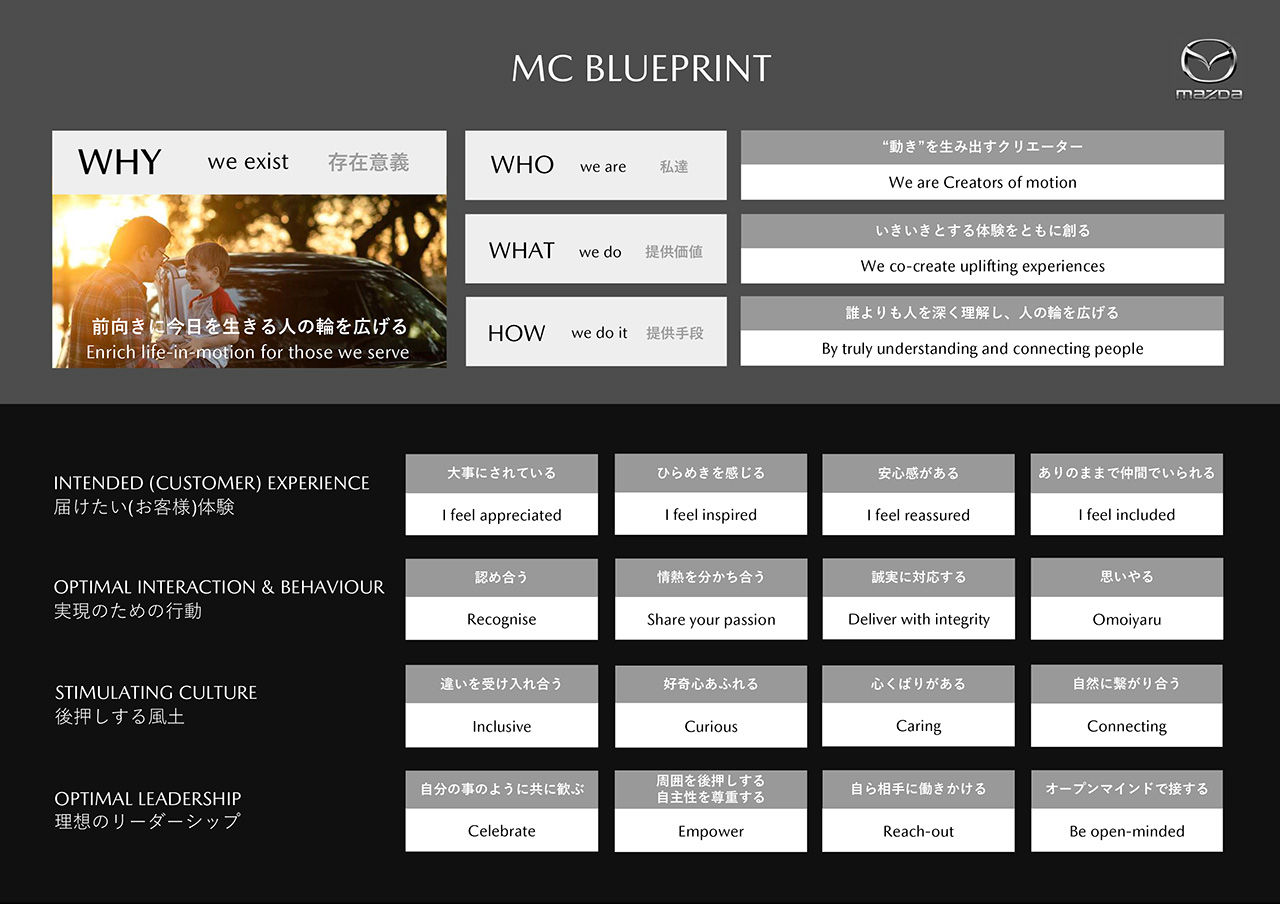
Blueprint has already delivered results at Mazda's operations in Europe and North America, where it was introduced first. Japan is the third region to adopt it. Mazda launched Blueprint initiatives in 2023 and completed the rollout in about two years, reaching all approximately 23,000 production and back-office employees at Mazda Motor Corporation. In FY March 2027, the company is holding Blueprint sessions to deepen understanding of its management philosophy, Brand Value Management, and embed it more firmly throughout the organization. Blueprint's core principle of "starting with how we want others to feel" is fundamentally aligned with the customer-centered approach of Brand Value Management. Mazda will continue these efforts until acting with consideration for customers and others becomes part of its organizational culture, connecting it to the creation of value that is distinctly Mazda.
Alongside Blueprint, Mazda provides regular opportunities for dialogue between executives and middle management. In FY March 2026, the company extended these opportunities to non-management employees through Blueprint President Sessions, which it continues to hold. The president personally facilitates the sessions and engages in direct dialogue with employees. Through open and honest discussion about the business environment and future direction of the company, Mazda aims to foster a workplace culture in which everyone, from senior management to employees, works together to sustain business growth.
Global Employee Survey
Mazda conducts its Global Employee Survey to regularly monitor employees' perceptions of their work environment and organizational culture, as well as their motivation at work. It uses the findings to improve organizational capabilities and productivity. The company shares the results of the survey with employees and provides detailed findings to top management at Mazda and its domestic and overseas group companies. It also provides senior management in each internal division and group company with results for their organization, encourages them to develop improvement plans, and implements these through PDCA cycles. The survey results also serve as one of the non-financial performance metrics in the officer remuneration system that was revised in June 2024.
Competency Evaluations
Twice a year, Mazda conducts competency evaluations to assess how each employee demonstrates their thinking, skills, abilities, values, and personality through their work and how these affect those around them. The evaluation aims to improve behavior by helping employees identify gaps between expected and actual conduct, along with their strengths and areas for development. Mazda updated the competency evaluation in FY March 2025, adding criteria that incorporate elements of Blueprint. In FY March 2026, the company extended the evaluations to executive officers, giving them regular opportunities to reflect on their own behavior and decision-making and use the insights for their professional development. Mazda's goal is for everyone, from employees to officers, to respect diversity and act in line with Brand Value Management and Blueprint.
Diversity, Equity, and Inclusion (DEI)
Mazda believes that diversity enhances creativity and underpins the sustainable growth of both companies and society. Based on this belief, it aims to foster a workplace in which all employees can realize their full potential, regardless of gender, age, nationality, disability, sexual orientation, or gender identity. DEI (Diversity, Equity, and Inclusion) initiatives are not solely for minority groups such as women, people with disabilities, foreign nationals, and LGBTQ+ people. Anyone can become ill or injured. As society ages, responsibilities such as caring for a parent or other family member can also make it difficult to work. Mazda believes that DEI is fundamentally about being a company where employees feel they can continue working with peace of mind when faced with circumstances such as these. DEI benefits all employees, laying the foundation for a workplace where everyone can work with peace of mind and feels empowered to build a brighter future. Mazda is committed to creating a virtuous cycle in which diversity fosters creativity and employee growth contributes to the sustainable development of both the company and the wider community. It will turn diversity into strength to build a future rich in creativity.
Advancing Women in the Workplace
Mazda seeks to create an environment in which women can realize their full potential and grow as leaders or specialists. The company is developing current and prospective female managers to build a more diverse management team. Specifically, it creates and implements individual development plans for female management candidates, provides career-development training for female employees and their supervisors, and offers opportunities to network with female managers at other companies.
Through these initiatives, Mazda aims to build a gender-balanced organization that creates new value and drives innovation, both of which are essential to its corporate growth and success.
FY March 2026 Results:
・Percentage of female executive officers: 10.5%
・Number of female managers: 99
Supporting Work-life Balance
Mazda has established support programs to help all employees balance work with their personal lives at every stage of life, enabling them to work with energy and enthusiasm. The company respects diverse values and lifestyles and is promoting better work-life balance to help every employee manage personal commitments alongside a fulfilling working life. Mazda complies with local laws and regulations on working hours and overtime in each country and region it operates in. It also works to reduce overtime by improving operational efficiency and addressing excessive working hours.
Key Initiatives to Support Work-Life Balance (as of March 31, 2026):
| Initiative | Overview | Start date |
|---|---|---|
| Maternal care leave | Allows pregnant employees to take leave for as long as needed when morning sickness or other health issues make it difficult to work. | August 2008 |
| Child-rearing leave | Allows employees to take five consecutive working days of leave relating to the birth or care of a child. Employees can take this leave from as early as their own or their spouse's pregnancy. | August 2008*1 |
| Postnatal childcare leave
(commonly known as postnatal paternity leave) |
Allows male employees to take up to four weeks of childcare leave within eight weeks of their child's birth.
FY March 2026 Results:
|
October 2022 |
| Childcare leave of absence | Allows employees to take a leave of absence for childcare until their child turns three. Extends beyond the statutory entitlement (leave until the child turns one) and can be taken in separate periods. | January 1991 |
| Statutory child-nursing leave | Leave to care for children who have not yet started elementary school. Employees may take up to five days of leave per year if they have one child, or 10 days if they have two or more. | January 2020 |
| Special working arrangements for employees involved in child-rearing or nursing care | Offers reduced working hours, exemptions from night work and overtime, and other arrangements for employees caring for family members or raising children through the end of sixth grade. Goes beyond the statutory provision for reduced working hours (until a child turns three) to support longer-term care of children and family members. | April 1999 |
| Statutory nursing care leave | Leave for employees caring for or assisting relatives who need care. Employees may take up to five days of leave per year for one eligible relative, or 10 days for two or more. | January 2020 |
| Nursing care leave of absence | Allows employees to take a leave of absence for up to one year to care for relatives requiring nursing care. Supports longer-term family care by offering more than the statutory entitlement of up to 93 days in total per eligible family member. | January 1992 |
| Remote work | Mazda introduced a remote work system to improve operational efficiency and work-life balance. The company expanded its existing work-from-home program in October 2020 to help prevent the spread of Covid-19, enabling employees to work from home or elsewhere without coming into the office. Many back-office employees combine office-based and remote work under a hybrid model, with no restrictions on where they work or how often they come into the office. | October 2020*1 |
| Special Warm Heart leave |
Multipurpose leave system to support employees through a range of life events and help them contribute to society. Can be taken for reasons such as:
|
August 2008*1 |
| On-site daycare facility | Mazda established Waku Waku Kids En, an on-site childcare facility for preschool-aged children, to support employees raising children. As a nurse is always on site, the facility can also care for children who are unwell. | April 2002 |
| Career development leave | Allows employees seeking to advance their careers to take up to three years of leave to attend a university or other educational institution. | October 2003 |
| Leave for employees accompanying a transferred family member | Allows employees to take leave for a specified period to accompany a spouse who is transferred for work, enabling them to resume their career at Mazda later on. | October 2003 |
| Special working arrangements to support work-life balance | Offers special working arrangements, including reduced hours, for purposes such as career development, accompanying a spouse assigned to another location, and family circumstances. These arrangements help employees improve work-life balance and develop and sustain their careers. | April 2024 |
| Benefits program to support employees engaging in volunteer activities | Employees can use points under the Flex Benefit*2 employee benefits program to claim reimbursement for volunteer expenses. | October 2001 |
| Annual paid leave | Labor and management work together to improve operational efficiency and balance workloads so that employees can plan and take paid leave on their own initiative. Leave is available in half-day increments. | Ongoing |
*1 A different program was in place before the stated start date.
*2 A flexible employee benefits program. Employees can receive subsidies for the benefits they choose, up to a predetermined points allowance.
Promoting Understanding of LGBTQ+ People and Other Sexual Minorities
Mazda aims to create a workplace where employees can be themselves without facing barriers because of their sexual orientation or gender identity. The company therefore promotes understanding of sexual and gender minorities, including LGBTQ+ people, through education and awareness-raising activities and is developing systems to prevent harassment. It will also enhance employee benefits and internal programs and foster allies (supporters) of LGBTQ+ people within the organization. Mazda is creating an environment where employees from diverse backgrounds can build their careers with peace of mind and thrive.
For more than ten years, Mazda's internal Human Rights Consultation Desk has advised employees from sexual and gender minorities and worked with their workplaces to provide ongoing support. The company also works to prevent harassment related to sexual orientation and gender identity (SOGI* harassment) through regular human rights meetings, e-learning, and other employee-focused measures. Mazda received Gold certification in the PRIDE Index in 2025, following its certification in 2024. The index was developed by work with Pride, a Japanese organization that supports the adoption and continued practice of diversity management for LGBTQ+ people and other sexual minorities.

Related Information (Sustainability Website):
* SOGI stands for sexual orientation and gender identity.
Empowering People with Disabilities
A workplace where employees with a range of disabilities can work with peace of mind and thrive promotes equity and creativity throughout the organization. Mazda is creating accessible workplaces and tailoring work to the characteristics and strengths of each individual so that people with disabilities can work with confidence. The company also provides disability awareness training for all employees and cultivates a culture of mutual respect, aiming to create an environment where people with disabilities can take the lead in their careers and grow.
Mazda's internal Physical Challenge Support Desk*1 helps employees with a range of concerns, including supporting improvements to their working environment. The company also employs two certified sign language interpreters to improve access to information for people with hearing impairments (as of March 31, 2026). Several employees with disabilities have also received the Excellent Workers with Disabilities Award from the Japan Organization for Employment of the Elderly, Persons with Disabilities and Job Seekers.
FY March 2014: Certified as an "Ai Support Company/Organization"*2
FY March 2016: Registered with the Special Support School Employment Hiroshima Support Unit*3
FY March 2022: Joined The Valuable 500
*1 Initiative conducted at Mazda Motor Corporation only.
*2 A certification recognizing companies and organizations that promote disability awareness among employees and others, including by encouraging them to read Let's Learn about and Live with People with Disabilities and providing Ai Supporter training.
*3 A program in which companies and the prefectural government collaborate to promote employment for students at special needs schools.
Target:
・Percentage of employees with disabilities: 2.7% in FY March 2027 (statutory requirement)
Supporting the Continued Contribution of Experienced Employees
Mazda has revised its post-retirement reemployment program and introduced a system that allows employees to choose their retirement age. These changes are designed to help employees of all generations make full use of their abilities and continue contributing with energy and a sense of fulfillment, regardless of age.
Health and Productivity Management
Basic Approach
The Mazda Group considers people its greatest asset and strives to create a workplace where all employees can stay physically and mentally healthy and continue working with energy and enthusiasm. It believes good health is the foundation that supports every aspect of life and that proactive efforts to maintain and improve health lead to more fulfilling work and personal lives, as well as contributing to corporate growth. Mazda supports the continued success of each of its employees by helping them adopt healthier lifestyles and habits, supporting their mental health, and creating workplaces in which employees can work safely and with peace of mind.
Health and Productivity Management Declaration
To fulfill Mazda's Purpose of "Enriching life-in-motion for those we serve," we aspire to contribute to the joy of living for customers by delivering the Joy of Driving in a way that is matched to the times.
In this quest, we recognize that our people are our most important form of capital, and that health is the foundation that supports them. By encouraging all employees to undertake self-driven activities to improve their health, we seek to contribute to more fulfilling work and personal lives and thereby achieve higher levels of productivity and creativity, the combination of which is anticipated to spur the enhancement of corporate value.
Mazda is advancing Blueprint organizational culture reform initiatives and acting in accordance with its Safety and Health Creed in order to create a workplace in which all employees can work while feeling empowered and maintaining good physical and mental health. We are also actively promoting health and productivity management to ensure that everyone is able to continue succeeding and contributing to their communities and society throughout the entirety of their lives.
My Health Initiatives
As a steward of management, I believe that it is imperative that I personally maintain good physical and mental health. For this reason, I exercise at least twice a week. This is a habit that I have kept up for more than a decade. As I age, my body may become less flexible, which could make me more prone to falling. However, I am confident that exercising today will protect the future me. I also try to make sure I get quality sleep, and value the habit of relieving stress with just a little wine. Another thing I emphasize is laughing as much as I can each day. Laughing relieves pressure while also uplifting those around you.
Being in good physical and mental condition is crucial to engaging actively with one's work. This is why I prioritize my health while also striving to provide employees with a workplace environment that allows them to feel happy and optimistic as they work together with their colleagues.
Mazda Motor Corporation
Representative Director, President and CEO
Masahiro Moro
Framework
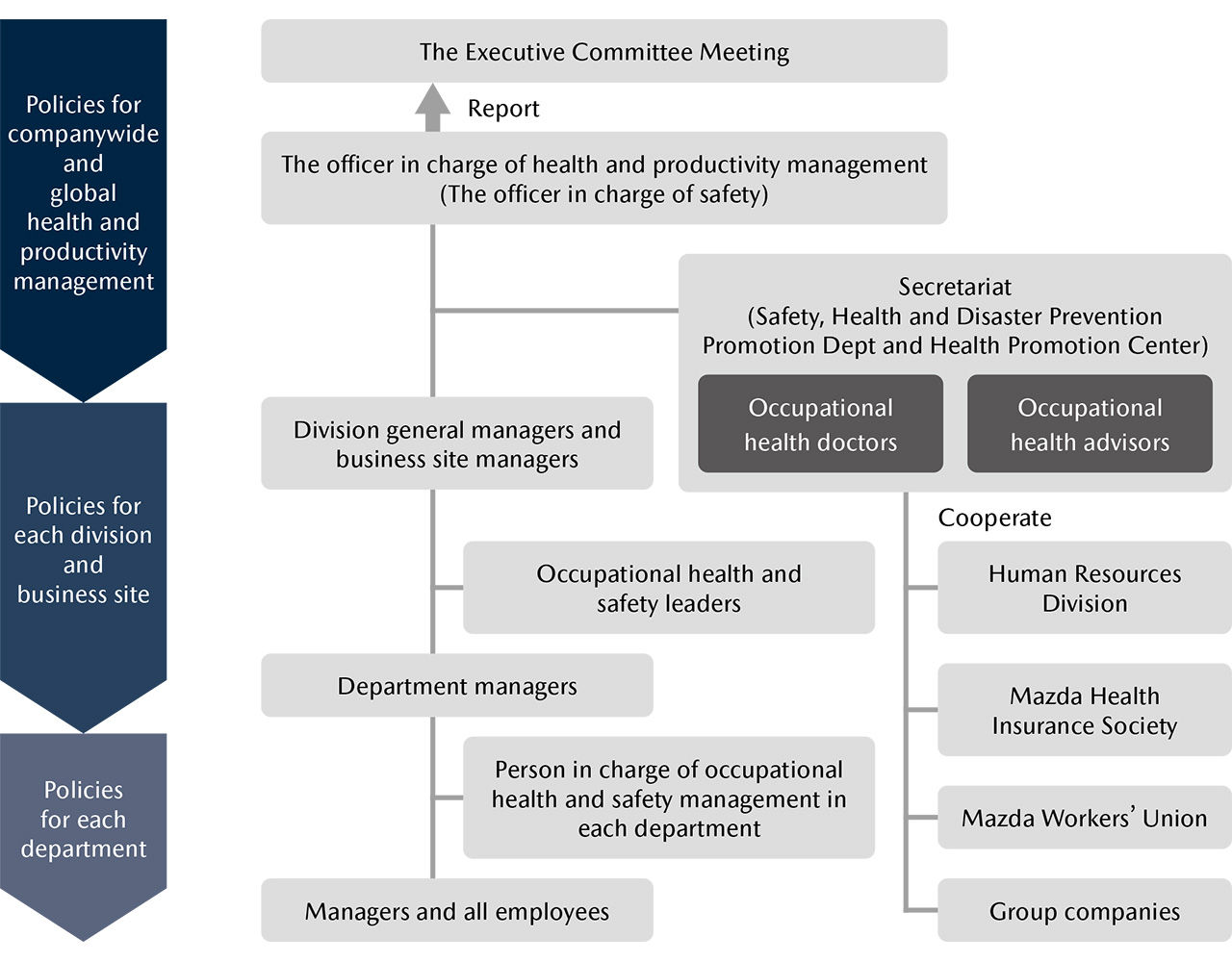
Mazda has promoted workplace safety and worked to maintain and improve employee health through its occupational health and safety management framework. The company now uses this framework to promote health and productivity management as well, recognizing that the physical and mental health of its employees are important factors in enhancing corporate value. To address increasingly complex health issues, the executive officer responsible for safety oversees health and productivity management. A secretariat centered on the Safety, Health and Disaster Prevention Department works with the Mazda Health Insurance Society, Mazda Workers Union, and group companies to identify health issues and develop, implement, and evaluate initiatives on an ongoing basis. The executive officer responsible for health and productivity management and the secretariat lead the development of companywide and global policies in this area and report them to the Executive Committee. Approved policies are shared with division and site general managers. Each division's OHS (Occupational Health and Safety) Promotion Leaders then coordinate the development of policies for each division and site. Policies to promote understanding and adoption of health and productivity management are also formulated at the department level to embed these among all employees.
Targets
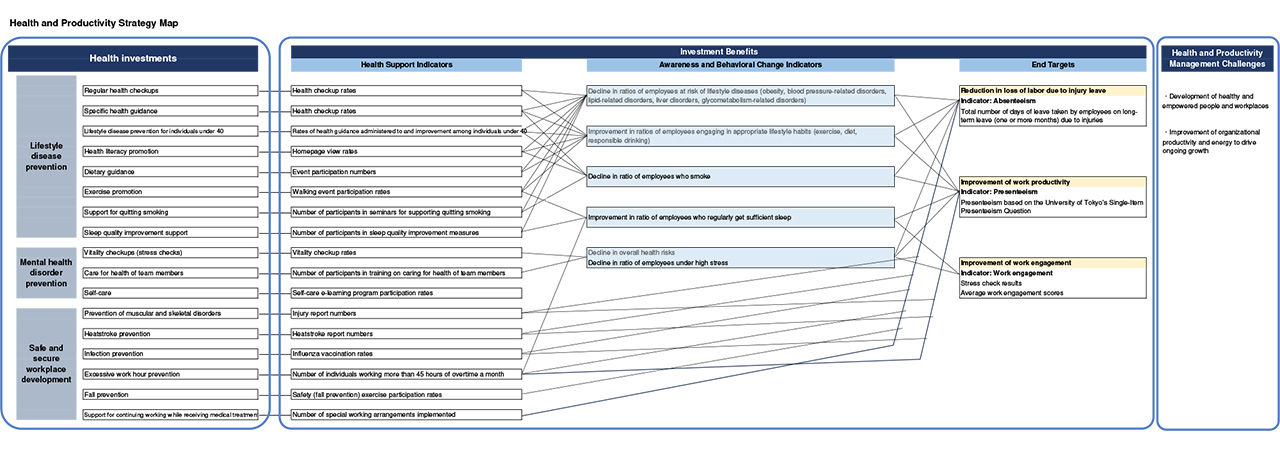
Mazda has chosen absenteeism, presenteeism, and work engagement as outcome metrics for quantifying and assessing the issues it needs to address through health and productivity management. Aiming to create a workplace where every employee can stay physically and mentally healthy and continue to work with energy and enthusiasm, the company has also set numerical targets for health checkup and stress check results.
| Unit | FY March 2026 | Target
(FY March 2028) |
||
|---|---|---|---|---|
| Absenteeism*1 | Days | 3.7 | less than 3.3 | |
| Presenteeism*2 | % | 20.3 | less than 15.0 | |
| Work engagement*3 | - | 4.9 | 5.0 or higher | |
| Health checkups | Percentage of employees undergoing regular health checkups | % | 100 | 100 |
| Percentage of employees undergoing stress checks | % | 97.4 | 98.0 or higher | |
| Lifestyle-related diseases | Percentage of employees with risk factors related to obesity | % | 29.5 | less than 25.0 |
| Percentage of employees with risk factors related to blood pressure | % | 36.9 | less than 35.0 | |
| Percentage of employees with risk factors related to lipid levels | % | 17.0 | less than 18.0 | |
| Percentage of employees with risk factors related to liver function | % | 35.1 | less than 35.0 | |
| Percentage of employees with risk factors related to glucose metabolism | % | 37.4 | less than 35.0 | |
| Lifestyle habits | Percentage of employees with healthy exercise habits | % | 39.5 | 40.0 or higher |
| Percentage of employees with healthy eating habits | % | 47.8 | 50.0 or higher | |
| Percentage of employees with appropriate drinking habits | % | 95.9 | 95.0 or higher | |
| Percentage of employees who smoke | % | 28.5 | less than 25.0 | |
| Percentage of employees who feel adequately rested after sleep | % | 58.9 | 65.0 or higher | |
| Mental health | Percentage of employees with high stress levels, as indicated in vitality checkups | % | 11.8 | less than 10.0 |
| Overall health risk score | - | 89 | less than 86 | |
*1 Absenteeism: Days absent per employee per year due to physical or mental health issues. Mazda calculates this by dividing the total number of calendar days employees spend on long-term leave (one month or longer) due to illness or injury by its total number of employees.
*2 Presenteeism: Attending work while unable to perform to one's full potential due to illness or poor health. Measured using the University of Tokyo Single-Item Presenteeism Question.
*3 Work engagement: A positive and fulfilling psychological state associated with one's work. Calculated based on answers to the two work engagement items in the New Brief Job Stress Questionnaire.
Health and Productivity Strategy Map
Health Promotion Initiatives
Mazda works to maintain and improve employee health by addressing lifestyle-related diseases and mental health issues and creating workplaces where employees can work safely and with peace of mind.
Measures to Address Lifestyle-related Diseases
Mazda encourages employees to stop smoking, walk more, and improve their diets as part of its measures*1 to manage and prevent lifestyle-related diseases, including metabolic syndrome.
- Health Checkups
Mazda provides regular health checkups*2 for all employees and more comprehensive health checkups*3 for employees aged 40 and older. Employees reaching ages 50, 54, and 58 receive additional comprehensive medical examinations that include gastric endoscopy and abdominal ultrasound. Occupational health doctors and advisors also provide personalized guidance based on checkup results to help employees improve their health.
- Support for Employees at High Risk of Health Problems
Mazda has established its own criteria for identifying high-risk persons—employees whose health checkup results indicate a high risk of heart disease or cerebrovascular diseases. Occupational health doctors interview employees who meet these criteria to assess their fitness for work, set work restrictions, review their treatment status, and direct them to seek medical care. Following this, support frameworks are in place to help reduce risk factors by providing employees with health guidance through occupational health advisors.
- Encouraging Employees to Stop Smoking
To achieve its target of a companywide smoking rate of 25% or less, Mazda holds the "Suwan Marathon," an event designed to help employees who smoke give up the habit. The company also designates each monthly payday as Mazda Smoke-Free Day—a one-day challenge that gives employees an easy, informal opportunity to go without smoking and take a first step toward giving up the habit. Mazda has already fully separated smoking and nonsmoking areas to prevent exposure to secondhand smoke.
- Encouraging Walking
To promote employee health, Mazda holds walking events twice a year through the PepUp*4 website. The company has also introduced the Eco-Walk Commuting Program, a system through which Mazda pays an allowance to employees who walk to work.
- Vege-Check® Vegetable Intake Measurement Events
Mazda runs "Vege Up Challenges," events aimed at improving eating habits, as part of Collab Health,*5 a joint initiative between the Mazda Health Insurance Society and Mazda Group companies. The company held Vege-Check®*6 vegetable intake measurement events in its cafeterias and shops to address obesity and help establish healthy eating habits.
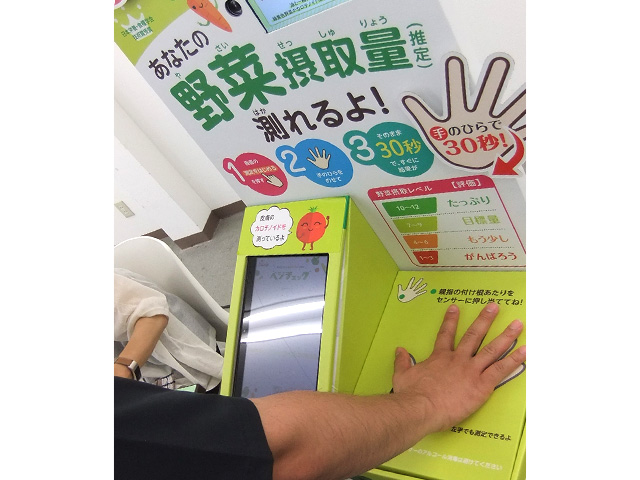
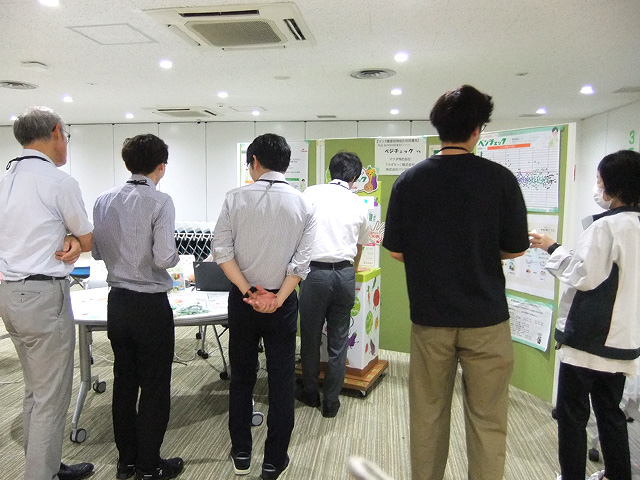
Employees measuring their vegetable intake
Helping Younger Employees Adopt Healthier Lifestyles: Health Guidance for Those Under 40
Mazda provides health guidance to employees under 40 to help prevent lifestyle-related diseases. About three months after a checkup, employees with abnormal findings related to obesity or lifestyle-related diseases are provided with information from and a one-on-one online consultation with an occupational health advisor or nurse. The program aims to reduce the risk of lifestyle-related diseases later in life by helping employees develop healthy habits in their 20s and 30s.
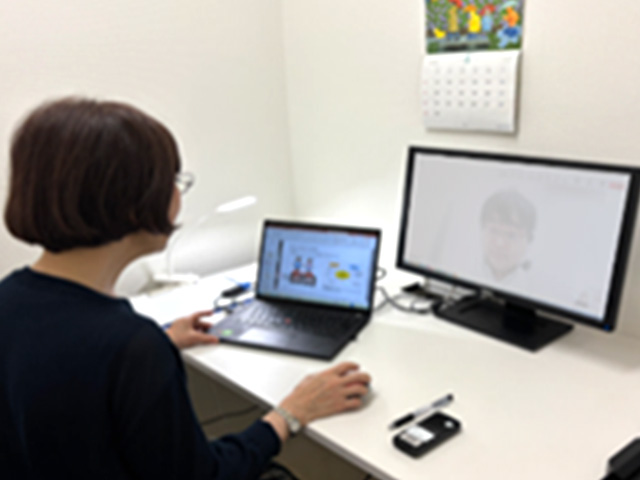
One-on-one online consultation
*1 Initiative conducted at Mazda Motor Corporation only.
*2 Health checkups include measurements of height, weight, waist circumference, and blood pressure; vision and hearing tests; a chest X-ray; blood tests; urinalysis; and an electrocardiogram.
*3 Comprehensive health checkups for people 40 and older include screening for stomach, colorectal, breast, and uterine cancer.
*4 A health and wellness website available to insured members of the Mazda Health Insurance Society and dependent spouses.
*5 The Mazda Health Insurance Society and Mazda Group companies work together to deliver disease prevention and health promotion initiatives for members efficiently and effectively, with clearly defined roles and a supportive workplace environment.
*6 A device provided by Kagome Co., Ltd. for estimating vegetable intake.
Mental Health Measures
In 2003, Mazda declared its commitment to active cooperation between labor and management to promote employee mental health and established the Mazda Warm Heart Plan. The company continues to implement a range of mental health initiatives under this plan.*1
- Consultation System
Mazda has systems in place for providing both domestic and overseas employees with consultations with occupational health doctors and advisors. The company offers phone and online health consultations for employees who cannot attend in person while on secondment in Japan or overseas.
- Education and Training
Mazda trains newly appointed managers to support employee mental health, covering topics such as active listening, assertive communication, and responding to specific situations. It also provides self-care training for employees in their second year, e-learning for all employees, and on-site training for individual workplaces.
- Support for Managers and Supervisors: "Shaberiba" Discussion Forum
Each month, Mazda holds an hour-long "Shaberiba" discussion forum to help managers and supervisors lead their teams with energy and enthusiasm. Each in-person session accommodates up to 15 participants. The program aims to help managers and supervisors respond more effectively to mental health issues. Participants share cases and everyday concerns with one another and receive practical advice from occupational health doctors and advisors on how to approach these issues and practical steps to take. The program also fosters connection between participants and occupational health staff so that participants feel comfortable asking for help and working with them when difficulties arise, rather than trying to handle problems alone.
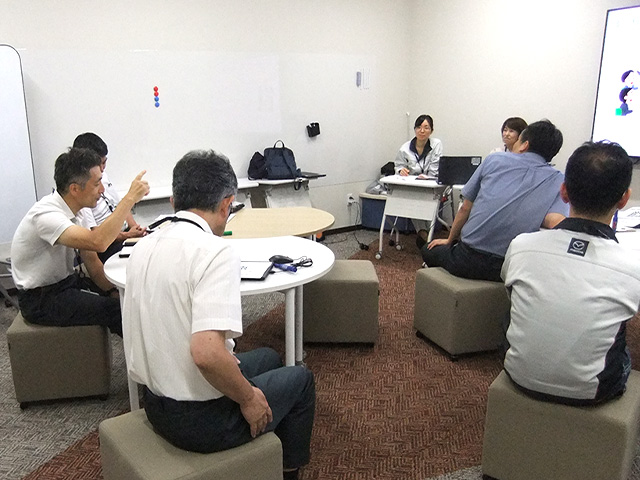
A "Shaberiba" discussion forum session
- Vitality Checkups (Stress Check System)
Since 2008, before stress checks became a legal requirement, Mazda has administered the Brief Job Stress Questionnaire provided by Japan's Ministry of Health, Labour and Welfare under the name "vitality checkups." Employees use their individual assessment results to better understand and manage their health. The company also shares organizational assessment results with each division and encourages workplace assessments involving all employees*2 to improve conditions across all workplaces. These efforts aim to prevent mental health issues and create more supportive working environments.
*1 Initiative conducted at Mazda Motor Corporation only.
*2 Everyone in the workplace helps identify areas for improvement, propose changes, and assess working conditions from a wide range of perspectives. They then make improvements through clear and simple procedures.
Creating Workplaces Where Employees Can Work Safely and With Peace of Mind
- Helping Employees Balance Work and Medical Treatment
Mazda has systems that enable employees to consult with occupational health doctors and advisors to help them balance work with ongoing medical treatment. When advanced medical care, such as cancer treatment or dialysis, requires time away from work, the company also offers special working arrangements based on the recommendation of an occupational health doctor.
- Supporting Employees Returning to Work
Mazda has expanded support for employees returning from leave due to illness or injury, including reduced working hours, trial returns to work, and follow-up meetings after they resume their duties.
- Infectious Disease Prevention
Mazda has established an infectious disease prevention team within its Health Promotion Center to address risks associated with a range of infectious diseases, including tuberculosis, measles, rubella, and Covid-19. The team routinely gathers information from inside and outside of Japan and works to raise employee awareness of infection prevention. Should an outbreak occur, the company works with public health centers and other relevant agencies to respond swiftly and appropriately. Its top priority is preventing further spread of the disease. It also promotes correct understanding of HIV/AIDS by regularly sharing information on testing and consultation services.
For employees seconded overseas and their accompanying family members, Mazda covers the cost of vaccinations against hepatitis A and other diseases as needed, based on infectious disease risks at their destination. Before departure, it also provides education on preventing malaria, hepatitis B, tuberculosis, HIV/AIDS, and other infectious diseases.
To prevent workplace outbreaks, the company also subsidizes influenza vaccinations and makes them available on-site.
- Fall Prevention Measures
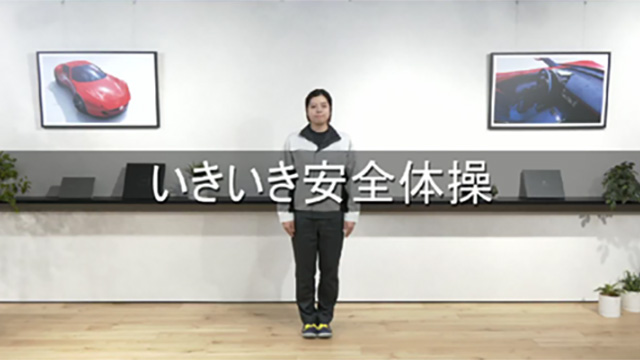
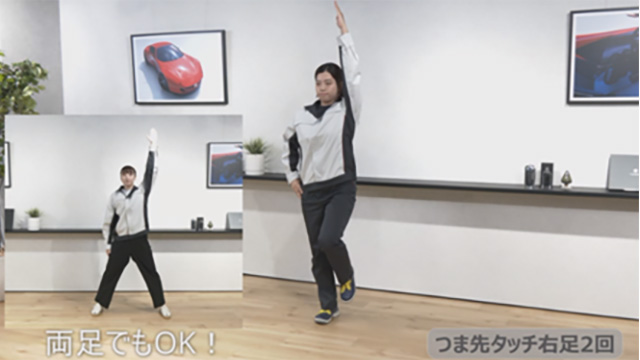
Accidents involving falls occur both at work and elsewhere among employees of all ages and in all job roles, making prevention a key concern. Mazda therefore encourages employees to take part in its Iki-Iki Safety Exercise program, developed specifically to help prevent falls. These exercises are easy for anyone to do during work breaks. They focus primarily on strengthening the legs and lower back and improving balance, flexibility, and agility. Doing the exercises consistently helps reduce the risk of falls and gives employees a refreshing break during the workday.
- Overseas Initiatives
Mazda's overseas locations also run health initiatives for employees, their families, and local communities.
Mazda provides employees seconded overseas and their accompanying families with support comparable to that available in Japan. This includes the provision of health education prior to departure, health examinations before and during assignments, and monthly health promotion information. It also offers online consultations scheduled to accommodate seconded employees' working hours. To help employees on secondment access medical care when needed, the company works with local HR staff to prepare referral letters, identify suitable healthcare providers, and make other related arrangements. In Thailand, for example, Mazda exchanges opinions with health and safety personnel at the Auto Alliance (Thailand) Co., Ltd. plant and staff from nearby hospitals to address shared challenges and promote health. It holds similar discussions with health and safety personnel at Mazda Toyota Manufacturing, U.S.A., Inc. in the United States.
Mazda Australia Pty. Ltd. supports Run for the Kids, an annual running event for the Royal Children's Hospital, to contribute to community healthcare and encourage employees to take part in volunteer activities. Funds raised through the event support vital research, infrastructure improvements, facilities, equipment, and other needs at the Royal Children's Hospital. Many Mazda Canada Inc. employees and their families take part in the Sporting Life 10K Run to help fund summer camp experiences for children with cancer and other illnesses. Mazda Motor Italia S.r.l. donated Mazda CX-5 vehicles to Peter Pan ODV, an association supporting children receiving cancer treatment at hospitals in Rome and their families. These vehicles are used by volunteers to transport children and their families to and from treatment.
- Data Analysis and Publication of "Everyone's Workplace Health Report"
Mazda's occupational health advisors are advancing centralized management and analysis of health data such as health examination results, medical questionnaire data, and stress check results. As an outcome of this work, Mazda created and published "Everyone's Workplace Health Report." The report aggregates and visualizes data for each division, including the percentage of employees with findings indicative of lifestyle-related diseases, the percentage with healthy lifestyle habits, and the results of multiple regression analysis on work engagement. This has enabled individual workplaces to identify health strengths and challenges that were previously difficult to assess. Examples include low rates of regular exercise, employees not feeling sufficiently rested after sleep, and factors contributing to improvements in work engagement. As a result, each workplace is better equipped to independently plan health measures suited to its circumstances and take action to improve workplace culture.
Enhancing the Work Environment
Mazda has operated its own hospital, Mazda Hospital, for more than 50 years to support the health, safety, and peace of mind of employees in the workplace. Through health checkups and other medical services, the hospital helps employees maintain and improve their physical and mental health.
Mazda also systematically renovates employee living and working environments. The company provides dormitories that foster an environment in which employees can grow alongside their peers from the day they join the company, parking close to workplaces, and changing and break areas. These facilities support everyday life and help create a safe environment that promotes peace of mind from the moment employees arrive at work to the moment they leave.
Specific Examples
- Hiroshima Area
Dormitory for Production Employees (scheduled to open in April 2027)
Ujinanishi Welfare Building (completed in November 2024) - Tokyo Metropolitan Area
Mazda R&D Center Tokyo (MRT), opened July 2025
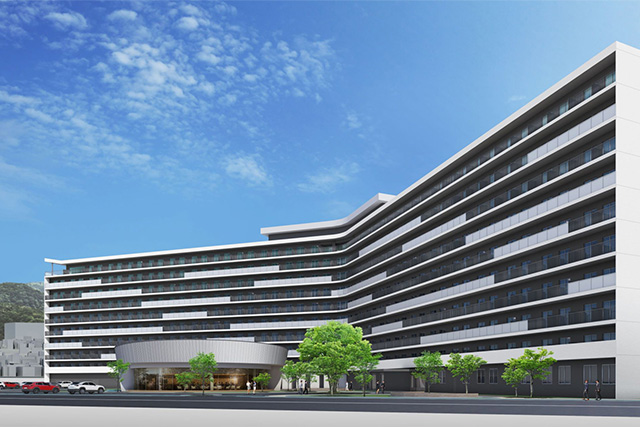
Dormitory for Production Employees
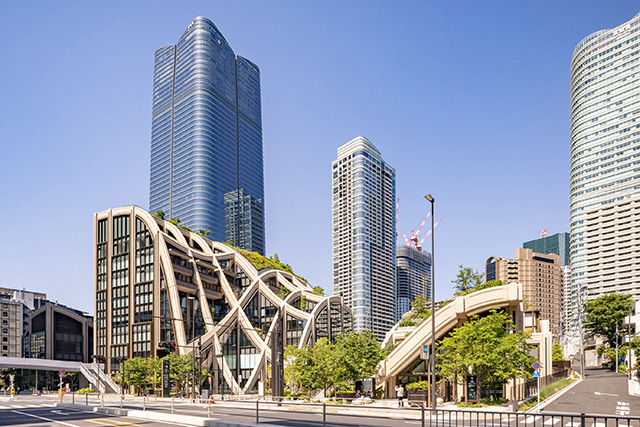
Mazda R&D Center Tokyo
Expanding Policies to Support Diverse Working Arrangements
In response to the Covid-19 pandemic, Mazda introduced a remote work policy in October 2020. By combining on-site and remote work according to the nature and responsibilities of each role, the company aims to accommodate employees' working arrangements while maximizing organizational performance and fostering high employee engagement. It will continue to expand policies and initiatives that support diverse working arrangements, including offering flexibility in when and where employees work, through options such as flextime and reduced working hours, and the removal of dress codes for back-office divisions, including Mazda R&D Center Tokyo.
Labor-management Relations
Mazda has a standing labor agreement with the Mazda Workers Union.* Together, they are building a relationship in which everyone thinks and works together as one to make Mazda a company that benefits all stakeholders. Amid rapid changes in the business environment, the company shares timely updates on the state of its business with the union through Labor-Management Council meetings. Before making operational changes that significantly affect employees, the company discusses them thoroughly with the union and then notifies employees.
Mazda has taken the same approach to establishing a labor-management consultation framework across the Mazda Group with the aim of maintaining and further strengthening positive labor-management relations.
Domestic Group Companies
Group companies in Japan regularly exchange information and engage in active discussion with the Federation of All Mazda Workers Unions.
Overseas Group Companies
Group companies outside Japan have established frameworks for appropriate labor-management consultations that reflect the labor practices of their country and/or region.
FY March 2026 Results:
- Number of collective labor disputes in the Mazda Group: 0
* Approximately 90% of Mazda employees belong to the Mazda Workers Union.
Labor-management Dialogue*
As part of its Blueprint organizational culture reform initiatives, Mazda actively creates opportunities for dialogue between management and members of the Mazda Workers Union with the aim of fostering a culture of open communication in the workplace. The company believes psychological safety grows when employees and management consistently respect one another and work together to address shared challenges. Going forward, Mazda will continue to deepen this dialogue to increase trust within the workplace and build an even better organization.
* Initiative conducted at Mazda Motor Corporation only.