Search

MESSAGE FROM THE CTO


Putting Brand Value Management into Practice in Our Vehicle Development and Continuing to Enhance the Joy of Driving Through a Human-centric Approach


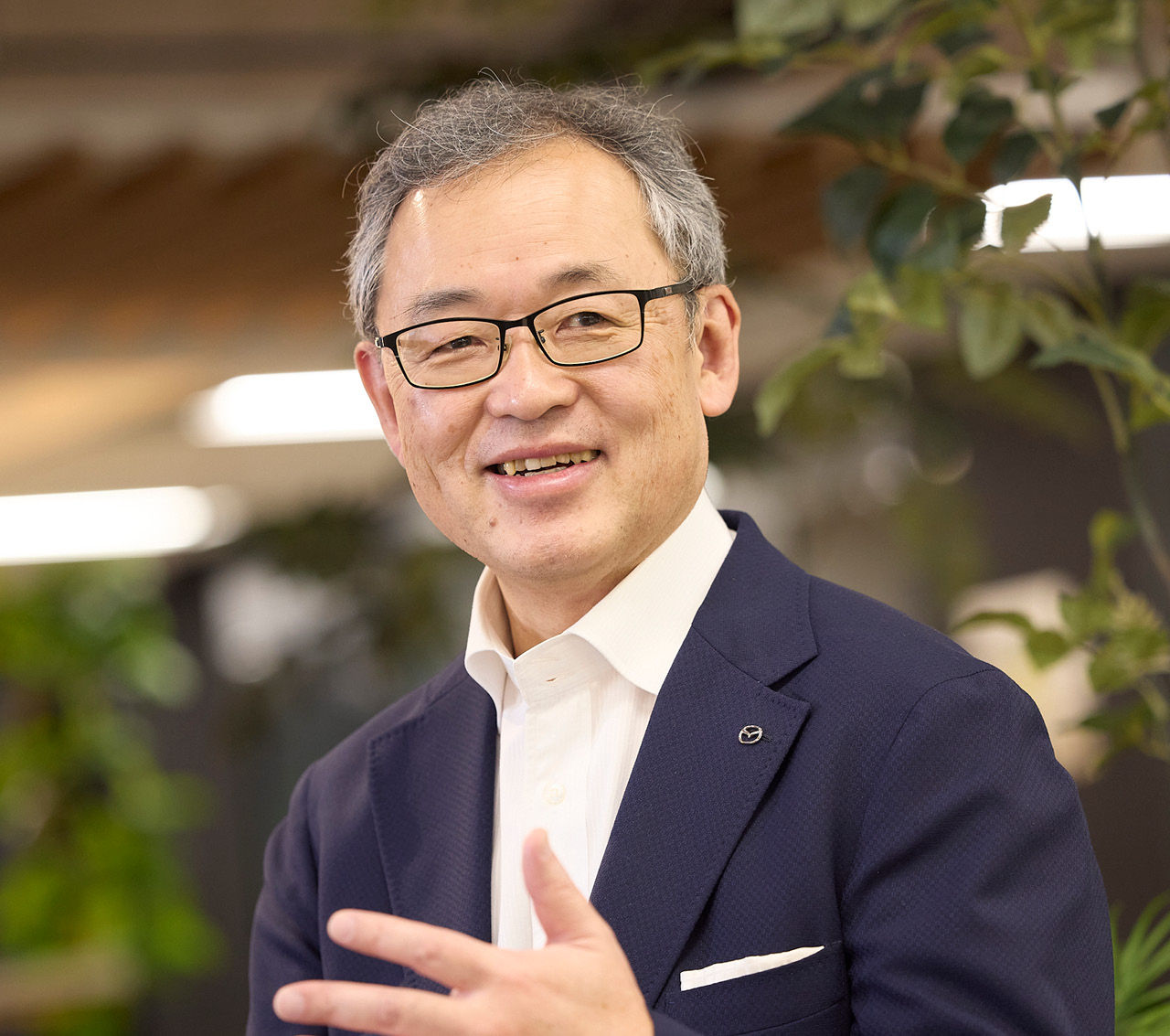
Ryuichi Umeshita

Director, Corporate Leadership Executive Officer,

CTO (Chief Technology Officer)


Highlights


1.  The value of the Joy of Driving comes from the moving experience of controlling a vehicle at will


2.  Human-centric vehicle development takes intuitive driving—the sense of oneness between car and driver—to the next level


3.  Practicing Brand Value Management by deepening our understanding of what our customers value and weaving these insights into our products and processes


What is Mazda’s vision for vehicle development?

As the world undergoes profound change, we are in the process of becoming a brand focused on creating value that is distinctly Mazda. The Joy of Driving is value that is, and always will be, distinctly Mazda. At a time when genuine human connection is becoming increasingly scarce, I believe the Joy of Driving—the moving experience of controlling a vehicle at will—can truly enrich and uplift people’s lives.


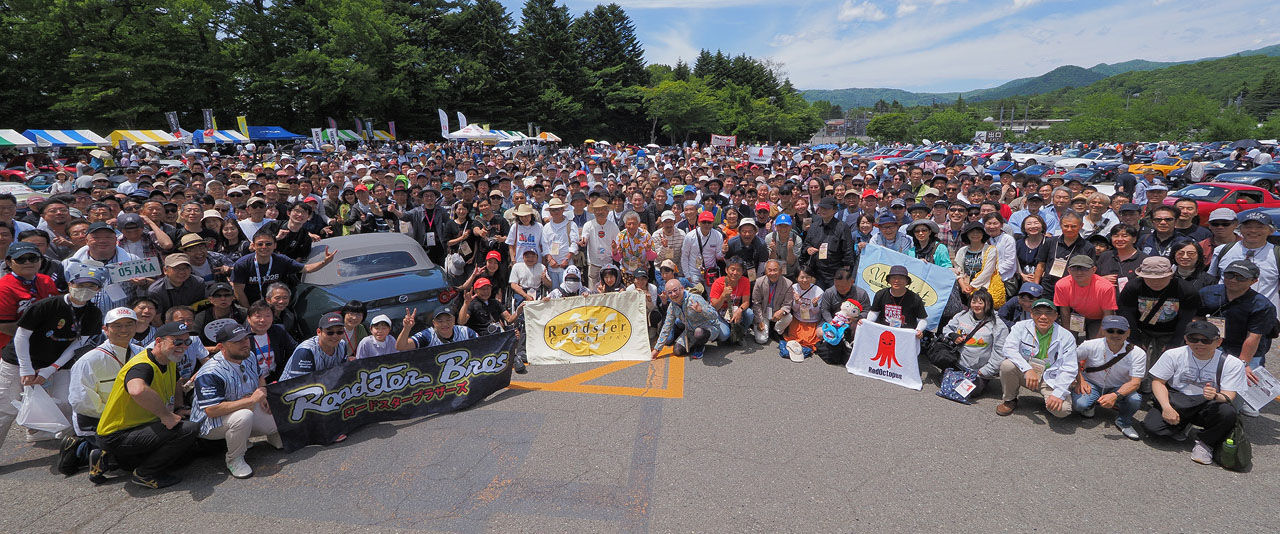
At Mazda, we have a product that embodies the Joy of Driving: the Mazda MX-5. Communities that connect MX-5 owners have formed around the world, fostering a growing circle of people who live life to the fullest and enjoy rich, fulfilling experiences together. Since its launch in 1989, we have sold approximately 1.27 million MX-5s worldwide. In Japan, we sold more than 10,000 units from January through December 2025, supported by an increase in younger customers. This was the first time the MX-5 reached this level of sales since 1998. It is clear to see that the Joy of Driving resonates with a broad range of customers around the world.


Gathering of MX-5 (Roadster in Japan) owners and fans in Karuizawa, Japan

Gathering of MX-5 (Roadster in Japan) owners and fans in Karuizawa, Japan


What value do we offer customers through our products and technologies?

To deliver the Joy of Driving, we will continue refining qualities such as uplifting drive and captivating design.


At Mazda, we look beyond vehicle specifications to focus on the human experience: how our cars make people feel. We pioneered research based on Kansei engineering, which evolved into the human-centric approach that underpins all our vehicle development. This human-centric approach has led us to develop driving positions and pedal layouts that promote a natural posture, reduce fatigue, and make the vehicle easier to operate, as well as proprietary control technologies that produce natural vehicle behavior. Our latest research extends into neuroscience, enabling us to quantify and simulate human movement and sensory perception. By taking intuitive driving—the sense of oneness between car and driver—to a new level, we will offer our customers vehicles that deliver truly uplifting drive.


Design is another one of our unique strengths, and we will continue to refine it strategically. Our own research shows that design is one reason customers choose a Mazda, and our Kodo Design has also helped establish a strong association between the Mazda brand and beautiful design. Even in this digital age, we will continue to preserve the timeless value of forms shaped by human hands and infused with a sense of vitality. For our next generation of vehicles, we will follow the “Neo Authentic” design theme to pursue even more beautiful designs while expanding our breadth of expression to lead future design trends.


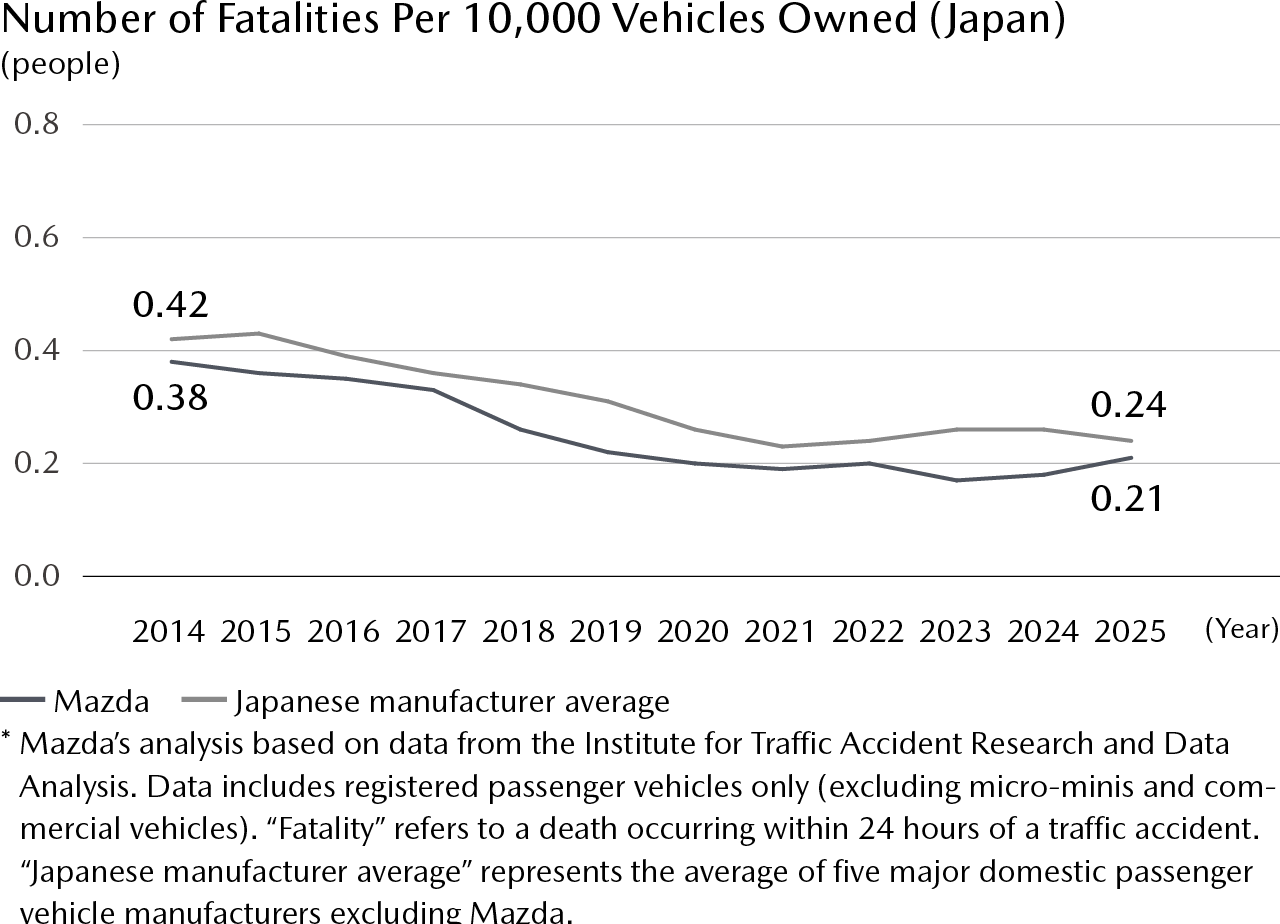
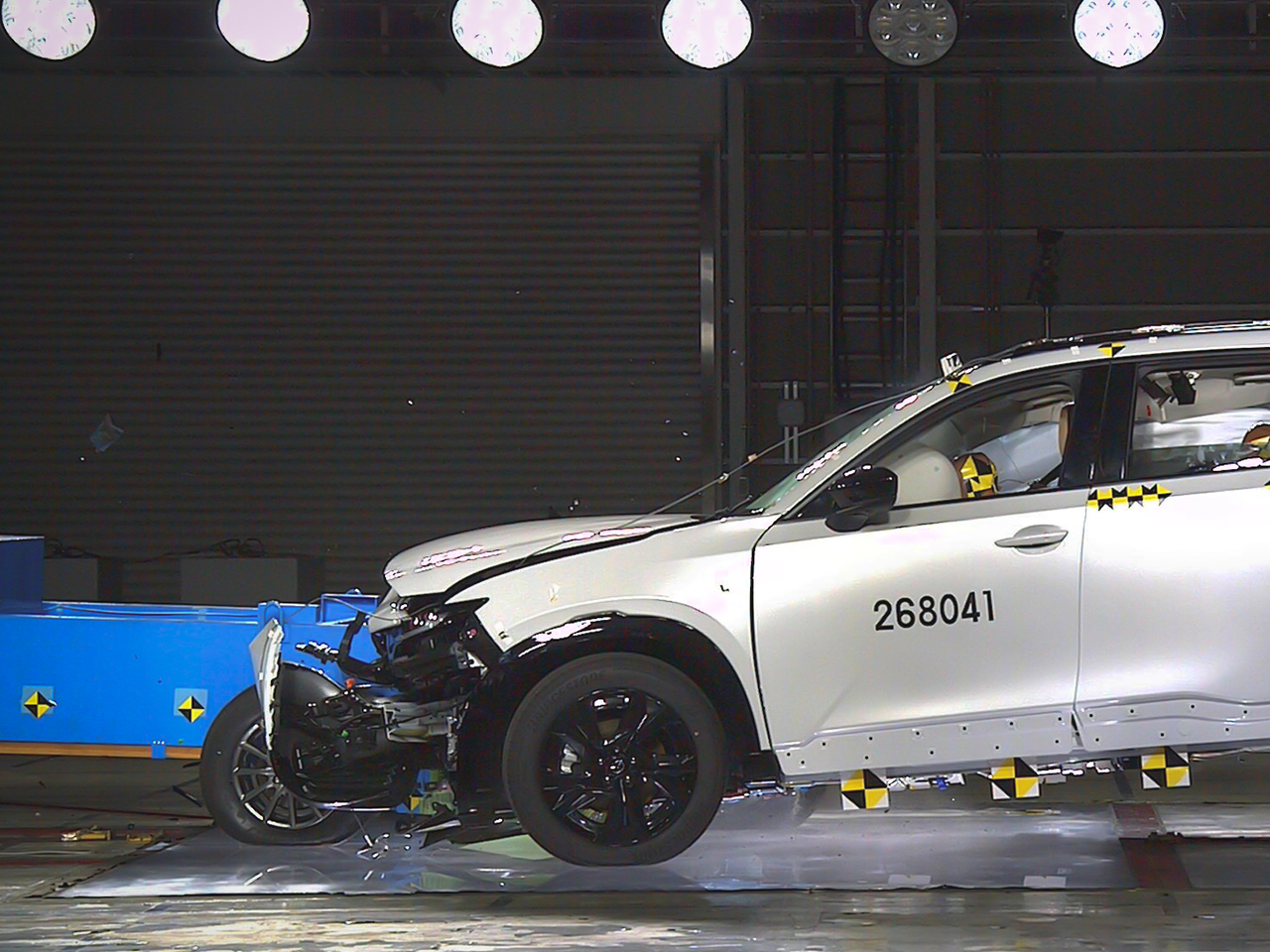
We are also continuing to enhance the safety and peace of mind technologies that enable customers to enjoy the Joy of Driving with complete confidence. All Mazda vehicles deliver excellent safety performance and have earned high ratings in countries around the world. In the United States, nine of our models received the highest rating from the Insurance Institute for Highway Safety (IIHS)—more than any other automaker. In Japan, fatalities in traffic accidents involving Mazda vehicles have fallen to one of the lowest levels in the industry, with fatalities per 10,000 vehicles below the average for Japanese automakers. As stated in our materiality metrics and targets, we aim to eliminate fatal accidents caused by our new vehicles where automotive technology can provide effective countermeasures by around 2040.

Number of Fatalities Per 10,000 Vehicles Owned (Japan)

How does Mazda plan to respond to greater advances in vehicle intelligence?

We will remain true to our human-centric philosophy in vehicle intelligence and software-defined vehicles. We see vehicle intelligence and software-defined vehicles as more than the development of autonomous driving technologies and features. From our human-centric perspective, they represent an evolution in the relationship between people and their vehicles. We recognized early on that software-defined vehicles would make it possible to integrate the control and continuous enhancement of a wide range of functions, including safety equipment, the cockpit environment, connectivity, and driving dynamics. Accordingly, we established a dedicated systems integration and control division around a decade ago and have since taken a phased, systematic approach to steadily strengthening our software development structure. Today, we are using tools such as MBD* and AI alongside Mazda Monozukuri Innovation 2.0 to accelerate technological development. Furthermore, under our Lean Asset and Partnership Strategy, we are concentrating business resources on areas of unique value that we must refine ourselves while collaborating with like-minded partners in areas such as electrification and software.


The All-New Mazda CX-5, announced in Japan in May 2026, features Mazda E/E Architecture+, which we developed in collaboration with Toyota Motor Corporation and other partners. I believe this architecture brings our technologies and human-centric philosophy together, representing our first step toward software-defined vehicles. We will provide customers with a more comfortable driving experience and greater peace of mind through features such as the redesigned human-machine interface (HMI) and enhanced advanced proactive safety features included on the All-New Mazda CX-5. By combining our partners’ technological capabilities with our integration expertise, we will continue to pursue the Joy of Driving and value that is distinctly Mazda even amidst advances in vehicle intelligence.

* Model-based development is a method for improving development efficiency by creating computer models of development targets—such as vehicles, control systems, occupants, and driving environments—and conducting extensive simulations


How will you bring this customer value to life?

Brand Value Management is at the heart of the type of vehicle development we aim to achieve. In order to put Brand Value Management into practice in development, we will build a dramatically deeper understanding of our customers’ values and weave these insights into our products and processes. To achieve this, we are transforming our development process so that we can co-create alongside partners in different markets from the earliest stages of development. Taking an approach that we call “Mazda Ryohin-renka”—maximizing customer value per unit of cost—we will continue to design cars that further enhance customer satisfaction while optimizing costs.


We have also made significant changes to our organizational structure. In April 2026, we established the KURUMA Development Division. Previously, product development spanned multiple divisions responsible for areas such as the vehicle and powertrain.

By bringing these functions together, the new division can take a whole-vehicle approach and coordinate and discuss how to create customer value with greater agility and flexibility. It has end-to-end responsibility for product development, from the early stages of product planning through to development for mass production, and the department name was chosen to communicate our aspiration for it to be the structure within Mazda that brings our cars to life.

We are also advancing digital and AI transformation and eliminating unnecessary work. At the same time, we are accelerating vehicle and technology development by vigorously advancing Mazda Monozukuri Innovation 2.0, which combines stronger model-based development—one of our strengths—with AI.


What is Mazda’s strategy for technological development?

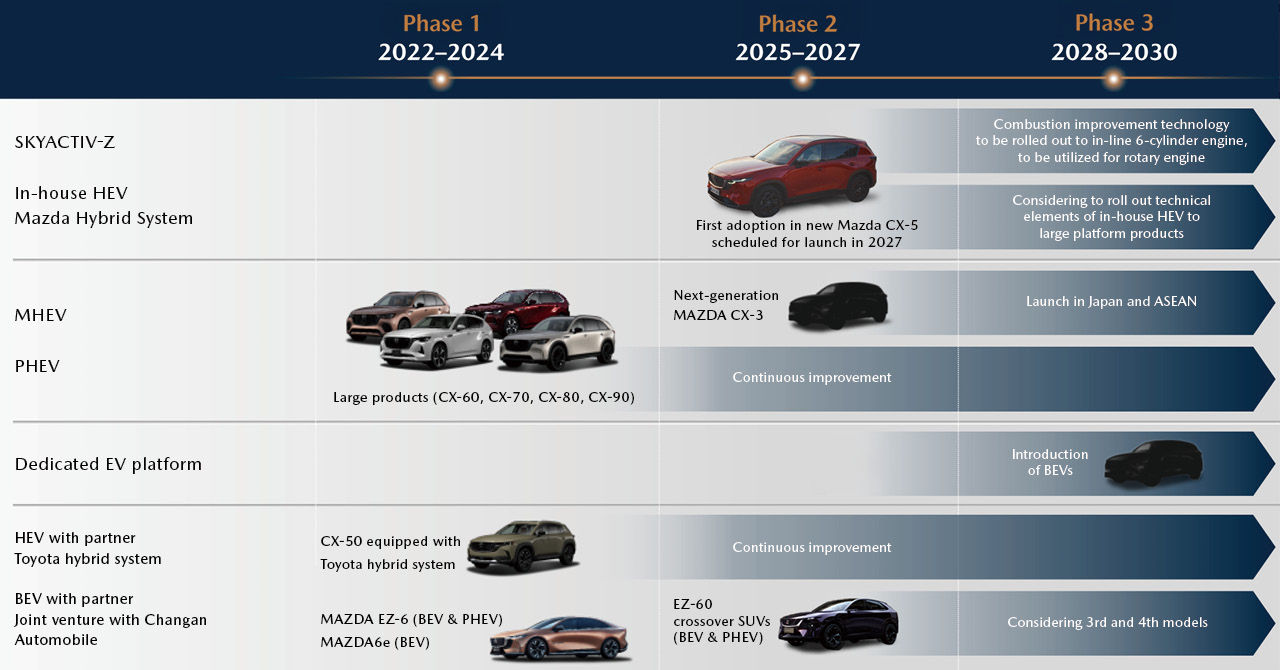
Guided by our Sustainable Zoom-Zoom Declaration, we see it as our mission to help create a beautiful planet and enrich society, and we are committed to uplifting people through the value of cars. Regarding electrification, we will continue to offer vehicles with a wide range of powertrains under our Multi-solution Strategy, while viewing the period through 2030 as the dawn of electrification and continuing to advance development of electrification technologies in a deliberate, systematic manner. Given the slower rollout of charging infrastructure in many markets, we believe high-efficiency ICEs will remain an important option, as they are essential components of HEVs and PHEVs. In terms of BEVs, we are leveraging partnerships to launch products quickly in markets where there is a need for electrified vehicles, an example of this being the Mazda EZ-6 (Mazda6e in markets other than China), which was developed in collaboration with Chongqing Changan Automobile Co., Ltd. (Changan Automobile) and won World Car Design of the Year 2026. Going forward, we are also working toward the coming era of full-scale electrification and plan to offer customers products infused with our unique craftsmanship, including design and drive feel that are distinctly Mazda. We are concentrating our business resources on the development of proprietary BEVs by making disciplined choices and carefully allocating resources in line with our Lean Asset and Partnership Strategy. Extensive collaboration and technology sharing means we expect to reduce development hours by 50% and development investment by 40% compared with a conventional approach, and are aiming to further improve management efficiency and achieve sustainable growth over the long term.


What progress and achievements has Mazda made in terms of its products and technologies, and what should we expect to see in the near future?

The All-New CX-5 delivers a dramatic increase in customer value by further enhancing the Joy of Driving and substantially improving usability and comfort. Customers have told us, for example, that “The rear seats are roomier and more comfortable” and “The wider door openings make it much easier to help children in and out of car seats.” As a product that will drive our growth this fiscal year and embody the earnings model we envisioned in our Management Policy up to 2030, we are committed to ensuring a successful launch for the All-New CX-5 so that it can return stable profits throughout its life cycle.


In 2027, we plan to introduce the next-generation Mazda CX-3, produced at our manufacturing base in Thailand, to the Japanese and ASEAN markets. As a new-generation entry model replacing the Mazda2, the next-gen CX-3 will take our new value to a broader customer base.


We also plan to introduce an HEV version of the CX-5 in 2027. This model will pair the Skyactiv-Z gasoline engine, equipped with combustion technology that dramatically improves efficiency, with our proprietary hybrid system to deliver an HEV driving experience that is distinctly Mazda. It will offer customers excellent fuel economy together with uplifting drive: quiet and smooth in the city, powerful on the highway, and rhythmic on winding roads.


We will also expand our HEV lineup to four models while further strengthening the competitiveness of our Large products to meet market needs. We will progressively introduce four electrified vehicles developed in partnership with Changan Automobile, including models that have already launched, in markets where electrification is advancing rapidly such as China and Europe.


Electrification road map

Electrification road map

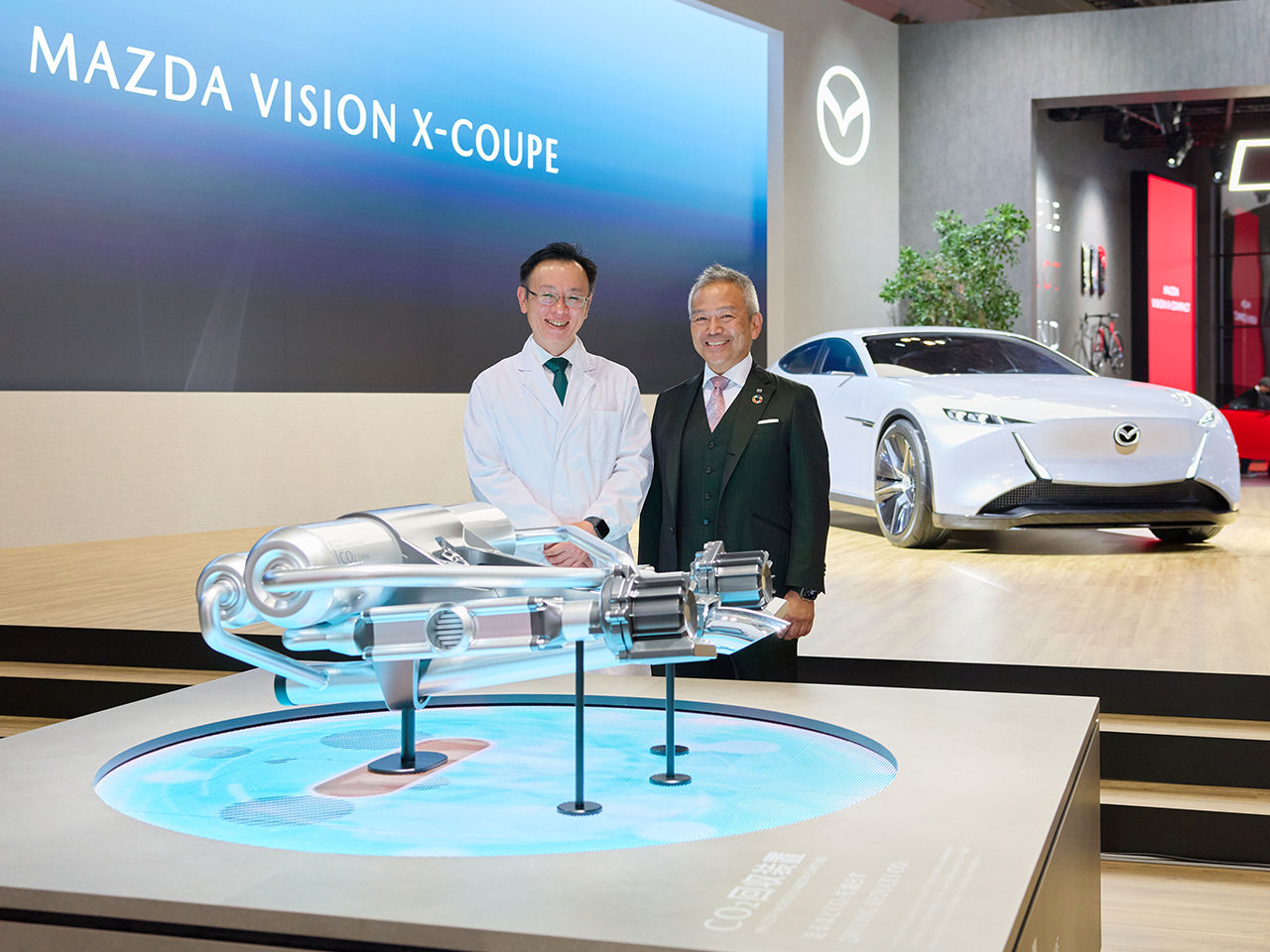
Looking toward the future we envision for Mazda in 2035, we are also making steady progress with research, development, and pilot programs for technologies such as carbon neutral fuel derived from microalgae and CO2 capture technologies. We believe that “the Joy of Driving fuels a sustainable tomorrow” and we aim to ultimately move beyond carbon neutrality to carbon negativity.


The most important factor in delivering value and products to our customers is the strength of the people who work side by side to make it happen. Through Blueprint organizational culture reform initiatives, I am seeing continued improvements in both the management of our development structures and the way our teams on the factory floor are working. I promise to lead this transformation through close, two-way communication, give shape to Mazda’s future alongside each and every person involved, and continue providing our customers with value that takes the world by surprise.