In the fifth installment, we share the story of Yuto Yabata. He puts how people feel during a drive at the heart of his work in car engineering, paying close attention to how sounds and vibrations are experienced inside a car.
2026.10.21
A Young Mazda Employee, a Mazda MX-5, and a Mazda RX-7: Cars That Open Up Your World and Make Every Day Fun
-Creating a Car-Loving Company with Car-Loving Employees Vol.5-
The younger generation may be falling out of love with cars, but at Mazda, there are young people who confidently go against that trend. In this series, we meet these car-loving employees and hear their unique stories.
The Yellow Car at the Racetrack
Yabata grew up in Ibaraki. His first encounter with cars came at a racetrack, where his car-loving father took him.
"I enjoyed looking at the cars parked outside more than watching the races. The one that stuck with me most was a yellow Mazda RX-7."
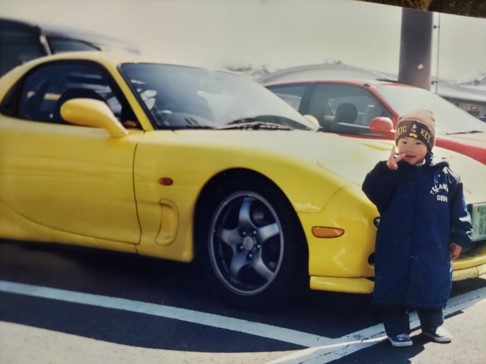
On weekends, Yabata's father took him to racetracks around the Kanto region. Here he is in front of the yellow car he loved so much.
What caught his eye was not the fast cars on the track. It was the cars parked in the lot. The most memorable of those, the yellow RX-7, sat so confidently in the lot that it seemed to look right back at him. Even as a young boy, he thought it was cool.
For Yabata, the fun did not end at the track. Every time they went, his father bought him a model car, and he would line them up in a display cabinet by the front door and gaze at them. Gradually, cars became something special to him, something that moved him just to look at.
Remembering His Love of Cars
When Yabata started elementary school, he took up baseball and devoted himself to it all the way through college. Cars drifted out of his life for a while. What brought them back was getting his driver's license in college.
To practice, he drove his mother's German compact car at night. Somewhere along the way, the longing he had felt for the cars at the racetrack returned, along with the habit of noticing interesting cars as they drove by.
"Sitting behind the wheel, I suddenly remembered how much I used to love cars."
Riding with friends in college also reminded him what makes cars so appealing.
"When you're all headed to the same place, conversation comes naturally, and it's okay if it trails off or the topic changes. Maybe that's why people can be a little more open in a car."
For Yabata, a car was more than a way to get around. It connected him with people and opened up his world, and its appeal only grew.
Building Cars For People To Drive
Having realized in college how much he loved cars, Yabata set his sights on the auto industry. What left the strongest impression was an idea he heard at a Mazda information session: "Cars are driven by people."
"During my job search, the car industry seemed to see cars as a way of getting people from A to B quickly and easily. But Mazda's message felt different. It was about building cars for people to drive."
With autonomous driving and new technologies in the spotlight, Mazda's approach struck a chord with Yabata, who loved the act of driving itself. Mazda builds cars for people who take the wheel, cars that respond to what the driver intends. He wanted to work for a company that thinks beyond efficient travel, one that considers how drivers and passengers feel and how they spend their time in the car. It was that desire that brought him to Mazda.
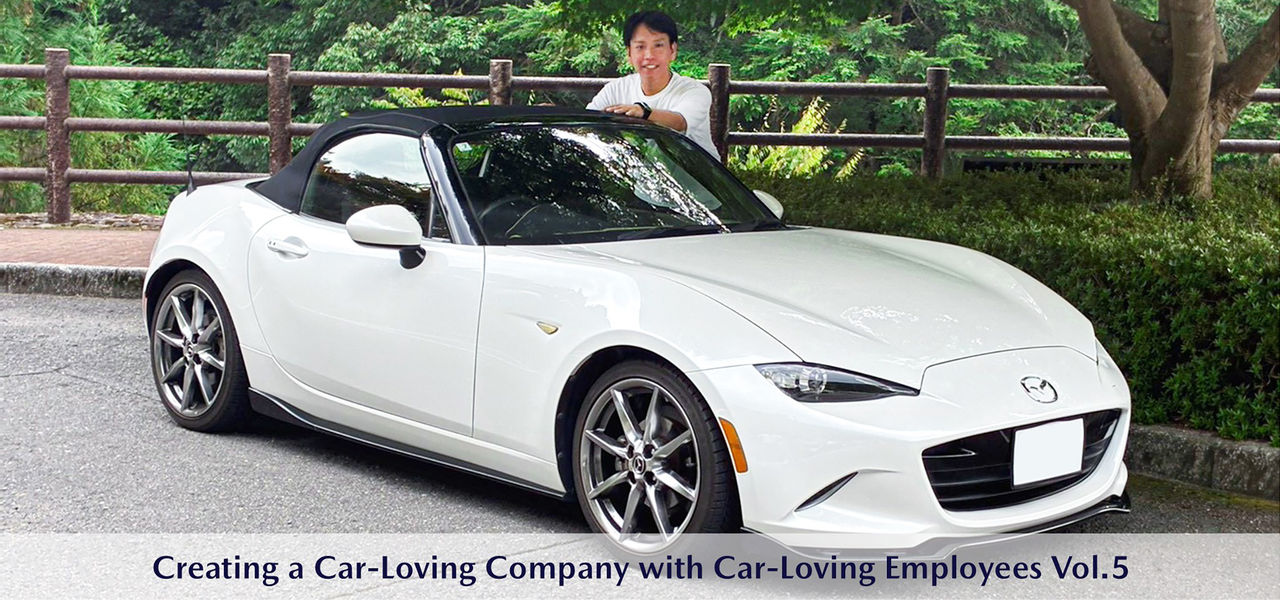
In his first year at Mazda, Yabata bought his first car. He wanted a light car with a manual transmission, one that felt like an extension of his own hands and feet. He chose the Mazda MX-5. It turned out to be more than just a car he loved. It opened up new ways for him to enjoy cars.
It began shortly after the car was delivered, when a colleague invited him to take it out on a racetrack.
"It was eye-opening to learn I could drive on the track myself. Racetracks always felt out of reach to me, so I'm really grateful to the colleague who invited me."
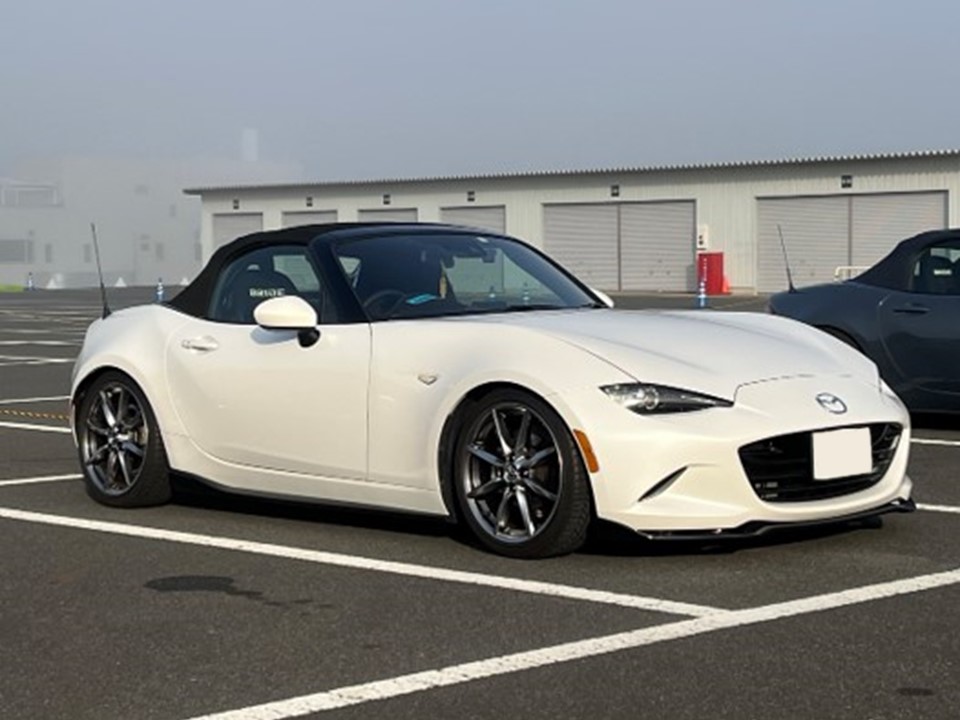
Yabata's MX-5, which he customized for the track. As a boy, he came to the racetrack with his father and watched the course from the stands. Now, thanks to this car, he now sits behind the wheel and watches the stands from the racetrack.
Once Yabata discovered the joy of driving on a track, colleagues invited him to join endurance races as well.
"The team started with about five people and has grown to nine. Some of them were people I'd rarely met at work, but through racing we've become friends."
One of the things Yabata enjoys about working at Mazda is that so many people around him love cars. Colleagues invite him to the track, and there is always someone to talk cars with. Some might worry that turning a passion into a job will change how they see it, but around Yabata, there are many people who have come to love cars even more since joining Mazda.
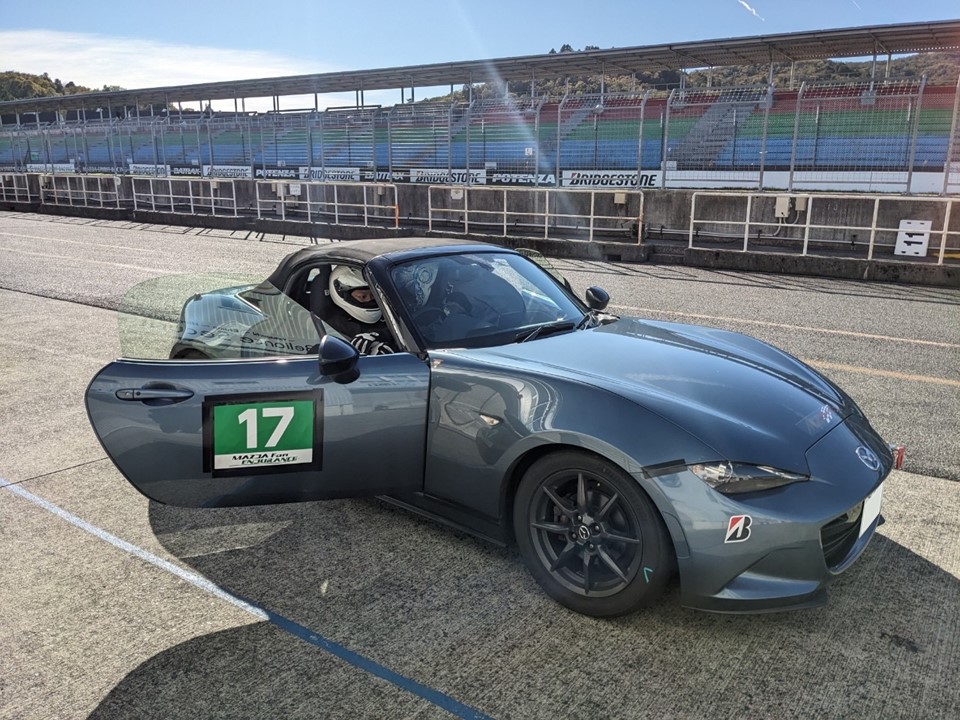
Working with car parts every day has changed how he sees racing. At the track, he now notices things he never used to, like how a part is built or how it comes off when it needs replacing.
For Yabata, loving cars and working with them are not separate ideas. Each feeds into the other and draws him in deeper. Which is another thing he enjoys about working at Mazda.
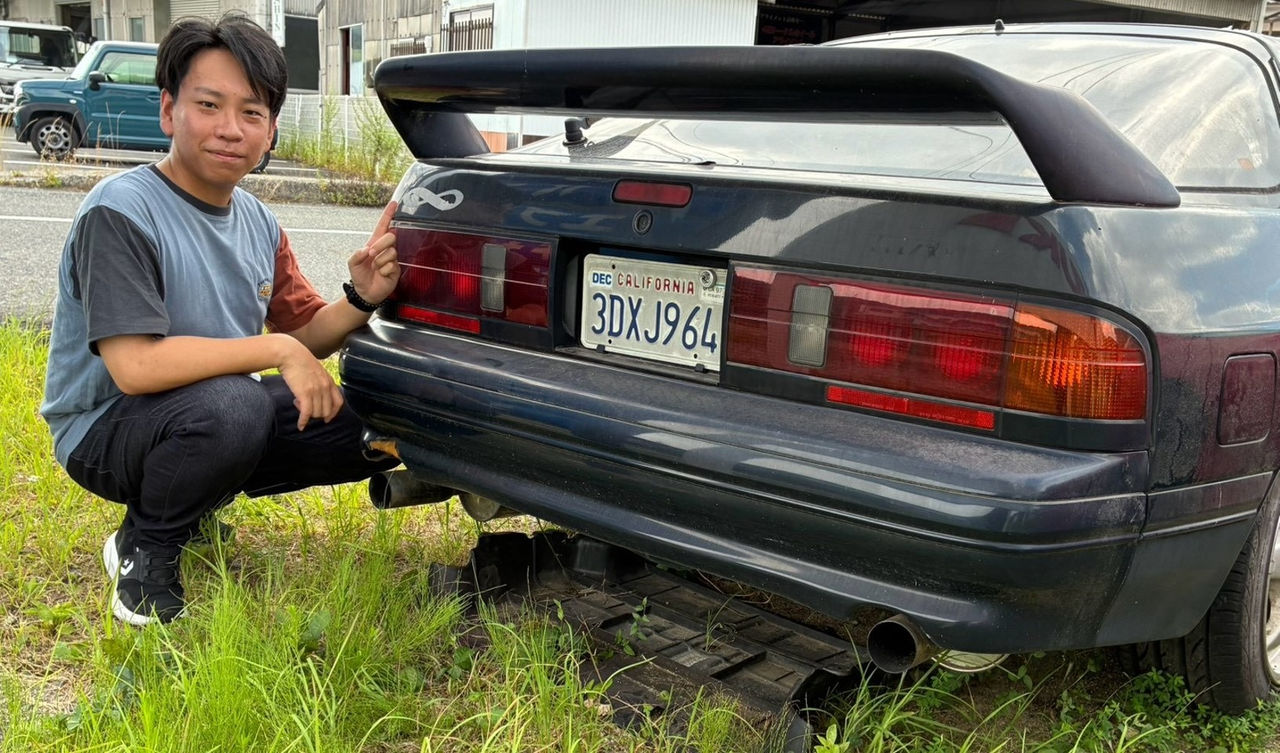
Two years ago, Yabata finally became the owner of his dream car when he bought a RX-7 his colleague had sitting unused. He is restoring the car and says that what he looks forward to most is driving it around town.
Shaping How People Experience the Ride
Yabata now works on noise, vibration and harshness (NVH) development, the area that covers the sounds and vibrations people experience inside the car.
"It may surprise people, but the goal is not simply to make the sounds inside the car quieter. We think about how sound reaches the occupants, and how they feel about it. For example, if you reduce one sound too much, another sound you never noticed before can start to stand out. The measurements say the car is quiet, but the people actually riding in it are still bothered by a sound. That's not unusual in vehicle development."
His work echoes the times he spent talking with friends in the car in college, and his night drives behind the wheel. What matters is not specs but how people spend their time in the car and how it makes them feel. Yabata is a car enthusiast before he is an engineer, and that is why he cares so much about how the person in the car feels.
He studies what sounds reach the people in the car, where they come from, and how they change as speed increases. By carefully adjusting each one, he helps create a cabin where occupants feel at ease, are less tired after long rides, and can enjoy conversation and music naturally.
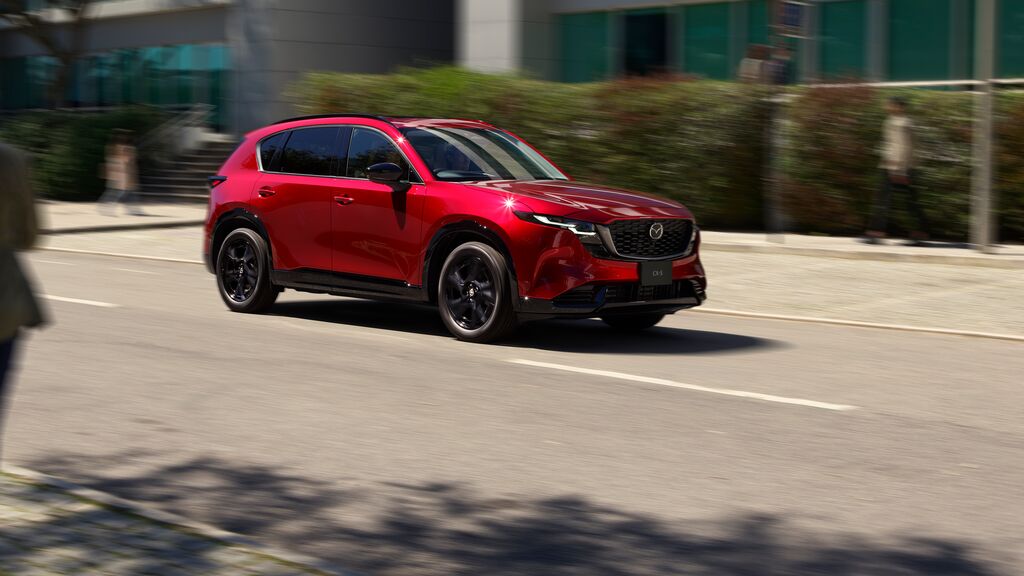
With the all-new Mazda CX-5, the team carefully tuned the balance of sounds in the cabin and even reexamined the airflow around the car, reducing unwanted noise and creating a cabin where conversation and music are easy to enjoy, even on the highway.
"If there's one thing that runs through all of it, it is that we put people at the center. People come first."
Pursuing high performance is a given for an automaker. But Yabata also considers how that performance is felt and what kind of travel experience occupants will remember. The idea that moved him before he joined the company, that cars support people's lives, has become more than a principle. It guides his work every day.
"A car is more than just a means of transportation."
As a boy, he saw a single yellow RX-7 at the racetrack. That car never carried him anywhere. But his admiration for it led to drives with friends, to the joy of driving on the track, and now to work creating drive experiences that move people. For Yabata, a car is more than something that carries people to a destination. It is something that takes people to new encounters, new memories and new experiences.
Looking ahead, Yabata says he wants to keep building cars that move people, and to keep driving cars like that himself.
"For everyone in the car to enjoy the ride, safety and comfort matter too. My goal is to pursue these qualities without losing sight of how people feel and what they experience, and to build cars that turn simply getting from A to B into something worth remembering. That's what I'm working toward."