Search

MESSAGE FROM THE CEO OF THE U.S. MARKET


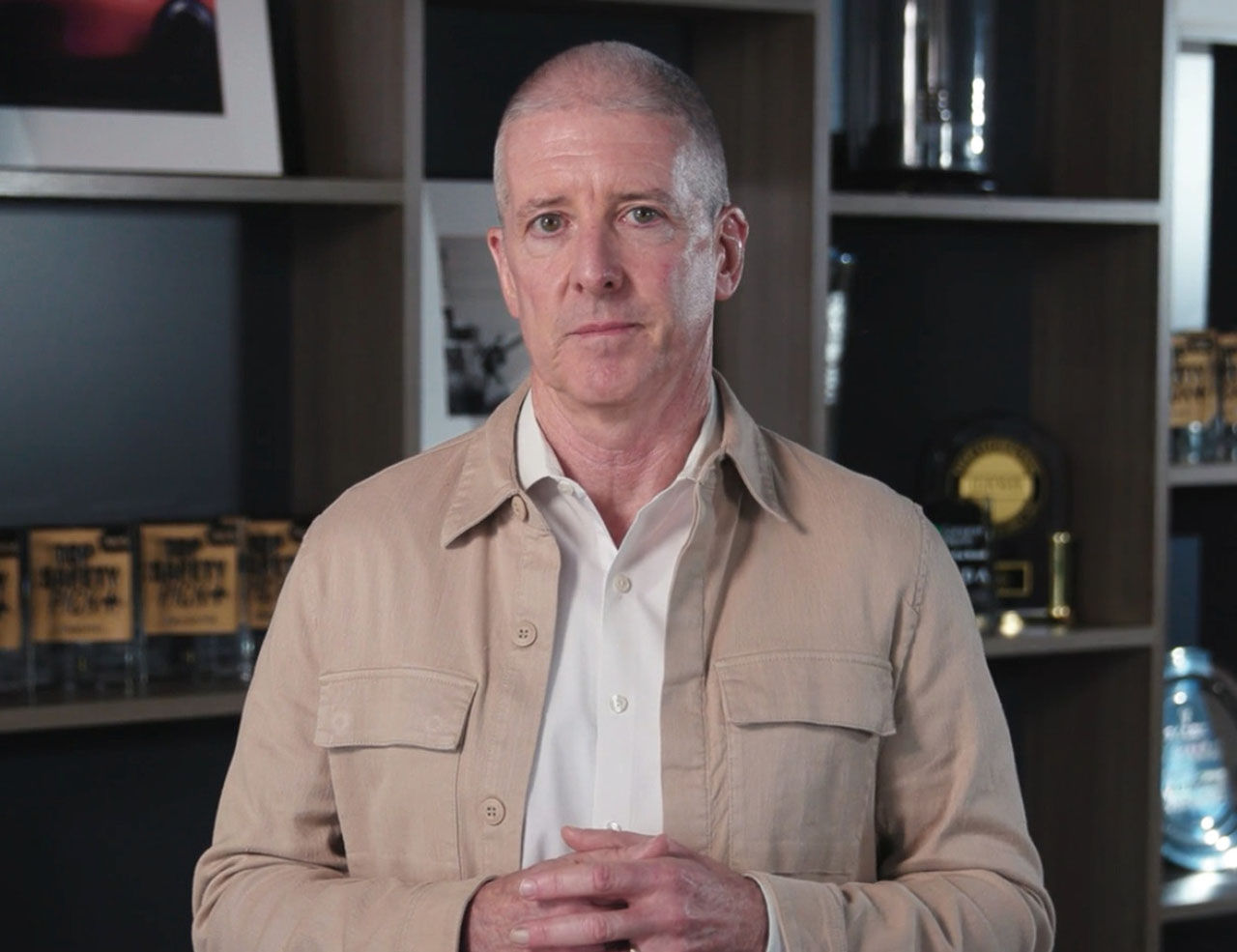
"Aiming to become a truly distinctive brand by elevating Omotenashi and delivering unique experiences"


Tom Donnelly

President and CEO, Mazda North American Operations


How did Brand Value Management get started in the U.S. and what results has it achieved?

This year marks the 10th anniversary of Mazda’s Brand Value Management journey. As our vehicles have become more diversified and competitive within their segments, we needed a holistic approach to our business that mirrored the improvements in our products. Brand Value Management, which started as an initiative to transition from a volume-driven business model to one that is value-driven, has become the guiding philosophy for our most important decisions.


Every day and at every level, MNAO works to enhance each aspect of our customers’ journeys. From the experience at our physical dealerships to the service touchpoints throughout the vehicle ownership life cycle, we have kept our customers at the center of all our decisions and actions. While this required some changes from where we were, our employees and our dealer partners have grown admirably to embody this mindset.


Brand Value Management has been one of the key drivers in our remarkable accomplishments over the past few years. It has also helped shield us from the challenging sociopolitical environment of the past two years. Although the business landscape, particularly in the U.S., has seen significant disruption with the introduction of tariffs and rapidly changing regulatory priorities, our commitment to Brand Value Management and customer centricity has not wavered. As a result, FY March 2026 was MNAO’s second best sales year in our history, with 395,000 total vehicles sold. Mazda’s overall market share rose from 1.7% in FY March 2019 to 2.4% in FY March 2026. This simply would not have been possible if our employees, dealer partners, and most importantly, our customers hadn’t seen the value that we bring in our products and processes.
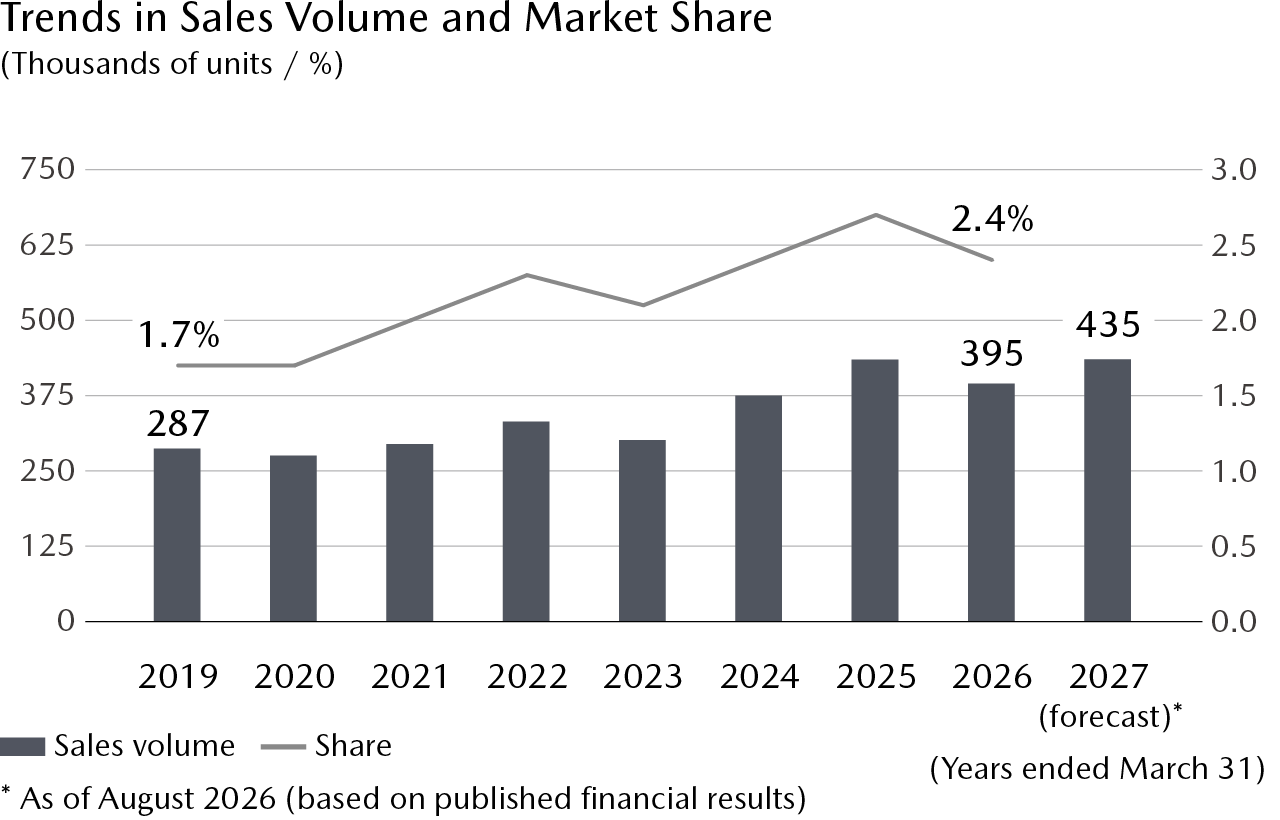
Trends in Sales Volume and Market Share

What are Mazda’s key strengths in the U.S. that have been built through Brand Value Management?

To capture the strengths and competitive advantages of Brand Value Management, it is helpful to look at this transformation across three distinct pillars: products, dealer facilities, and experience.

(1) Products

Our vehicles are the first point of judgment for our brand. We must continue to offer consumers a segment-competitive product at an attractive price point, and it’s clear that we do. The introduction of the CX-50, CX-50 Hybrid, CX-90, and most recently, the All-New 2026 CX-5 have demonstrated that we are providing our customers with the great-driving, beautifully designed vehicles they desire at a strong price.

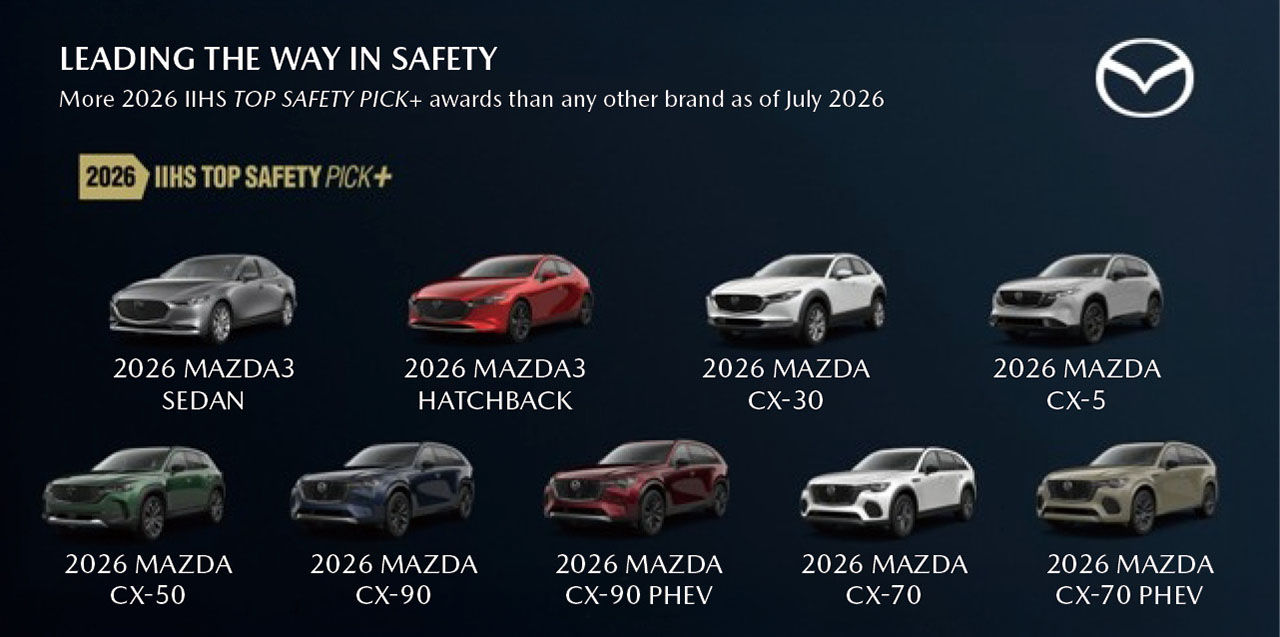
The commitment to our products is more than just providing great value at every price point to our customers. We have made significant investments to build some of the safest vehicles on the road. The Insurance Institute for Highway Safety (IIHS) has awarded its highest honor, the TOP SAFETY PICK+ designation, to nine Mazda models, including the All-New CX-5. Mazda’s nine current TOP SAFETY PICK+ awards are more than any other brand, as of July 2026. In addition, Mazda reached the milestone of 100 cumulative TOP SAFETY PICK and TOP SAFETY PICK+ awards since 2008, further strengthening our proven safety credentials.

Awarded the 2025 TOP SAFETY PICK+ by the Insurance Institute for Highway Safety (IIHS) (as of July 2026)

Awarded the 2026 TOP SAFETY PICK+ by the Insurance Institute for Highway Safety (IIHS)
(as of July 2026)

(2) Dealer facilities

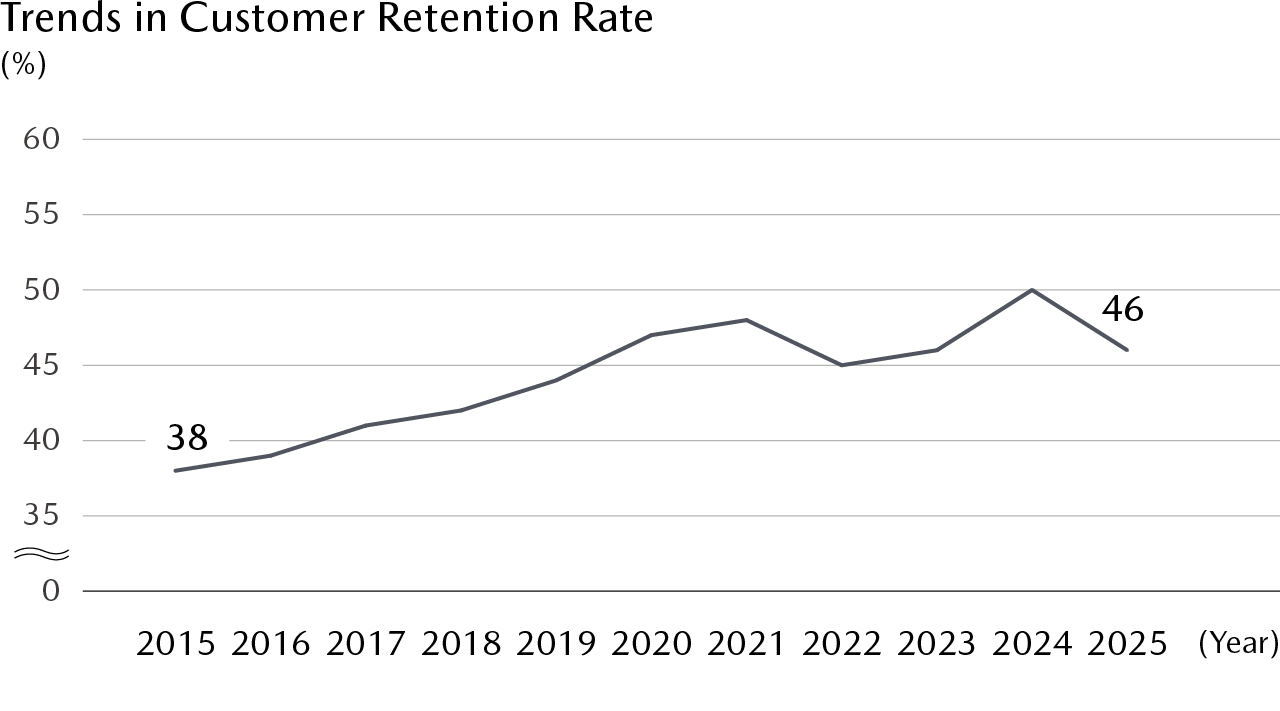
Great products lay the foundation, but the environment in which our customers interact with the Mazda brand is also important. Since 2016, nearly 400 dealers have invested with us in the vision of Brand Value Management by transforming their legacy dealership facilities into Retail Evolution (RE) stores. We asked our dealer partners to trust Brand Value Management, and that trust is paying off. Dealers have experienced tremendous sales growth in average throughput, increasing from 450 in FY March 2017 to 600 across the network in FY March 2026. This only tells part of the story; our RE dealers have seen their throughput increase to 756 across the same period. Dealers have also seen improved customer retention, from 38% in 2015 to 46% in 2025, and improved service retention, which measures the percentage of customers who return to dealerships for after-sales services such as maintenance and repairs, from 52% in 2017 to 59% in 2025. In fact, our service retention results have made Mazda one of the fastest-improving brands over the past five years. Our dealer partners are recognizing these results. In the winter 2025 survey conducted by the National Automobile Dealers Association (NADA), Mazda maintained a strong performance, ranking third in the “Most Optimistic” category. For “Franchise Value”, Mazda currently ranks sixth among non-premium brands and is steadily progressing toward its goal of ranking within the top five.

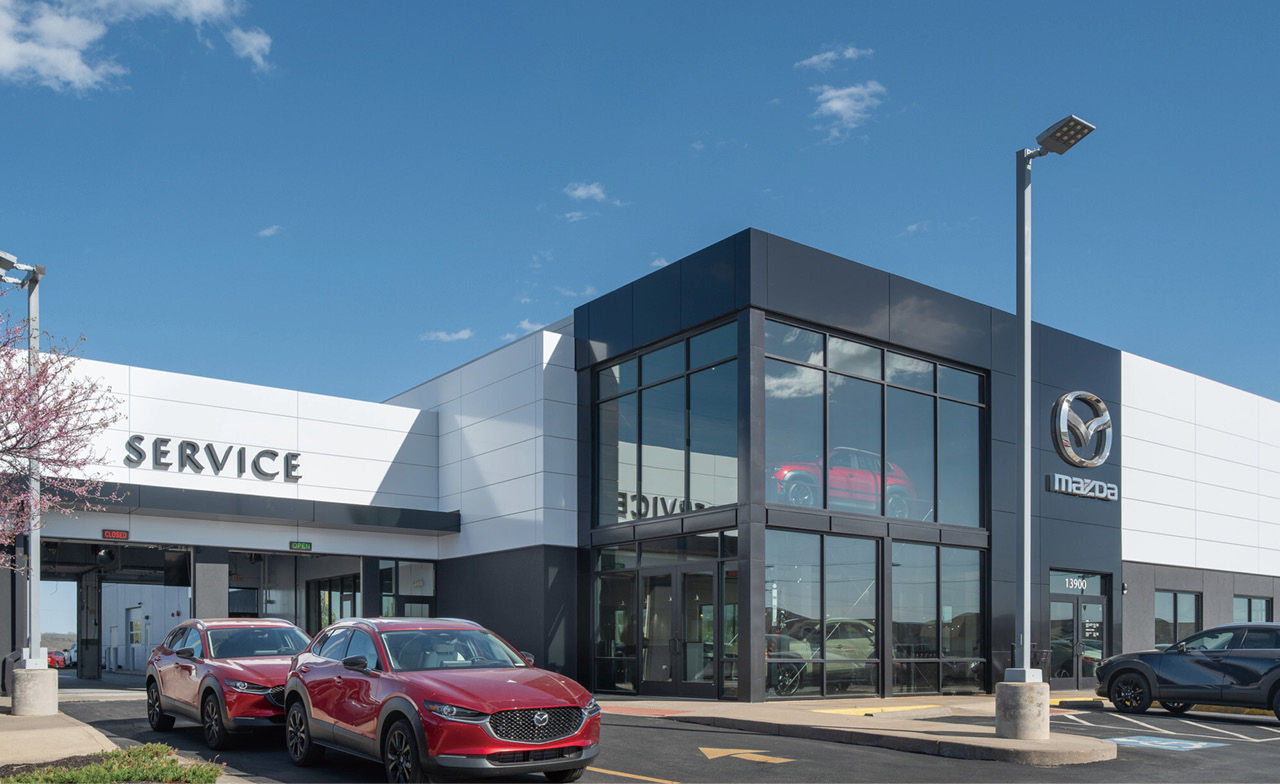
New-generation showroom, Luther Mazda, located in Kansas City

New-generation showroom, Luther Mazda, located in Kansas City


Trends in Customer Retention Rate

(3) Experience

Building on our top-quality products and beautiful facilities, MNAO set out to tackle the third pillar of experience. We took a hard look at our business through the lens of Omotenashi, or the Japanese hospitality concept of anticipating the needs of our customers with selfless consideration, and asked ourselves, "What could we be doing better for our customers?”


We settled on the theme of improving human connection across all aspects of our business. First, we introduced a new community engagement platform in April 2025, called Be Moved. This platform initially focused on amplifying existing dealer and employee programs that drive local impact. During our first national program, the Be Moved Drive Program, we offered test drives at local high schools with $50 donated for each drive, up to $10,000 to each school. This program raised $128,550 across 21 events for schools across the U.S. The Be Moved Drive Program highlights our belief that education plays a vital role in empowering individuals and strengthening communities.


Second, we integrated Omotenashi into our recognition platform for frontline dealer employees, reinforcing the behaviors we want to celebrate. We also trained all our field managers in customer experience approaches that prioritize individual connections. As we continue to embrace Omotenashi throughout our business, we have seen our recommendation intention index for sales and service hit all-time highs. Looking ahead, we aim to achieve industry-leading performance in both areas.


Finally, we launched the Mazda Service Promise, an initiative designed to make vehicle maintenance more transparent, convenient, and customer-centered through features such as online scheduling, Digital Video Service, which enables technicians to record videos of actual inspections and service work and share them with customers, and flexible communication options. This commitment takes maintenance, one of the more frustrating parts of vehicle ownership, and turns it into a loyalty-driving engine for our brand and our dealer partners. The results speak for themselves: since 2018, the average Mazda dealer has seen service and parts profits increase by more than 100%; Mazda is the top OEM in video inspections; and we have achieved record highs in customer retention rate.


All these programs turn small, proactive acts of caring into meaningful moments with our brand, which in turn helps build trust in the Mazda brand.

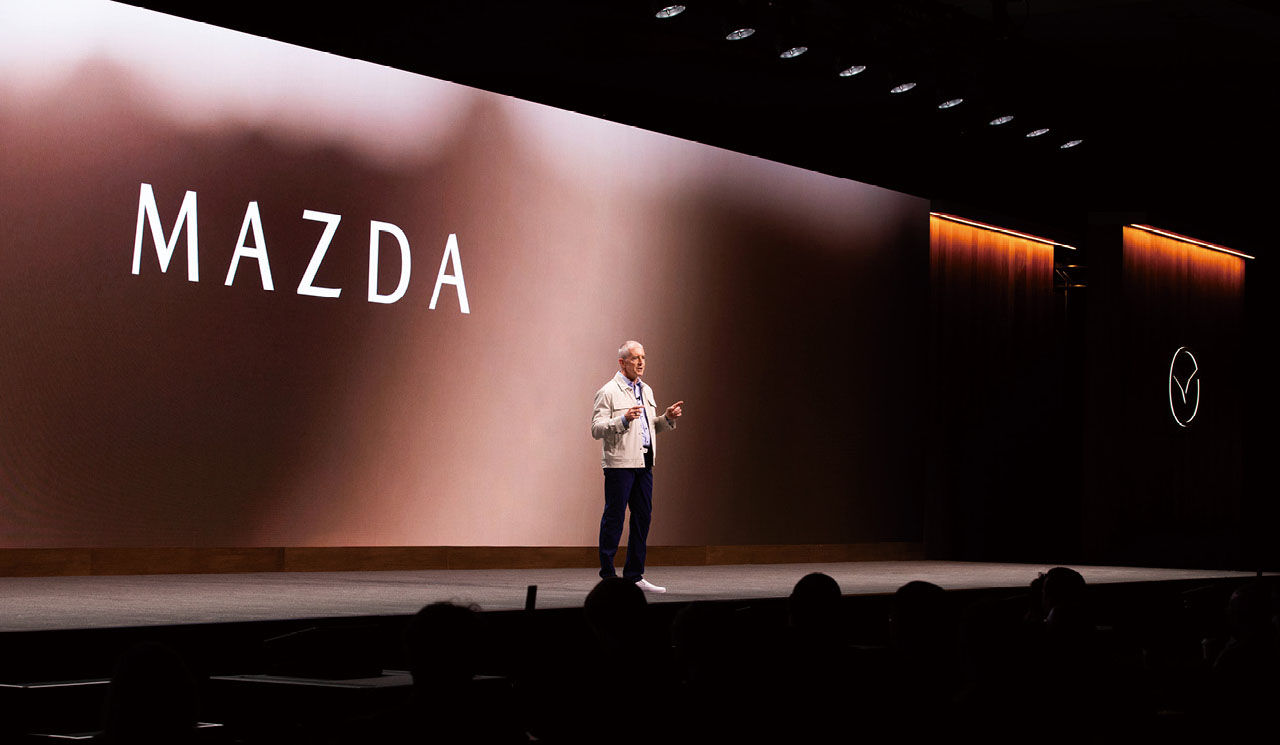
At the U.S. National Dealer Meeting

At the U.S. National Dealer Meeting


What are your key priorities going forward?

One of the challenges facing Mazda now is the lack of a clearly defined customer-facing identity. Brand Value Management certainly has a role in addressing this. We need to unite our people, processes, and technology to deliver unique and differentiated experiences and enable capabilities that will add customer-centered value. We need to rise to this challenge, and will do so with the ambition of growing our U.S. sales volume from the current level of approximately 400,000 units to 500,000 units over the longer term.


We must transform into a connected experience company, embodying Omotenashi in every touchpoint. We must also continue to invest in our partnerships and strengthen these relationships across the value chain. By pairing these changes with a resilient, skilled, and engaged workforce supported by technology, we can become a brand that is chosen by more customers. Our dealers are actively engaged in this vision and are partnering with Mazda to drive growth. We anticipate that the upcoming introduction of the CX-5 Hybrid will also drive excitement, engagement, and sales.


Currently, the majority of MNAO profit comes from the sale of vehicles. In the future, as cars become more connected, the vehicle will be at the center of a broader revenue ecosystem, encompassing everything from eCommerce to parts sales. We must be prepared to make this transition while remaining true to the values and experience that define Mazda. Brand Value Management has already started us along the path, with initiatives that focus on customer experience such as the Mazda Service Promise kickstarting our transformation from a car company to an experience company.


It is my belief that as we progress through this decade, we will see far more emphasis on how consumers interact with their vehicles. Tomorrow’s cars will not just be a way to get from place to place; they will be integrated into our lifestyles in ways that were impossible just a few years ago. The relationship between consumers and car manufacturers will change as a result. Brand loyalty will become more important than ever, and much like smartphones, more entrenched.


If we continue to embrace keeping our customers at the center of everything that we do and look for moments to demonstrate Omotenashi both internally and externally, we will be well positioned for the continued evolution of the automotive industry.