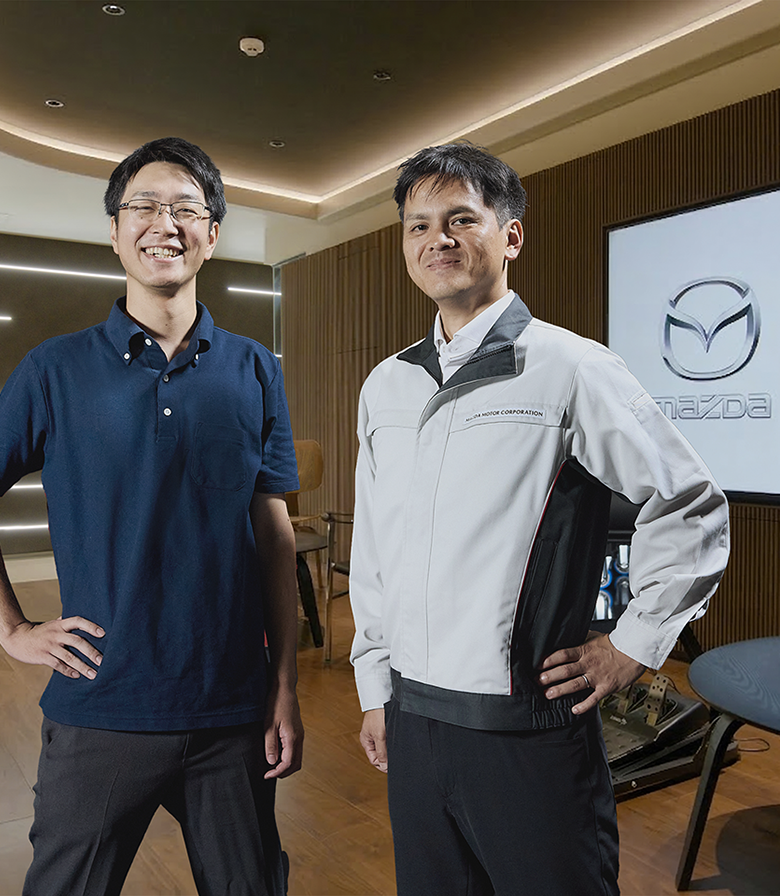
At the heart of Mazda's car design is Jinba-ittai, the philosophy of horse and rider as one. Just as a skilled rider and horse move in perfect harmony, a Mazda responds naturally to the driver's intent, moving exactly as they wish. Mazda has spent years making that feeling accessible to every driver.
2026.04.10
Creating Cars That Become Your Ultimate Driving Partner
-How Human Research and Driving Simulators are Paving the Way to the Ultimate Driving Partner-
What is a car? Is it simply a tool for getting around? Or is it something more, a trusted companion that understands you, growing closer with every drive?
At the foundation of that pursuit are two things: human research, which engages directly with how people feel and sense the world, and the expert drivers who have spent years perfecting the feel of every car.
Now, a new challenge is underway: bringing Jinba-ittai into the design process earlier than ever before.
In this article, we explore the intersection between research, development, and evaluation, and how a car comes closer to becoming the ultimate driving partner.
Car Engineering Starts With Understanding People
At Mazda, car engineering begins with understanding people. Daichi Sato embodies that thinking at the forefront of research.
Sato:
I joined Mazda in 2015 with one goal: to one day create cars that become true partners to people. Since then, I've been researching human perception and sensation.
Human research spans several fields. Ergonomics improves usability and safety based on people's physical characteristics. Kansei engineering applies science to feelings like comfort and pleasure. Kansei neuroscience uses brain response to understand how people experience safety and well-being.
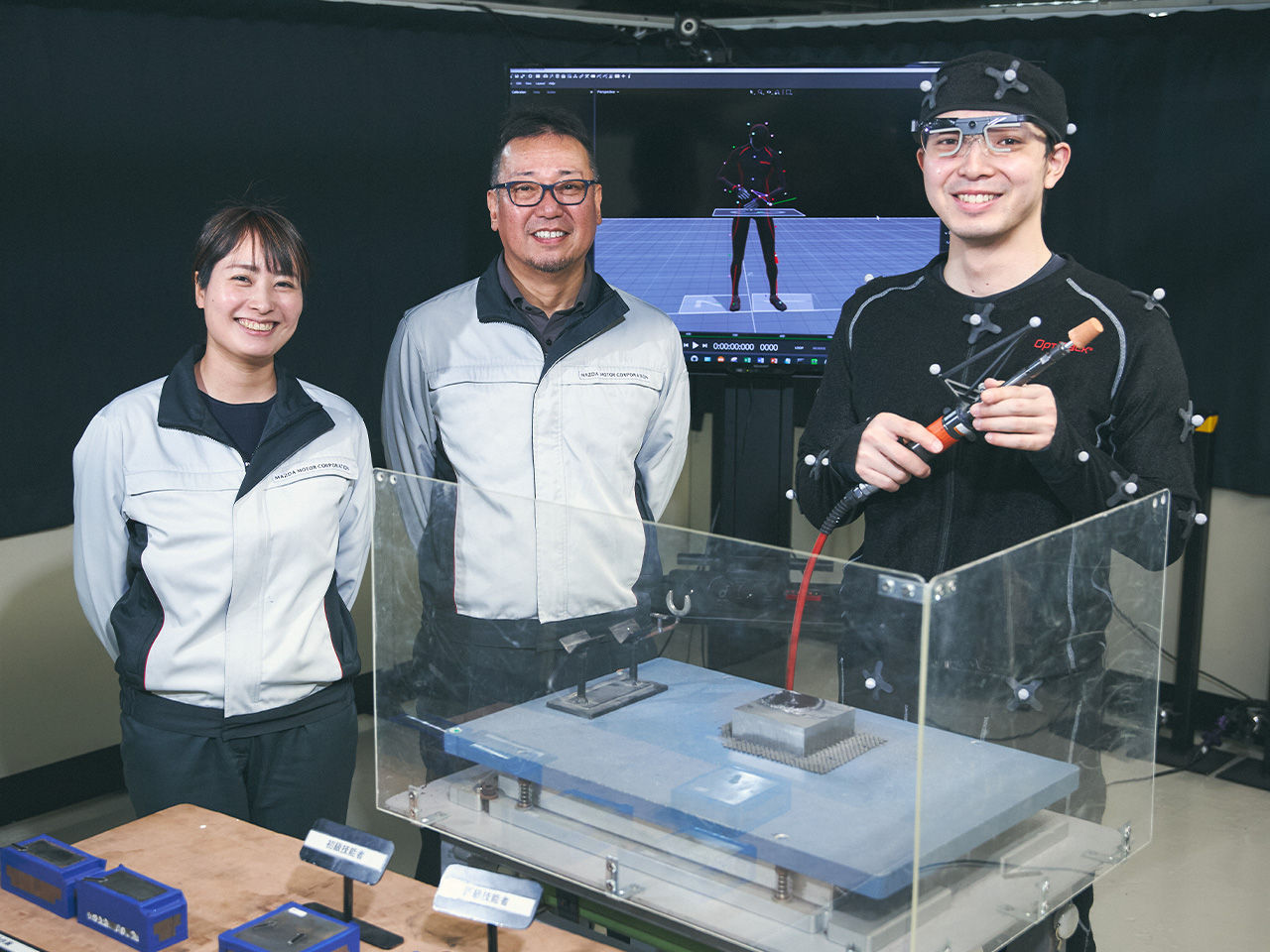
My own work focuses on modelling driver and passenger perception and sensation, and on how people move and control their posture while in a vehicle. Using an electric wheelchair, I collect data on how people move and what they feel, then build simulation models* that connect people and cars.
This experiment uses an electric wheelchair (or mobility platform) provided by WHILL Inc. to collect data on ride comfort and mobility experiences that support well-being.
*A simulation model is a digital formula built from experimental data and observations. It captures how something behaves or works. These models enable the reproduction of real-world phenomena on computers without the need for physical experiments. Model-Based Development, or MBD, is Mazda's approach to using these models throughout the development process.
Human research is something most people would associate with a university. Why does a car manufacturer pursue it?
Sato:
Mazda's core development philosophy has always been human-centered. Car engineering is not only about vehicle performance. It's about understanding when drivers feel at ease and when they feel stressed, and applying that understanding to how we build cars.
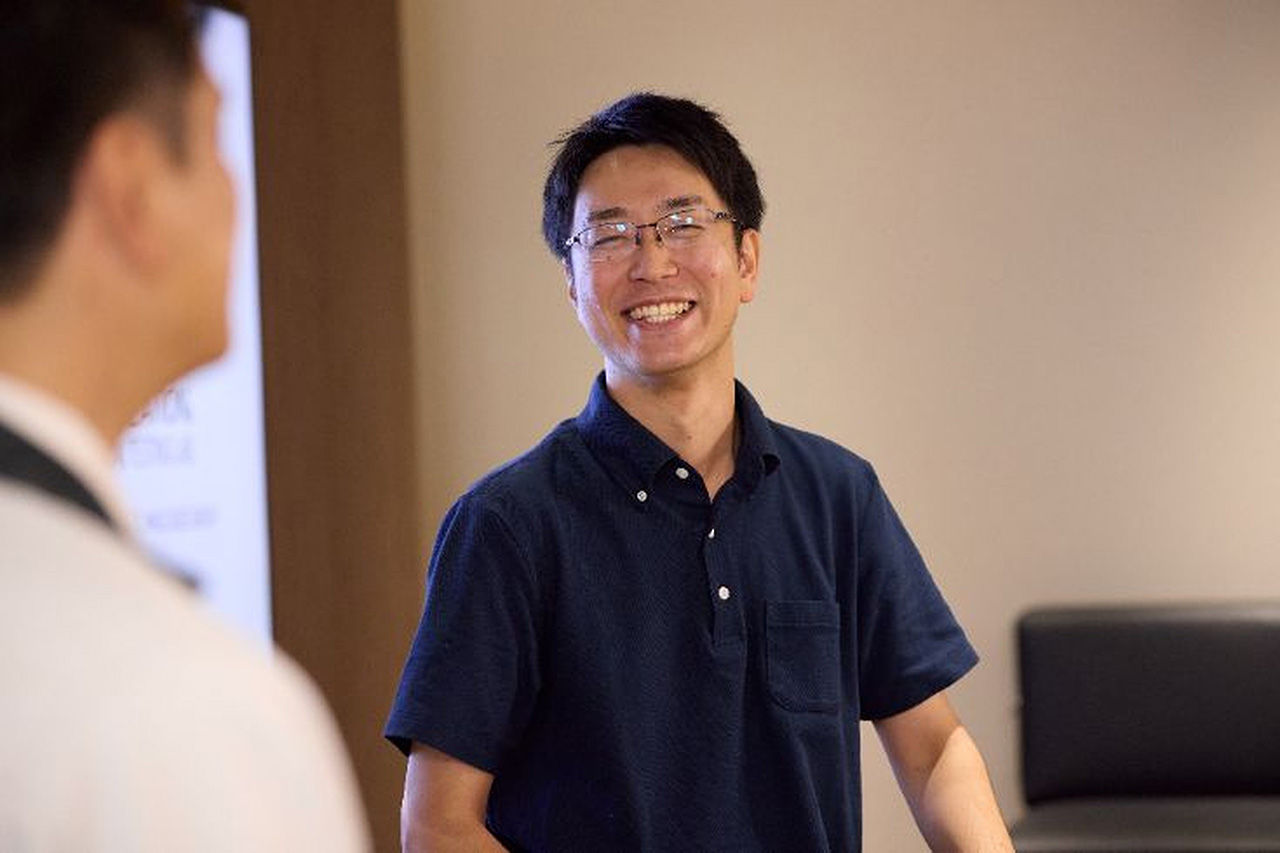
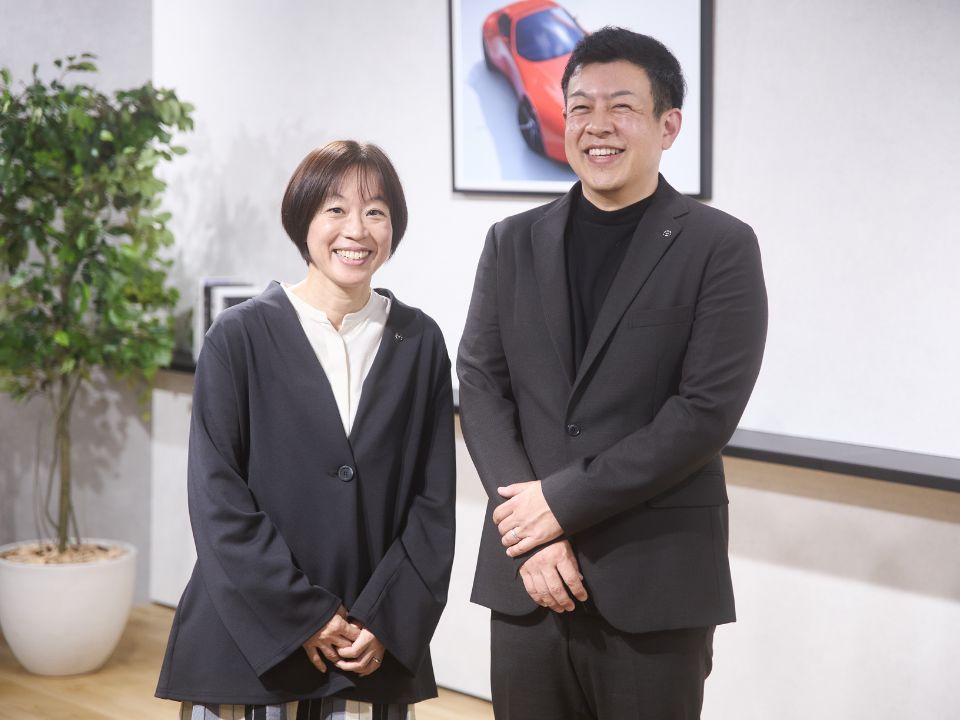
Daichi Sato from the Technical Research Center's Advanced Human-Centered System Research Field. He joined Mazda driven by a desire to turn what he learned from studying people into real products that enrich everyday life. He's also a devoted father to his 4-year-old daughter.
I've been conducting analysis and research related to people since my student days, but back then I struggled to turn those findings into everyday products. At Mazda, research flows directly into engineering. I can see how my work feeds into actual cars, and that connection gives me a real sense of purpose.
For example, the research showing that darker interior colors speed up the brain's response to external stimuli has already been applied to production cars. Seeing research findings become real value in a product keeps me motivated to push further.
What do you find most challenging about human research?
Sato:
There's no shortage of challenges! But if I had to choose one, it'd be how difficult it is to get consistent results. How someone feels in a car depends on their physical condition, body type, and experience. External environmental factors add another layer, shifting results even further.
Say we're running a test drive in rain with poor visibility. Even if the driver uses their skill and experience to keep the accelerator and steering perfectly consistent, we can't control the volume of rain or how it falls. And that difference can throw off the experimental results.
Mazda has been conducting human research for many years, and every test required expert drivers at the wheel and carefully controlled conditions. That took enormous time and cost. But because this research directly connects Jinba-ittai and how secure a Mazda feels to drive, it was always worth the effort.
Refining Jinba-ittai: The Co-Creation of Expert Drivers and Virtual Evaluation
We understand there are new developments in how Mazda refines the Jinba-ittai feel. Suzuki, could you tell us more about this and your work?
Suzuki:
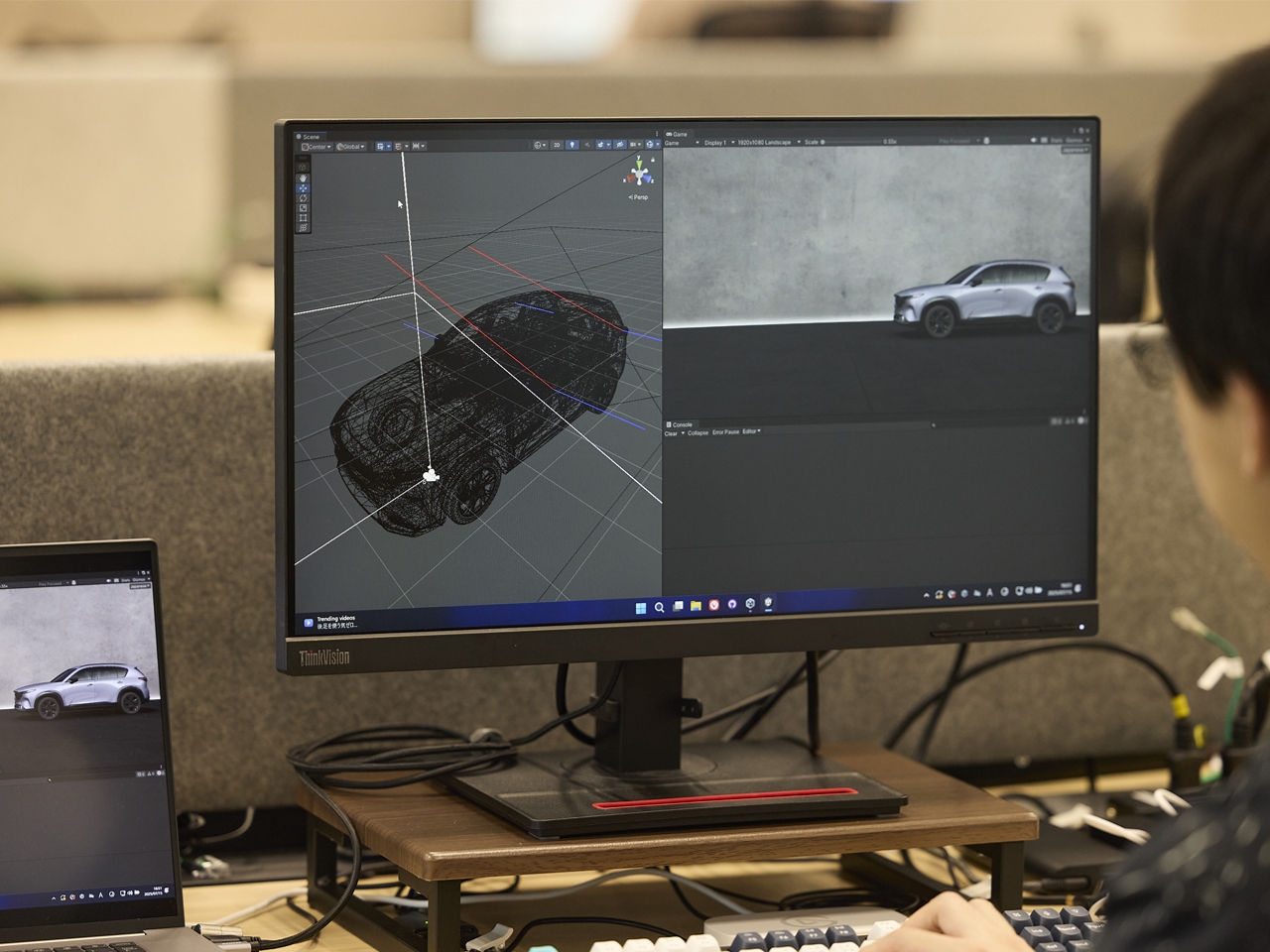
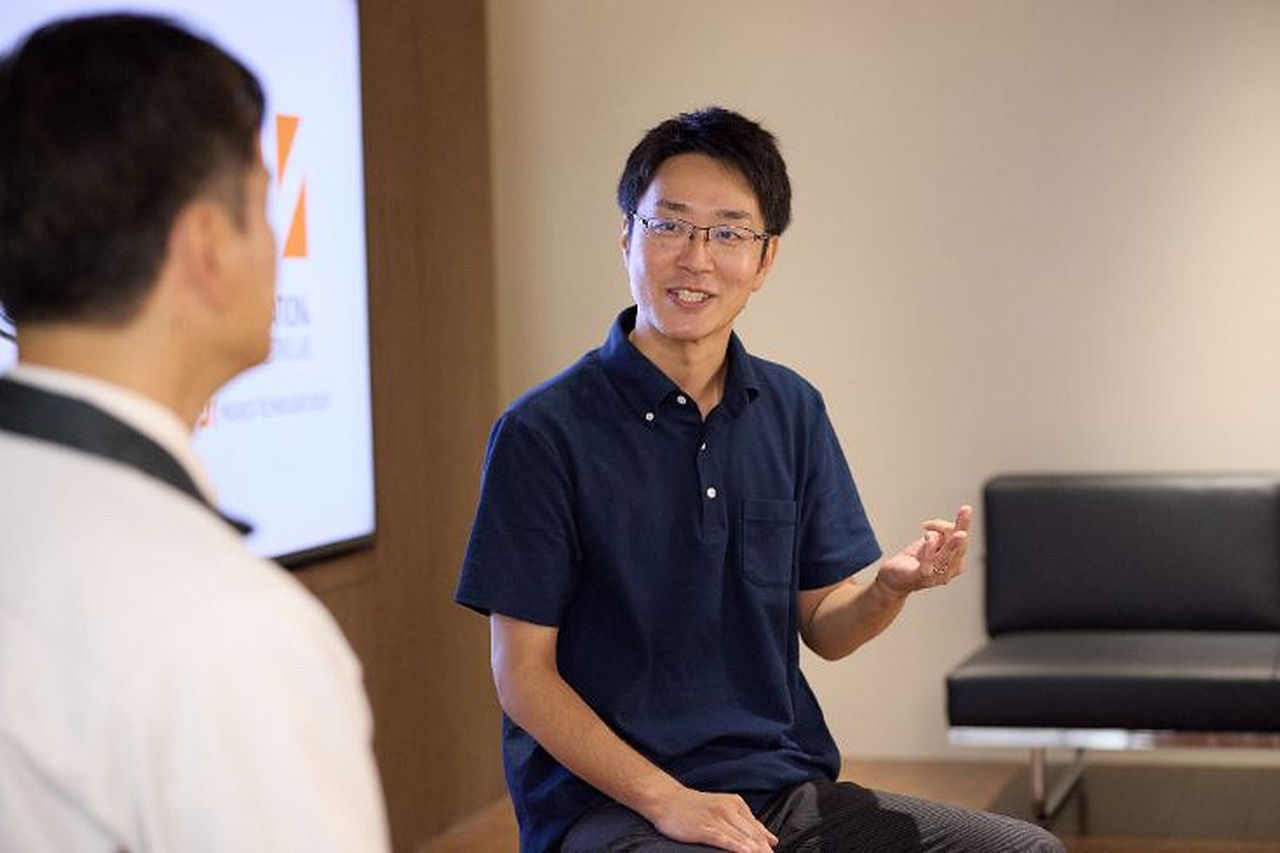
I joined Mazda in 2019 after working at another car manufacturer. Throughout my career, I've worked on powertrain design and development, using simulation models for engine fuel efficiency and emissions. Now I'm responsible for virtualizing and digitalizing vehicle control elements, and developing driving simulator technology. I work alongside expert drivers to "cultivate" the simulator itself.
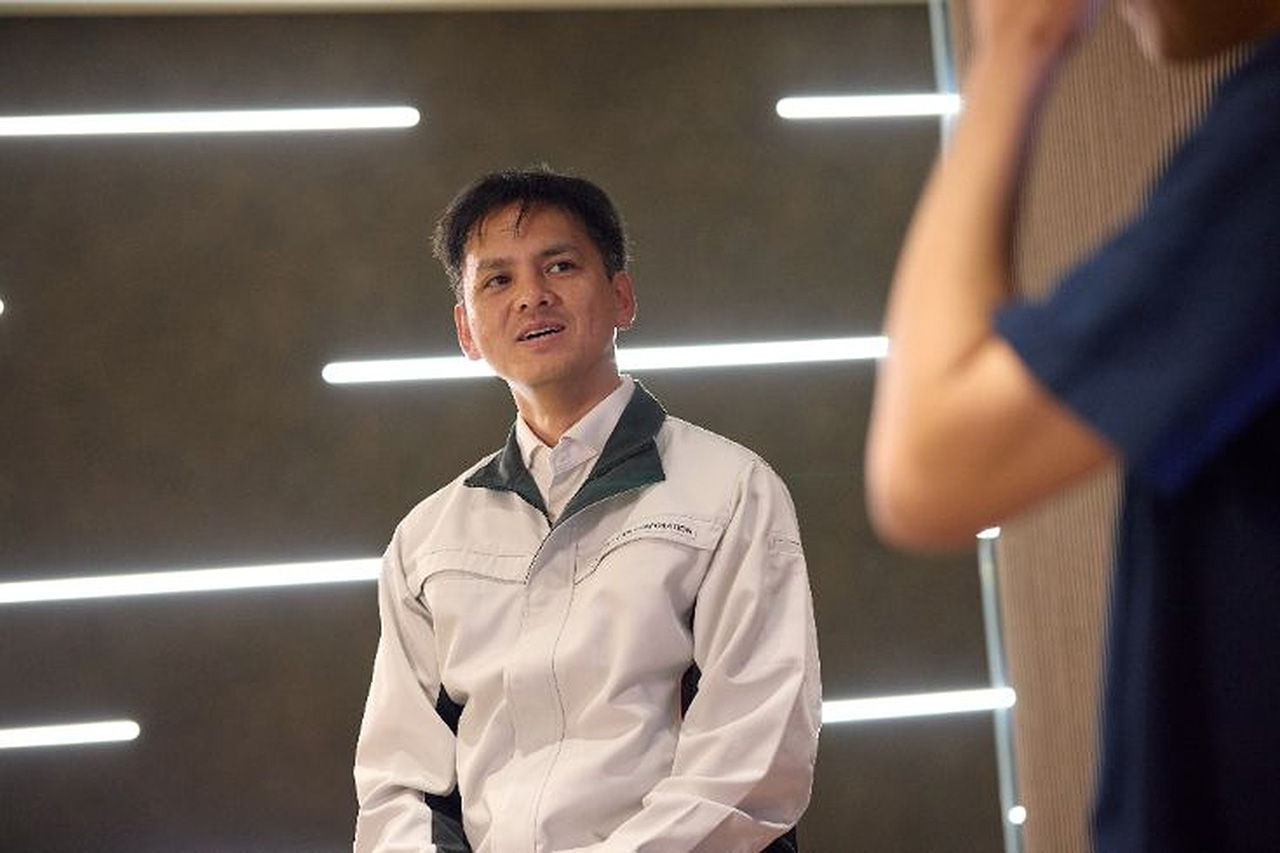
Takashi Suzuki from the KURUMA Development Division. He's been working on vehicle control virtualization since before joining Mazda. He recently bought a Mazda MX-5 (Roadster) as a second car, though he wishes he had more time to drive it.
What do you mean by "cultivating" the simulator?
Suzuki:
It's the ongoing process of adjusting and refining the simulator so it can reproduce vehicle movement as close to a real car as possible.
Simulators aren't like arcade racing games where you just put in a coin and start driving. Before the driver can start, you need to prepare road surface data, visual data, and vehicle motion models, load them into the simulator, and then confirm everything is working correctly. Only after doing all of that can the driver get in and start driving.
What matters most is time consistency. To control a simulator properly, one second in the real world must equal one second in the simulator. No matter how precise and detailed our models are, if the simulator's processing can't keep up, time discrepancies accumulate during experiments. The key is building models that maintain the necessary accuracy while simplifying where appropriate. It takes specialist knowledge, but this is precisely where the skill of an engineer to "cultivate" the simulator really shows.
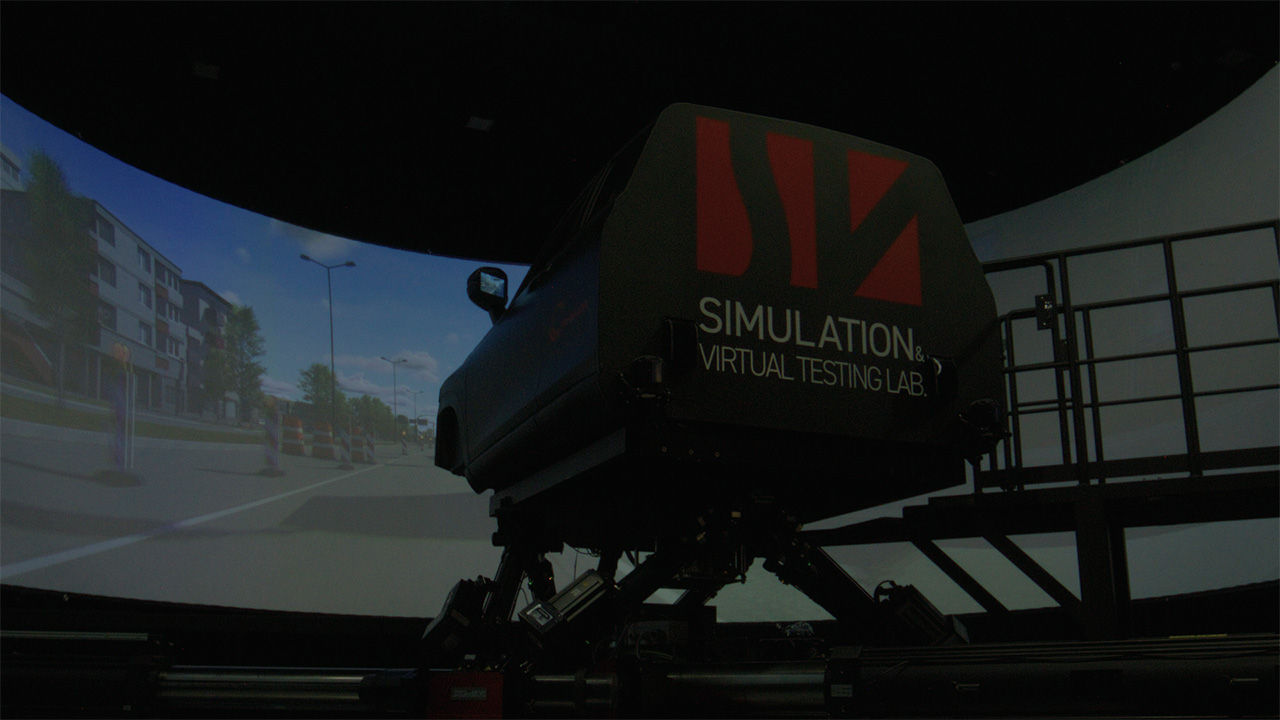
From there, expert drivers get in and work through every nuance, carefully fine-tuning until the simulator feels as close to a real vehicle as possible. It's a genuine two-person effort between driver and engineer. Some drivers even wear blindfolds until they're seated in the simulator seat, blocking out external information to immerse themselves fully in the feeling of being in a real car.
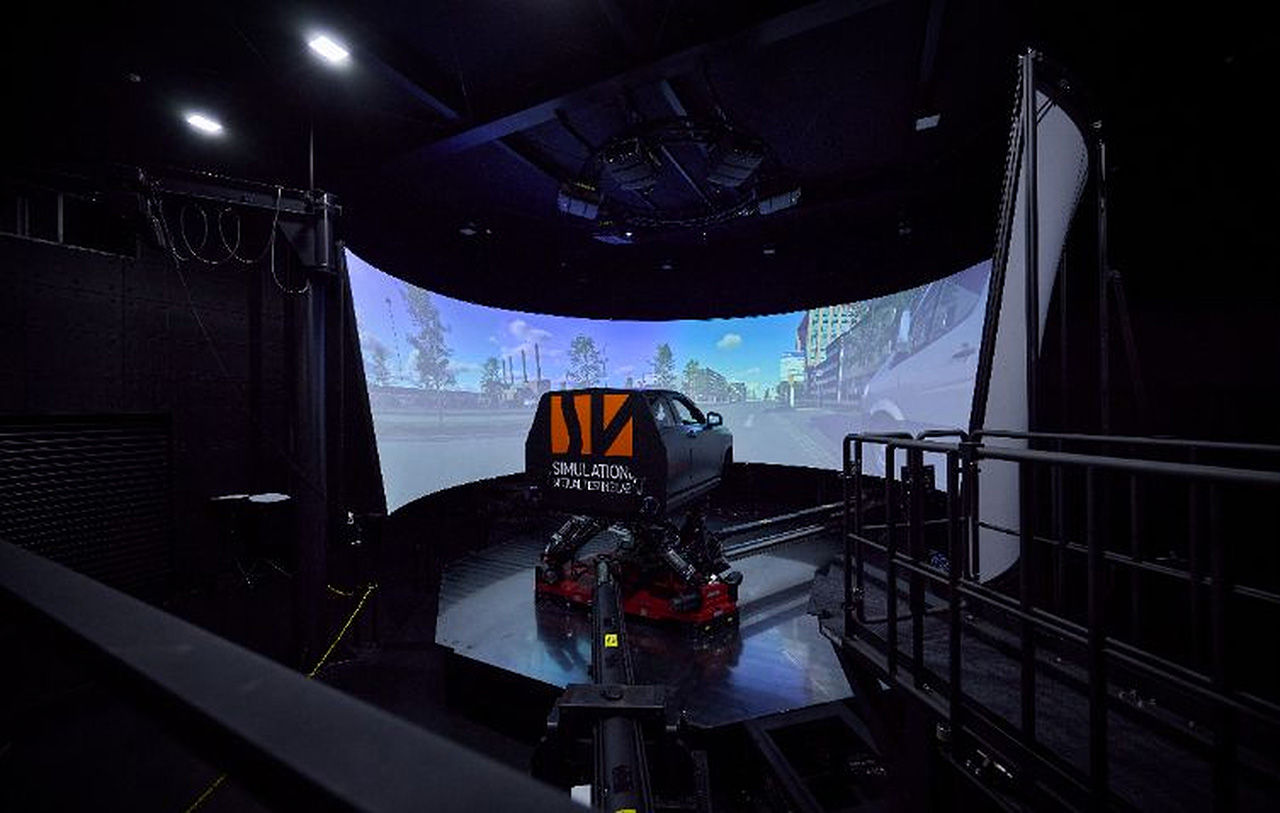
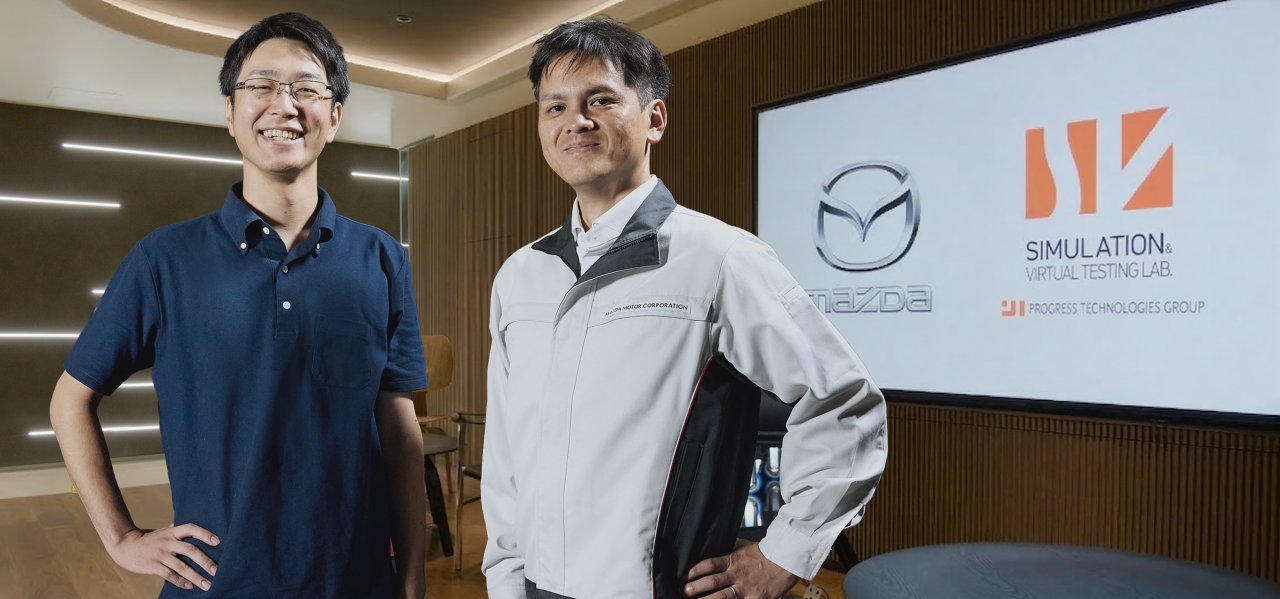
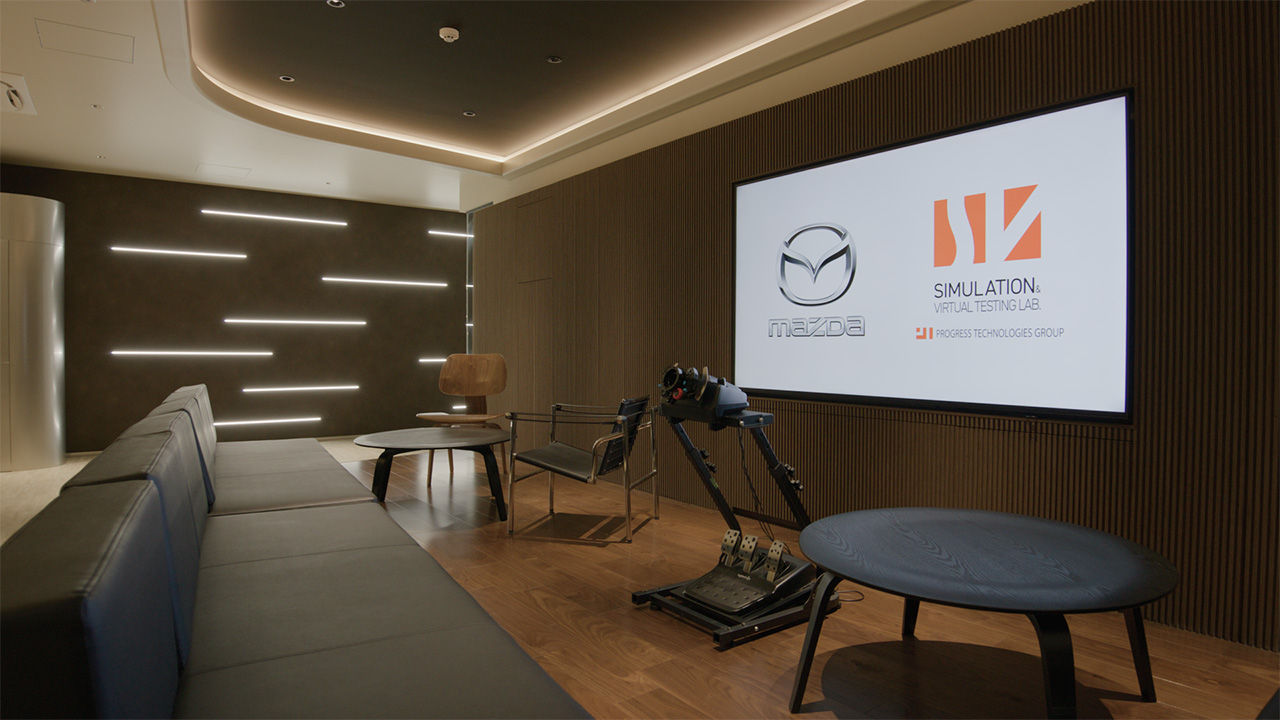
The Jinba-ittai feel that Mazda has refined through real-vehicle testing is now being carried into virtual evaluation. Alongside its own in-house simulators, Mazda partners with S&VL Technology Research Institute in Ota, Gunma, to use their state-of-the-art driving simulator. Expert drivers and designers now develop cars not just at proving grounds, but in virtual space as well.
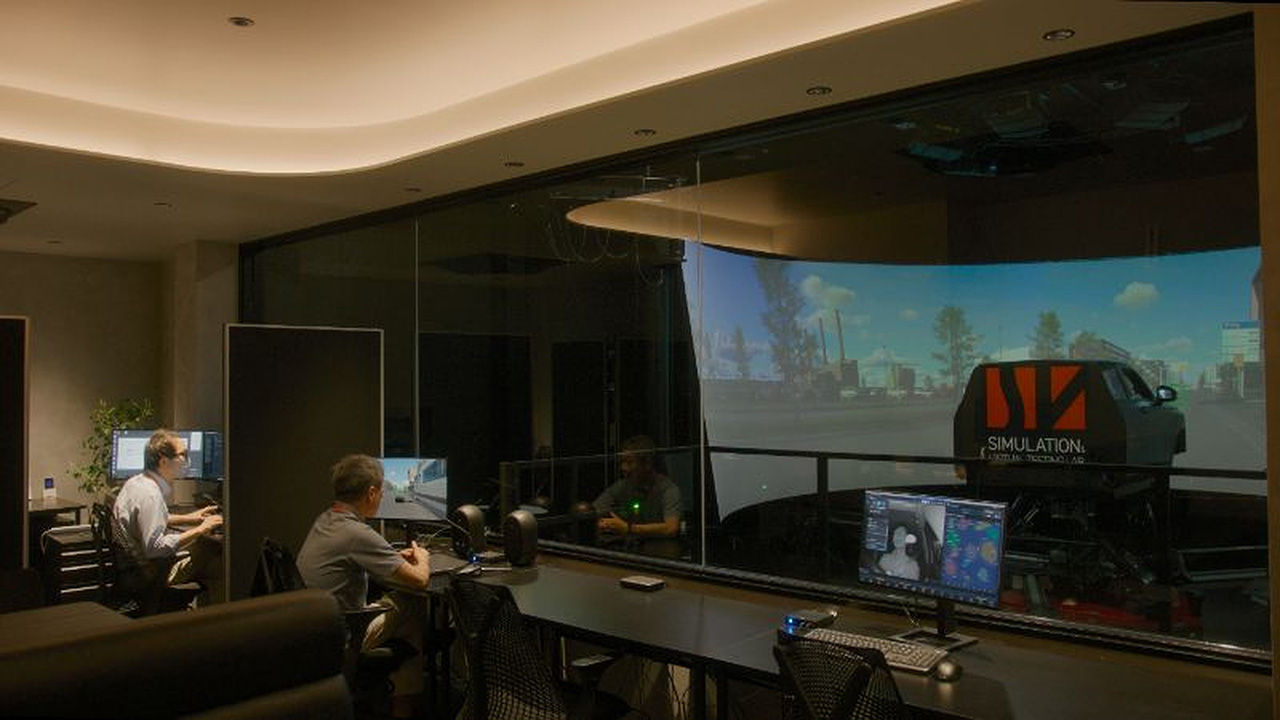
During tests, engineers take feedback from expert drivers and work out adjustments on the spot. Virtual or not, the pursuit of Mazda excellence is always real.
×
How are driving simulators being used in development?
Suzuki:
Previously, we had to build a physical prototype first. Only then could expert drivers evaluate how the vehicle felt. But if they discovered fundamental structural problems at that stage, we'd have to overhaul the basic design, and the development process had to start over.
By bringing simulators in earlier, we can evaluate performance in virtual space before anything physical is built and prevent major setbacks. Driving simulators are an essential part of Model-Based Development (MBD) at Mazda.
But development efficiency isn't our only goal. What we're really after is creating time, the time needed to carefully build the drive feel we're aiming for.
Still, real vehicle testing seems hard to beat.
Suzuki:
That's an understandable opinion. But simulators have strengths that real car testing simply can't match. They let us eliminate noise that's impossible to isolate on a real road.
Take vibration evaluation. In a real car, when you feel vibrations through the steering wheel, it's difficult to tell whether they're coming from road surface irregularities or the vehicle's own structure. But in a simulator, we can create a perfectly flat, smooth-as-ice surface, and isolate exactly what's causing the vibration. That kind of precision makes uncovering the mechanisms behind ride comfort and drive feel much more straightforward.
Sato:
From a human research perspective, simulators open up real possibilities. High-precision driving simulators let us control experimental environments reliably and reproduce them with precision. As a result, we can measure how driver and passenger move and react under different conditions in far greater detail.
That makes it easier to identify what's causing the phenomena we observe. Once we understand the causes, we can make real progress in modelling human sensation and deepen our understanding of how drivers and passengers feel and respond inside a car.
What do we gain from understanding these mechanisms?
Suzuki:
We can pass on the culture of refining Jinba-ittai to the next generation, instead of it being locked away in an individual experience. The driving feel Mazda calls Jinba-ittai has been shaped by the skills and sensibility of our expert drivers, refined over many years. If human research advances to the point where we can model and quantify those sensory evaluations, that's a major step forward.
It's like writing down a secret recipe so it can be passed on to the next generation. The result is that we can deliver Mazda cars that embody Jinba-ittai at higher quality and with greater speed, generation after generation.
Sato:
For me, this work connects to a people-first approach to car engineering. If we can share a quantified human model across teams from the planning stage, we can define what we're aiming for much earlier. Instead of beginning design with performance objectives, we can start by defining the ideal sensory experience and engineering the car to achieve it. That's a fundamentally different way of creating cars, one that starts with people.
×
Creating Cars That Become Your Ultimate Partner
Finally, what's your vision of the ideal car and your outlook for the future?
Suzuki:
Many people think of a car as just a way to get around, but Mazda values the experiences connected to driving and traveling.
I want to understand each customer's sensations, emotions, and physical condition, so we can create cars that become true partners that people can connect with. That's where driving simulators come in - they're the bridge between human research and car engineering.
Sato:
There are many feelings and values in this world that simply haven't been put into words yet. Human research has the potential to bring those hidden feelings to light, creating a new kind of relationship where a car deeply understands people and can intuitively respond to emotions they haven't even noticed themselves.
Ideas come up along the way about interesting things that could be built into a car. But I always ask: will this genuinely enrich customers' lives and bring them happiness? And will customers truly feel its value? That customer-centric perspective is something I never lose sight of.
When I said in my Mazda job interview that I wanted to create cars that become true partners to people, I hadn't really thought about how I was going to do that. But now I can see that is exactly what human research is working toward.
And that's not the only change. My family has grown, and it's made a big difference to how I think. That's why I want to create cars that can foster understanding and connection between people and cars. Cars that families want to take out, making lasting memories together. Cars that feel like your ultimate partner. That's what I'm working toward.
From the Editorial Team
Research, technology, and people. When these come together, a car becomes something more: a partner that stays by your side throughout life. Today, as always, researchers, engineers, and expert drivers are at work, eyes fixed on the same goal, hands never still.
That's what I want to create cars that understand people, cars that people understand in return.
Related Contents
ENERGIZING>
More riding a car, more energized: by riding Mazda with less tiring and car sickness, even in driving long distances, winding roads, or traffic jams.